On this page
- Who Can You Sponsor?
- What Counts as Evidence
- The Financial Bar for Sponsors
- How to Apply for Family Sponsorship
- How Long the Process Takes
- Why Family Visas Get Denied
- Your Status During Processing
- Conditions After Approval
- From Family Visa to PR
- Real Scenarios
- Visa options for this goal
- Guides for Brazil
- Other goals for Brazil
Who Can You Sponsor?
#To sponsor a family member for a visa in Brazil, you must meet specific eligibility criteria based on the relationship you have with the prospective visa holder. The Brazilian immigration system, managed by the Federal Police (Polícia Federal), allows you to sponsor certain family members for residency. Below is a detailed overview of who you can sponsor under the family visa category:
Eligible Relationships
The following relationships qualify for sponsorship under the family visa category:
| Relationship Type | Eligibility Requirements |
|---|---|
| Spouse | Must be legally married to the sponsor. Documentation proving the marriage is required. |
| De Facto Partner | Must demonstrate a stable union, typically through shared financial responsibilities or cohabitation. Proof of relationship duration (usually over 1 year) is necessary. |
| Children | Includes biological, adopted, and stepchildren under the age of 18. Older children may qualify if they are financially dependent due to health or educational reasons. |
| Parents | Can be sponsored if they are financially dependent on the sponsor. Documentation of dependency is required. |
| Other Dependents | Includes siblings, grandchildren, or other relatives who are financially dependent on the sponsor. Proof of dependency must be provided. |
Key Considerations
Important: Ensure that all documentation is current and properly translated into Portuguese by a certified translator. The Federal Police may require original documents and certified copies during the application process.
Documentation and Evidence
For each relationship category, you will need to gather and present specific documentation. This typically includes:
- Marriage Certificate for spouses
- Proof of Cohabitation and Joint Financial Accounts for de facto partners
- Birth Certificates for children
- Financial Statements showing dependency for parents and other dependents
Consult the Documents Checklist to ensure you have all necessary paperwork ready for your application.
Related Visa Types
If you're considering alternative visa options, the following may be relevant:
These options might suit different family dynamics or long-term plans in Brazil.
Tip: Consult the How To Apply guide for a step-by-step overview of the application process. This can help you avoid common pitfalls and ensure a smoother experience.
Understanding who you can sponsor is a crucial first step in the family visa application process. Make sure you verify all requirements on the official Federal Police website to ensure compliance with the latest immigration policies.
What Counts as Evidence
#When applying for a family visa in Brazil through the Federal Police (Polícia Federal), you need to provide evidence that substantiates your relationship with the family member you wish to sponsor. The following sections outline what counts as valid evidence to support your application.
Proof of Marriage or Partnership
- Marriage Certificate: A certified copy of your marriage certificate is essential if you are married to a Brazilian citizen or permanent resident.
- Civil Union Documentation: If applicable, provide legal documentation of a civil union or similar partnership recognized by Brazilian authorities.
- Joint Accounts: Evidence of joint bank accounts can demonstrate financial interdependence and shared responsibilities.
Evidence of Cohabitation
- Residential Records: Rental agreements or property ownership documents showing both names can serve as strong evidence of cohabitation.
- Utility Bills: Shared utility bills, such as electricity or water, with both partners' names can further demonstrate a shared residence.
- Shared Lease: If you are cohabiting, present documents indicating that both parties are on the lease.
Demonstrating Financial Interdependence
- Joint Financial Assets: Statements from joint bank accounts or investments can illustrate financial ties.
- Shared Liabilities: Documents showing shared debts or financial obligations, such as a mortgage or car loan, can also be used.
- Insurance Policies: Copies of insurance policies where one partner is listed as a beneficiary of the other are useful evidence.
Personal Evidence and Communications
- Photographs: A selection of photographs that span the course of your relationship, showing both informal and formal settings, can provide visual proof of your relationship.
- Communication Records: Logs of frequent communication, such as emails or messages, can help establish the ongoing nature of your relationship.
- Social Media Interactions: Screenshots or printouts of social media interactions that highlight your relationship over time can be supportive.
Important: Ensure that all documents are translated into Portuguese by a certified translator if they are originally in another language. This is a requirement by the Federal Police (Polícia Federal) for all non-Portuguese documents.
For more detailed guidance on gathering the required documents, refer to the Documents Checklist. If you are considering other visa options, you might also want to explore the Vitem Family or the Mercosur Residence pathways for family reunification in Brazil.
By carefully gathering and organizing these pieces of evidence, you can help ensure a smoother application process with the Federal Police. Always verify current requirements on the official website, as they can change.
The Financial Bar for Sponsors
#When sponsoring a family member for a visa in Brazil, financial requirements play a crucial role. As a sponsor, you must demonstrate sufficient funds to support your family member without relying on public resources. The financial bar for sponsors involves specific income thresholds, potential savings requirements, and maintenance funds.
Income Thresholds for Sponsors
To sponsor a family member, you must meet certain income requirements. These thresholds are designed to ensure that sponsors can financially support their relatives during their stay in Brazil.
| Family Visa Type | Minimum Monthly Income Required |
|---|---|
| Temporary Visa - Family Reunion (VITEM XI) | BRL 3,000 |
| Mercosur Residence | BRL 2,500 |
Important: These amounts are indicative as of 2023. Always verify on the official Polícia Federal website for the most current requirements.
Savings and Maintenance Funds
In addition to meeting monthly income thresholds, having savings or other financial assets can bolster your application. While not always mandatory, demonstrating additional financial stability can be beneficial.
- Savings Account Statements: Present recent bank statements showing a stable balance over the past six months.
- Investment Portfolios: Include details of any investments that contribute to your financial security.
Tips for Meeting Financial Requirements
To ensure you meet the financial requirements, consider the following tips:
- Document Everything: Keep thorough records of all financial assets, including savings, investments, and income sources.
- Plan Ahead: If your current income is below the threshold, consider improving your financial situation before applying.
- Consult a Professional: If unsure about meeting the requirements, consulting with an immigration advisor can provide clarity.
For more detailed guidance, explore the Financial Requirements guide. Additionally, understanding the How To Apply process can further streamline your application preparation.
Tip: Demonstrating financial readiness not only helps in meeting the requirements but also strengthens your overall application, increasing your chances of approval.
How to Apply for Family Sponsorship
#-
Start with Eligibility Assessment
Before you begin the application process for a family visa in Brazil, ensure you meet the eligibility criteria. This involves checking your relationship to the Brazilian citizen or resident you intend to join. Common eligibility categories include spouses, dependent children, and parents. Review the specific requirements for each category on the Polícia Federal's official website to confirm your eligibility.
-
Prepare and Gather Required Documents
Collect all necessary documents that support your application. These typically include proof of relationship, such as marriage or birth certificates, and identification documents like passports. It's crucial to ensure all documents are up to date and, if necessary, translated into Portuguese by a certified translator. For a detailed list of required documents, consult the Documents Checklist.
-
Lodge Your Application with the Polícia Federal
Once you have all your documents ready, proceed to lodge your application for the family visa. This involves completing the official "brazil-family" form provided by the Polícia Federal. Be thorough in filling out all required sections, and make sure to include all necessary evidence to support your case.
-
Attend an Interview
After submitting your application, you may be required to attend an interview with the Polícia Federal. This step is designed to verify the authenticity of your relationship and assess your eligibility. To prepare, review the Interview Prep guide, which provides tips on what to expect and how to handle the interview process.
-
Provide Biometrics
As part of the application process, you will need to provide biometrics, including fingerprints and photographs, at a designated Polícia Federal office. This step is essential for identity verification and security purposes.
Tip: Schedule your biometrics appointment early to avoid delays, as availability can vary depending on the location.
-
Await Decision
After completing the steps above, your application will be reviewed by the Polícia Federal. Processing times can vary, so it's advisable to check the Processing Times regularly. While waiting, keep all your contact information current to ensure you receive any updates regarding your application status.
By following these steps carefully, you enhance your chances of a successful application for a family visa in Brazil. For further details on family visas and related options, you might explore other visa avenues such as the Temporary Visa - Family Reunion (VITEM XI) or Mercosur Residence if applicable.
How Long the Process Takes
#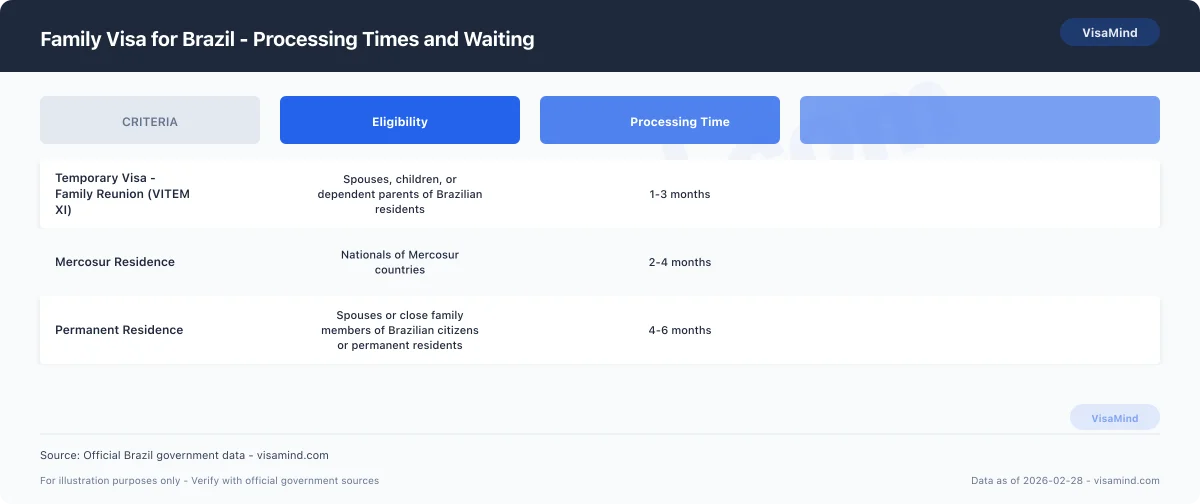
Processing times for family visa applications in Brazil can vary based on several factors, including the visa type, priority categories, and the completeness of your application. As you prepare to lodge your application with the Polícia Federal, it is important to understand these variables to better plan your move.
How Long Does it Take?
Family visa application processing times can fluctuate due to demand, staffing, and the specific category you apply under. Here's a general overview of expected timelines:
| Visa Type | Processing Time | Priority Considerations |
|---|---|---|
| Temporary Visa - Family Reunion (VITEM XI) | 2-3 months | Priority given to applications with complete documentation and those involving minor children |
| Mercosur Residence | 1-2 months | Faster processing for applicants from Mercosur member countries |
| Residence Permanent | 4-6 months | Applications involving family reunification may receive priority |
What Affects Processing Speed?
Several factors can influence the speed at which your family visa application is processed:
-
Completeness of Documentation: Applications that are complete and accurate are processed more swiftly. Missing or incorrect information can lead to delays. Refer to the Documents Checklist to ensure you have everything needed.
-
Demand and Staffing: High demand periods or reduced staffing levels at the Polícia Federal can increase processing times. It's advisable to apply well in advance, especially if you plan around specific dates.
-
Priority Situations: Some applications, such as those involving minor children or urgent reunifications, may be prioritized. Clearly indicate any urgent circumstances in your application to potentially expedite the process.
Tip: To check the most current processing times and any priority considerations, visit the Processing Times guide. This can help manage expectations and plan effectively.
Can You Expedite the Process?
While there is no formal expedited process for family visas, ensuring your application is complete and well-documented can naturally speed up processing. Additionally, contacting the Polícia Federal directly for guidance in urgent situations may also help.
For more detailed guidance on application procedures, consider reviewing the How To Apply guide to streamline your preparation and submission process.
Remember, timelines are subject to change, so always verify the latest information on the official website or through direct inquiry with Brazilian consulates or the Polícia Federal.
Why Family Visas Get Denied
#Understanding why applications may be denied is crucial for avoiding common pitfalls. Here are some key reasons why family visas get denied:
Insufficient Evidence
- Lack of Documentation: Failing to provide adequate proof of a genuine relationship or family ties can lead to denial. Ensure all required documents, such as marriage certificates and birth certificates, are included and properly authenticated.
- Incomplete Information: Missing information in your application may delay processing or cause outright rejection. Always double-check that all sections are complete and consistent.
Sham Marriage Concerns
- Inconsistent Details: Discrepancies in how you and your partner describe your relationship can raise red flags. Consistency in all submitted documents and during any interviews is vital.
- Previous Visa Denials: If you or your partner have previously been denied a visa due to suspected sham marriages, this could impact your current application.
Important: Ensure that all relationship evidence is thorough and credible to mitigate the risk of denial due to marriage authenticity concerns.
Financial Shortfalls
- Inadequate Financial Support: The sponsor must demonstrate adequate financial means to support the family member(s) in Brazil. This includes meeting specific income thresholds, which are detailed in the Financial Requirements guide.
- Unstable Employment: Sponsors with unstable job histories or insufficient proof of income may find their applications at risk. Providing consistent and verifiable employment records is essential.
Medical and Character Issues
- Health Concerns: Applicants may be denied based on certain health conditions that pose a public health risk. Medical examinations are often required to assure compliance with Brazilian health standards.
- Criminal History: A background check revealing criminal activities can be a significant barrier. The Polícia Federal takes character assessments seriously, and any criminal history must be disclosed and explained.
For more detailed information on potential refusal reasons, you can review our Visa Refusal Reasons guide. Additionally, preparation for the application process, including gathering appropriate documentation, can be found in the Interview Prep guide.
Your Status During Processing
#When applying for a Family Visa for Brazil through the Polícia Federal, understanding your status during the processing period is crucial. This period can affect your work rights, your ability to travel, and your legal status in Brazil.
Work Rights During Processing
While your Family Visa application is under review, you will not automatically gain the right to work in Brazil. To engage in employment, you will need a separate work authorization. Consider applying for a Vitem Work visa if you wish to work while waiting for your family visa decision. It is important to ensure that you meet all requirements and have the necessary documentation for a work permit.
Travel Restrictions and Return Entry
During the processing of your Family Visa, travel restrictions can apply. If you leave Brazil, re-entry may require additional documentation or visas, such as a Vivis Tourist visa for short-term visits. It's advisable to consult with the Polícia Federal before making travel plans to avoid complications with your application.
Important: Exiting Brazil without proper documentation during visa processing might result in delays or complications upon return. Always verify your status with the Polícia Federal before traveling.
Bridging Visas and Implied Status
Brazil does not have a formal "bridging visa," but once you have lodged your application with the Polícia Federal, you may remain in the country while your application is processed, assuming you maintain legal status. If your current visa is expiring, you may need to apply for an extension or a different visa type, such as the Vitem Student or Vitem Digital Nomad, to ensure continuous legal status until a decision is made.
Maintaining Legal Status
It is essential to maintain your legal status throughout the application process. If your current visa is nearing expiration, promptly apply for an extension or another visa category to stay compliant with Brazilian immigration laws. For guidance on visa extensions, refer to the Visa Extension Guide.
By staying informed about your rights and obligations during the processing of your Family Visa application, you can better navigate the complexities of Brazil's immigration system and minimize potential disruptions to your stay.
Conditions After Approval
#Once your Family Visa application has been approved by the Federal Police (Polícia Federal), it's important to understand the conditions and requirements that come with it.
Temporary vs Permanent Status
Upon approval, you will initially receive a temporary residence status. This allows you to reside in Brazil legally but comes with certain conditions. Temporary residence typically lasts for two years, after which you may be eligible to apply for permanent residency. To transition from temporary to permanent status, you must demonstrate compliance with specific requirements set by the Federal Police.
Residence Requirements
To maintain your temporary residence status, you must adhere to certain residence requirements.
- Continuous Presence: You are expected to reside in Brazil for most of the year. Absences from the country should not exceed 90 days within a 12-month period.
- Address Registration: It is crucial to register your address with the Polícia Federal upon arrival and update them of any changes during your stay.
Failure to meet these requirements could affect your ability to apply for Residence Permanent status later on.
Restrictions and Obligations
While holding a Family Visa, you're expected to comply with Brazilian laws and obligations. Here are some key restrictions and responsibilities:
- Work Permission: You may be eligible to work in Brazil, but it's advisable to check specific work authorization requirements related to your visa type.
- Healthcare and Insurance: Ensure you have adequate health insurance coverage during your stay, as public healthcare access may be limited for temporary residents.
- Financial Stability: You should maintain financial stability, showing that you can support yourself and your family without relying on local welfare systems.
Important: Failure to comply with any of these conditions could jeopardize your residency status.
For more information on planning your stay, consider reviewing the Visa Extension Guide and Financial Requirements.
From Family Visa to PR
#When you hold a Temporary Visa - Family Reunion (VITEM XI) in Brazil, you're on the path to potentially securing permanent residency and eventually citizenship. Understanding this progression is crucial for planning your stay and future in Brazil.
Transitioning to Permanent Residency
After living in Brazil on a VITEM XI for a specific period, you may be eligible to apply for permanent residency. Generally, this period is two years, but it's important to verify the exact timeline and requirements on the Federal Police website, as these can change. Permanent residency offers you more stability, allowing you to live and work in Brazil without the need to renew your visa regularly.
Tip: Once you obtain permanent residency, regularly check for any changes in requirements or regulations with the Permanent Residence status to ensure compliance.
Path to Citizenship
Becoming a Brazilian citizen is an appealing prospect for many permanent residents. After holding permanent residency for four years, you can apply for Brazilian citizenship. If you have a Brazilian spouse or child, this period may be reduced to one year. Brazilian citizenship grants full rights in Brazil, including the ability to vote and access to certain social benefits.
Key Steps from Family Visa to Citizenship
- Maintain Legal Status: Ensure your VITEM XI is valid and renew as necessary while residing in Brazil.
- Apply for Permanent Residency: After meeting the residency requirement, apply through the Residence Permanent process.
- Fulfill Residency Requirements: Live in Brazil as a permanent resident for the required duration to qualify for citizenship.
- Apply for Citizenship: Submit your application once eligible, using resources such as the Brazilian Citizenship guide for detailed instructions.
Important: Any criminal activities or violations during your stay may affect your eligibility for permanent residency or citizenship. Always stay informed about Brazilian laws and regulations.
Summary Table: From Family Visa to Citizenship
| Step | Duration Required | Key Considerations |
|---|---|---|
| Temporary Visa (VITEM XI) | Initial entry and stay in Brazil | Ensure validity and renew as needed |
| Permanent Residency | 2 years on VITEM XI | Confirm eligibility and apply |
| Citizenship | 4 years as a permanent resident | Reduced to 1 year if married to a Brazilian or have a Brazilian child |
For more guidance on specific steps, including document requirements, refer to the Documents Checklist and How To Apply resources.
Real Scenarios
#A software developer from India married a Brazilian citizen after meeting online and maintaining a long-distance relationship. They decided to live together in Brazil, but the concern was proving the authenticity of their marriage to satisfy the requirements for the Family Visa for Brazil. They engaged with the Polícia Federal by gathering detailed documents, including marriage certificates and evidence of their ongoing relationship, such as communication records and joint travel itineraries. After submitting their application and attending an interview, the couple was granted the visa within six months, allowing them to start their life together in Brazil.
Scenario: Joining a Parent in Brazil
A high school student from Argentina wanted to join her father, who had recently been granted permanent residence in Brazil through the Mercosur Residence program. Her main challenge was demonstrating her dependency on her father to qualify for the Family Visa. They consulted the Polícia Federal to understand the specific documentation required, such as proof of financial dependency and her father's residence status. By carefully preparing and submitting these documents, they successfully obtained the visa within four months, just in time for the new school year in Brazil.
Scenario: Sponsoring a Sibling for a Family Reunion
A Brazilian resident sought to bring his younger brother from Portugal for a family reunion. Since the sibling did not qualify under immediate family categories, the resident needed to explore alternative visa options. They learned about the Temporary Visa - Family Reunion (VITEM XI), which might be applicable. By consulting with the Polícia Federal and following the outlined procedure, the resident gathered necessary documents like proof of familial ties and financial support. Eventually, they secured the visa, allowing the brothers to reunite in Brazil after a five-month process.
FAQs
How long does the Polícia Federal take to process a Family Visa for Brazil?
Why might a Family Visa for Brazil be denied?
Can I switch from a Temporary Visa - Family Reunion (VITEM XI) to a permanent residence in Brazil?
What are the conditions after a Family Visa for Brazil is approved?
How does the Family Visa for Brazil relate to the Mercosur Residence visa?
Can my spouse work in Brazil on a Family Visa for Brazil?
What happens to my status during the processing of a Family Visa for Brazil?
Sources
Last reviewed: March 1, 2026
VisaMind provides informational guidance only and is not a government agency. This is not legal advice. Requirements can change and eligibility depends on your specific facts. If your case is complex or high-stakes, consult a licensed immigration attorney.
Next steps
Requirements vary by nationality, purpose, timeline, and case details. Use Find My Visa to get a personalized checklist for Brazil with official sources and deadlines.
Find my visa