The Admission Step
#-
Secure Admission to a Vietnamese University
Before you can begin your journey to study in Vietnam, securing admission to a recognized Vietnamese university is your first step. You will need an official offer letter from the institution, which serves as proof that you have been accepted into a study program. Universities typically require that you meet academic prerequisites and language proficiency standards, which may include Vietnamese or English, depending on the program. Be sure to confirm the specific requirements and deadlines for your chosen institution.
-
Collect Your Confirmation of Enrollment (COE)
After receiving your offer letter, the next step is to obtain a Confirmation of Enrollment (COE) from your university. This document is critical as it confirms your enrollment in a full-time course and is a prerequisite for your student visa application. Ensure that all details on the COE match your personal information to avoid complications in the visa process.
-
Understand the Visa Requirements
To study in Vietnam, you will need to apply for a Student Visa (DH Symbol). This involves gathering necessary documents such as your passport, COE, and any other required paperwork specific to your program and nationality. Visit the Documents Checklist for a comprehensive list of items you need to prepare.
-
Prepare Financial Evidence
You must demonstrate that you have sufficient funds to cover tuition fees and living expenses while studying in Vietnam. This financial evidence may include bank statements, scholarship letters, or sponsorship declarations. Refer to the Financial Requirements guide for detailed information on acceptable forms of financial proof.
Important: Ensure all your documents are accurate and complete before submission. Inaccuracies or missing information can delay your visa process and potentially impact your study plans.
-
Lodge Your Visa Application
With your COE and financial documents in hand, you can proceed to apply for your student visa. This process involves submitting your application to the Immigration Department of Vietnam. Understanding the specific visa process, such as timelines and fees, is crucial. For more details, consult the How To Apply guide.
Tip: Keep digital and physical copies of all your documents and application materials. Having backups ensures you can quickly respond to any inquiries or issues during the visa processing period.
By following these steps meticulously, you lay a strong foundation for your study adventure in Vietnam. Remember to keep abreast of any changes in requirements or processes by checking the official website of the Immigration Department of Vietnam.
Student Visa Requirements
#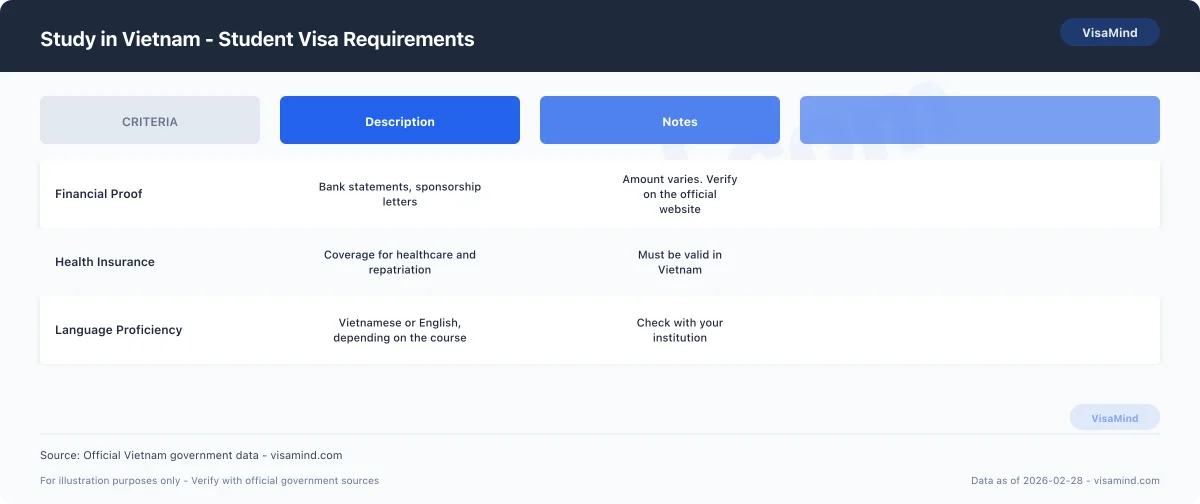
Obtaining the appropriate visa is a crucial step. The Student Visa (DH Symbol) is designed for international students pursuing education in Vietnam. Here are the key requirements you need to meet regarding financial proof, health insurance, and language proficiency.
Financial Requirements
To secure a student visa, you must demonstrate that you have adequate financial resources to cover your tuition fees and living expenses while studying in Vietnam. The exact amount varies depending on the institution and location, but it's typically advisable to have at least $10,000 USD available for an academic year. This amount should cover tuition, accommodation, and basic living costs. For more detailed information, refer to the Financial Requirements.
Health Insurance
Health insurance is mandatory for all international students in Vietnam to ensure access to medical services during their stay. You must provide proof of health insurance coverage when applying for your visa. This insurance should cover medical emergencies, hospitalization, and routine check-ups. Some universities might offer their own insurance plans, or you may choose a private provider that covers Vietnam. Verify the policy details with your chosen institution.
Language Proficiency
While Vietnam offers programs in both Vietnamese and English, you must meet language requirements specific to your chosen course of study. If your program is in Vietnamese, you may need to demonstrate proficiency through a test like the Vietnamese Language Proficiency Test. For English programs, tests like TOEFL or IELTS with scores as specified by the institution are generally required. Check with your university for their specific language requirements.
Comparison Table: Key Student Visa Requirements
| Requirement | Details |
|---|---|
| Financial Proof | At least $10,000 USD for tuition and living expenses per academic year |
| Health Insurance | Mandatory; coverage for medical emergencies, hospitalization, and check-ups required |
| Language Proficiency | Vietnamese or English proficiency as per course requirements (tests like TOEFL/IELTS) |
Important: Incomplete or inaccurate information may lead to visa application rejection. Ensure all documents are in order before lodging your application.
For a comprehensive list of documents needed for your visa application, visit the Documents Checklist. Additionally, familiarize yourself with the application process by checking the How To Apply guide.
The Application Process
#Gather Required Documents
To apply for a Vietnam Study E-visa, you need to prepare specific documents. This includes a digital image of your passport's data page and a recent photograph of yourself. Ensure that the portrait photo is smaller than 50KB and that the passport image is under 200KB. Having correctly formatted documents is crucial to avoid application rejection.
Important: Missing or incorrectly formatted information can result in application rejection, so double-check your documents before proceeding.
Submit Your Application Online
Once your documents are ready, proceed to the E Visa application process with the Immigration Department of Vietnam. You will need to enter your personal details and upload the necessary documents. During this process, you will also select whether you need a single-entry or multiple-entry visa, depending on your study plans in Vietnam.
Pay the E-visa Fee
After submitting your application, you will be required to pay the E-visa fee. The payment must be made electronically as part of the application process. Be sure to verify the current fee amount on the official website to ensure accuracy.
Check Your Application Status
Once your application is submitted, you can track its progress by entering your registration code, registration email, and date of birth in the E-visa search menu. It is important to monitor your application status regularly until it is approved.
Print and Use Your E-visa
If your application is approved, you will receive an electronic visa. Print a copy of your E-visa to present upon arrival in Vietnam. Having a printed copy is essential for your entry into the country.
Tip: Applying for your E-visa well in advance of your intended travel date helps ensure you have adequate time to address any potential issues.
By following these steps, you can successfully apply for a Vietnam Study E-visa. For more detailed guidance on the application process, refer to our How To Apply guide, which offers additional tips and insights.
Working While Studying
#When studying in Vietnam, international students often seek opportunities to work part-time to support their living expenses and gain valuable experience. However, it's important to be aware of the specific regulations governing work for students on a Student Visa (DH Symbol) in Vietnam.
How Many Hours Can You Work?
Students holding a valid Student Visa in Vietnam are permitted to work part-time. Typically, international students are allowed to work up to 20 hours per week during academic terms. During breaks or holidays, students may work full-time. It's crucial to adhere to these limits to avoid any potential issues with your visa status.
Restrictions on Employment
While working part-time is permissible, there are several restrictions that you should keep in mind:
-
Type of Work: Students are generally allowed to engage in jobs that do not interfere with their studies. Common roles include tutoring, translation services, or positions in the service industry.
-
Employer Requirements: Employers hiring international students must ensure that their work does not exceed the allowed hours and that it complies with local labor laws.
-
Legal Compliance: Ensure that your employment is formalized with a contract and that any necessary work permits are obtained if required.
Important: Failing to comply with work hour restrictions or engaging in unauthorized employment can result in penalties, including the revocation of your Student Visa.
Finding Part-Time Work
To find part-time work, students can explore opportunities through university career services, online job portals, or local networking events. It's advisable to have a good command of Vietnamese to increase your employment prospects, although there are opportunities where English proficiency is sufficient.
For more information on the Student Visa (DH Symbol) and other visa types, such as the E Visa, refer to the relevant sections on the Immigration Department of Vietnam's website. Additionally, consider reviewing the Visa Extension Guide if you plan to extend your stay for work or further study.
By understanding these regulations, you can make the most of your study experience in Vietnam while gaining valuable work experience.
After Graduation
#After completing your studies in Vietnam, you may be interested in exploring your options for staying in the country to work. The Immigration Department of Vietnam offers several pathways for international graduates to remain and gain work experience. Below, we explore some of the key options available to you.
Post-Study Work Options
Upon graduation, international students can consider applying for a Work Visa (LD), a common route for those wishing to transition from study to employment in Vietnam. This visa allows you to work legally and is a crucial step if you intend to establish a career in the country.
To obtain a Work Visa, you will typically need:
- A valid job offer from a Vietnamese employer
- An approved work permit
- Necessary documents such as your degree certificate and a health check
Employers often assist with the work permit process, as it involves coordination with the Department of Labor, Invalids, and Social Affairs.
Temporary Residence Cards
Another viable option is applying for a Temporary Residence Card, which allows you to live and work in Vietnam for an extended period without needing to frequently renew your visa. This card is particularly beneficial if you plan to stay long-term.
Tip: A Temporary Residence Card is generally valid for 1-3 years, making it a convenient alternative to short-term visas.
Transitioning to Permanent Residency
For those considering a more permanent stay, pathways to permanent residency are also available, although they generally require a longer period of residence and fulfillment of specific criteria, such as contributions to the community or having a Vietnamese spouse.
Common Pitfalls to Avoid
When navigating post-study work options, ensure that all documentation is accurate and complete. Applications can be rejected due to missing or incorrect information, so double-check that all entries, particularly personal details and job offer specifics, are correct.
Important: Ensure your portrait photo and passport image meet size requirements (50KB and 200KB respectively) to avoid delays.
Key Considerations
- Job Market: Research the Vietnamese job market in your field to understand demand and potential employers.
- Language Skills: Improving your Vietnamese language skills can significantly enhance your employment prospects.
- Networking: Engage with local professional networks and career fairs to discover job opportunities.
For more information on work permits and visas, you may refer to the Work Permit and Work Ld pages. Be sure to verify current requirements and processes on the official Immigration Department website as they can change.
By understanding these pathways and preparing accordingly, you can successfully transition from student life to a professional career in Vietnam.
Pathway to Permanent Residence
#In Vietnam, transitioning from a student to a permanent resident involves a series of steps that leverage your educational and professional achievements. Here’s a detailed look at how studying in Vietnam can pave the way to obtaining permanent residence.
The Pathway from Student to Permanent Resident
After completing your studies in Vietnam, you may be eligible to apply for a Temporary Residence Card, which can be an essential step toward permanent residency. This card allows you to stay and work in Vietnam legally, offering you the opportunity to gain valuable professional experience.
- Eligibility for Temporary Residence Card:
- Hold a valid Student Visa
- Have a job offer from a Vietnamese employer
- Meet specific financial and legal requirements
Benefits of a Temporary Residence Card
Obtaining a Temporary Residence Card provides several benefits that support your journey to permanent residency:
- Legal Employment: Allows you to work in Vietnam without a separate Work Permit.
- Extended Stay: Offers a longer duration of stay compared to standard visas.
- Family Inclusion: Possibility to include family members in your residency application.
Tip: Start your Temporary Residence Card application early as the process can take several weeks.
Transitioning to Permanent Residence
Once you have established yourself with a Temporary Residence Card, you can pursue a Permanent Residence Card. This step involves meeting additional criteria, such as a longer duration of stay and contributions to Vietnamese society.
- Requirements for Permanent Residence:
- Continuous residence in Vietnam for a specified period
- Demonstrated financial stability
- No criminal record
For more detailed guidance, consult the Permanent Residence Card requirements and process.
Potential Challenges
Navigating the transition from a student to a permanent resident can present challenges. Common hurdles include ensuring all documentation is correctly prepared and understanding the specific criteria for each stage of residency.
- Document Accuracy: Missing or incorrect information can lead to delays or rejections.
- Size Restrictions: Ensure your passport image and photo meet the size requirements to avoid issues with the E-visa application.
Important: Always verify the most current requirements and procedures on the official Immigration Department of Vietnam website to stay updated on any changes or new policies.
Common Mistakes
#It's important to be aware of common pitfalls that can lead to delays or rejections in your visa application. Understanding these issues can help you better prepare your application and increase your chances of success.
Financial Requirements and Genuine Intent
-
Insufficient Funds: One of the most common reasons for visa rejection is not demonstrating adequate financial means to support your studies and living expenses in Vietnam. Ensure you have the required documentation to prove your financial stability. For more detailed guidelines, refer to the Financial Requirements guide.
-
Genuine Student Intent: Immigration authorities need to be convinced that your primary purpose for entering Vietnam is to study. Providing a clear study plan and reason for choosing Vietnam as your destination can help establish your genuine intent. Be prepared to explain this during any interviews or in written statements if required.
Application Errors
-
Incorrect or Missing Information: Applications can be rejected if they contain errors or omissions. Double-check all personal details and ensure your passport information matches exactly what is provided in your application. Utilizing the Documents Checklist can help you avoid these errors.
-
Document Upload Issues: Pay close attention to the specifications for document uploads. Portrait photos must be smaller than 50KB, and passport images must be smaller than 200KB. Failure to meet these requirements can lead to processing delays or rejections.
Tip: Always keep a backup of the documents you upload and note down your application reference number for future tracking.
Visa Application Process
-
Lack of Supporting Documents: Supporting documents such as admission letters from Vietnamese educational institutions are crucial. Make sure to have all necessary documents ready before you lodge your application.
-
Failure to Follow Up: After submission, it's important to monitor your application status. You can use your registration code, email, and date of birth to check the result via the E-visa search menu. For more insights into comparing different visa types, you can explore the E Visa Vs Visa On Arrival guide.
Understanding these common mistakes and proactively addressing them can significantly improve your chances of a successful visa application. Pay close attention to the details, and make sure you meet all requirements set by the Immigration Department of Vietnam.
What It Actually Costs
#Studying in Vietnam offers a unique experience, combining affordable education with rich cultural exposure. Understanding the costs involved is crucial for planning your educational journey.
Tuition Fees in Vietnam
Tuition fees in Vietnam can vary widely depending on the institution and the course of study. Here's a general overview:
| Institution Type | Tuition Range (per year) |
|---|---|
| Public Universities | $1,000 to $3,000 USD |
| Private Universities | $2,000 to $6,000 USD |
| International Programs | $4,000 to $8,000 USD |
Public universities tend to be more affordable, but international programs offer additional benefits such as courses in English and international accreditation.
Living Costs
Living in Vietnam is relatively inexpensive compared to Western countries. Here are some average monthly costs:
| Expense Type | Monthly Cost |
|---|---|
| Accommodation | $200 to $500 USD |
| Food and Groceries | $100 to $200 USD |
| Transportation | $20 to $50 USD |
| Miscellaneous | $50 to $100 USD |
Tip: To save on accommodation, consider shared housing or student dormitories, which are often more economical.
Financial Requirements
When applying for a Student Visa (DH Symbol), you need to demonstrate sufficient financial resources to cover your tuition and living expenses. This typically involves providing bank statements or financial guarantees.
Important Considerations
- Ensure your budget accounts for unexpected expenses, such as medical emergencies or travel.
- Check the Financial Requirements for the most up-to-date information on financial documentation needed for your visa application.
- Consider additional costs like health insurance, which is essential for international students.
Important: Always verify current tuition and living costs on the official website of your chosen institution and the Immigration Department of Vietnam, as prices can fluctuate.
Day-to-Day Student Life
#- Mandatory Coverage: As a student in Vietnam, it's crucial to have health insurance to cover medical expenses. Many universities offer health insurance plans as part of their student services.
- Local Providers: You can choose from several local insurance companies that provide comprehensive health coverage specifically designed for international students.
- Cost and Coverage: Health insurance costs vary depending on the provider and plan. As of 2023, expect to pay around $100 to $200 per year. Verify on the official website for the latest rates.
Housing Options
- University Dormitories: Most universities in Vietnam provide on-campus housing, which is an affordable and convenient option for international students. Dormitory fees generally range from $30 to $60 per month.
- Private Rentals: Renting an apartment or a room in a shared house is another common option. Prices vary by city; for instance, in Ho Chi Minh City, you might pay between $200 and $500 monthly.
- Homestays: Living with a Vietnamese family through a homestay can offer cultural immersion. Costs can range from $150 to $300 per month, including meals.
Banking for Students
- Opening a Bank Account: To manage finances easily, students are advised to open a local bank account. Vietnamese banks such as Vietcombank and BIDV offer accounts for international students.
- Required Documents: Typically, you will need your passport, student visa, and proof of enrollment to open an account.
- Currency and Transactions: The local currency is the Vietnamese Dong (VND). It's advisable for students to use their local bank accounts for daily transactions to avoid foreign transaction fees.
Tip: When opening a bank account, inquire about student-friendly options that waive maintenance fees or offer better exchange rates.
For more detailed guidance on managing your finances and other aspects of student life, consider reviewing our Visa Extension Guide and E Visa Vs Visa On Arrival.
Real Student Visa Stories
#Emily, a prospective student from Canada, faced an unexpected challenge when applying for her Vietnam Study E-visa. Despite submitting all necessary documents, her application was initially rejected because her portrait photo exceeded the required size limit of 50KB. Determined to study at a university in Ho Chi Minh City, Emily quickly took action. She used an online tool to resize her photo to meet the specifications and re-uploaded it through the Immigration Department of Vietnam's official portal. Within a week of resubmission, her e-visa was approved, allowing her to begin her studies on time.
Scenario: Overcoming Missing Information for a Successful E-Visa Application
Raj, an aspiring engineer from India, encountered difficulties when he realized his Vietnam Study E-visa application was incomplete due to missing information from his passport data page. Initially anxious about the potential delay, Raj promptly contacted the Immigration Department's helpline for guidance. He was advised to reapply, ensuring all fields were accurately filled and required documents were uploaded. By meticulously following the Documents Checklist, Raj successfully submitted a complete application. Within ten days, he received confirmation of his e-visa approval, enabling him to attend his university's orientation program without delay.
Important: Always double-check document sizes and completeness before submitting your application to avoid rejections.
FAQs
What is the fee for obtaining a Study E-visa for Vietnam?
How can I switch from a Vietnam Study Visa to a work visa after graduation?
What should I do if my Vietnam Study Visa application is rejected due to incorrect information?
Can a Vietnam Study Visa be converted to a permanent residence permit?
Is it possible to apply for a Vietnam Study Visa while residing outside Vietnam?
How long does it take for the Vietnam Immigration Department to process a Study E-visa?
What is the maximum file size for a passport image when applying for a Vietnam Study E-visa?
Sources
Last reviewed: March 1, 2026
VisaMind provides informational guidance only and is not a government agency. This is not legal advice. Requirements can change and eligibility depends on your specific facts. If your case is complex or high-stakes, consult a licensed immigration attorney.
Next steps
Requirements vary by nationality, purpose, timeline, and case details. Use Find My Visa to get a personalized checklist for Vietnam with official sources and deadlines.
Find my visa