Official sources referenced
Is This Guide for You?
#A Post-Graduation Work Permit (PGWP) can be your ticket to gaining valuable Canadian work experience, which is a significant step towards becoming a Permanent Resident (PR) of Canada. If you have recently graduated from a designated learning institution in Canada, you may be eligible to apply for a PGWP, which allows you to work in Canada for up to three years, depending on the length of your study program. This guide is intended for those international graduates who are looking to transition from a PGWP to PR status through various pathways offered by Immigration, Refugees and Citizenship Canada (IRCC).
Who Should Use This Guide?
This guide is particularly beneficial if you hold a PGWP and aim to leverage your Canadian work experience to apply for permanent residency. It is also relevant for those interested in learning about the different pathways, including Express Entry and the Canadian Experience Class (CEC), which specifically cater to individuals with Canadian work experience. For those considering provincial routes, the Provincial Nominee Program (PNP) offers additional opportunities to obtain PR status based on specific regional demands and criteria.
When to Use This Guide
You should consider using this guide if you are nearing the end of your academic program in Canada and are planning your next steps towards permanent residency. It will be useful if you are about to apply for a PGWP or have recently obtained one and want to understand how to strategically position yourself for PR application. This guide will help you navigate through the requirements, timelines, and processes associated with transitioning from a temporary work permit holder to a permanent resident.
Tip: Applying for permanent residency while your PGWP is still valid can significantly enhance your chances of remaining in Canada without interruption. Consider exploring options like the Express Entry Guide to understand how to maximize your Comprehensive Ranking System (CRS) score.
For more information on bridging permits that can allow you to continue working while your PR application is in process, check out the Bridging Open Work Permit. Additionally, understanding the PR Pathways Overview can provide a broader perspective on all available options.
Overview
#Navigating the transition from a Post-Graduation Work Permit (PGWP) to Permanent Residence (PR) in Canada is a significant step for many international graduates. The process involves understanding various pathways and requirements set by Immigration, Refugees and Citizenship Canada (IRCC). This overview provides insight into how international graduates can leverage their work experience gained through a PGWP to achieve PR status.
What is the PGWP?
The Post-Graduation Work Permit (PGWP) is an open work permit that allows international students who have completed an eligible program at a Canadian designated learning institution to work in Canada. The duration of the PGWP can be up to three years, depending on the length of the study program. This permit is a critical stepping stone for gaining Canadian work experience, which is highly valuable when applying for PR.
Pathways to Permanent Residence
After gaining work experience in Canada, PGWP holders can explore several pathways to transition to PR status. Here are some of the most common options:
-
Express Entry: This is a points-based system that manages applications for three economic immigration programs: the Canadian Experience Class (CEC), the Federal Skilled Worker Program (FSW), and the Federal Skilled Trades Program (FST). Many PGWP holders use the CEC stream to apply for PR, as it specifically caters to individuals with Canadian work experience.
-
Provincial Nominee Program (PNP): Each province and territory in Canada has its own PNP, which allows them to nominate individuals who wish to immigrate to Canada and are interested in settling in a particular province. Some provinces have specific streams for international graduates and workers with experience in high-demand occupations.
-
Atlantic Immigration Program (AIP): This program is designed for skilled workers and international graduates who want to work and live in one of Canada's four Atlantic provinces. It focuses on filling labor shortages in the region and requires a job offer from a designated employer.
Important Considerations
When planning your transition from PGWP to PR, keep the following in mind:
-
Timing: It's essential to start planning your PR application early, as some pathways have specific work experience requirements. For example, the Canadian Experience Class requires at least 12 months of skilled work experience in Canada.
-
Eligibility Criteria: Each PR pathway has its own eligibility criteria, which may include language proficiency, education, work experience, and adaptability. Ensure you meet the criteria for your chosen program.
-
Document Preparation: Gather and organize the necessary documentation, such as proof of work experience, language test results, and educational credentials. Proper documentation is crucial for a successful application.
Tip: Consider applying for a Bridging Open Work Permit if your PGWP is expiring and you have already submitted a PR application. This permit allows you to continue working while your PR application is processed.
Resources and Support
Utilizing available resources can make your journey from PGWP to PR smoother:
- PR Pathways Overview: A comprehensive guide to understanding different PR pathways.
- Express Entry Guide: Detailed information on applying through the Express Entry system.
- Bridging Open Work Permit: Learn how to extend your stay in Canada while waiting for your PR decision.
Understanding the options and requirements for transitioning from a PGWP to PR is crucial for international graduates wishing to make Canada their permanent home. By leveraging the right resources and pathways, you can effectively navigate this process and achieve your immigration goals.
Eligibility and Requirements
#To transition from a Post-Graduation Work Permit (PGWP) to Permanent Residence (PR) in Canada, understanding the eligibility criteria and requirements is essential. Below is a detailed breakdown of who qualifies, what key requirements are involved, and the necessary prerequisites for this pathway.
Eligibility Criteria
-
Valid PGWP Holder: You must hold a valid Post-Graduation Work Permit. This permit allows you to gain valuable Canadian work experience, which is a crucial factor for many PR pathways like the Canadian Experience Class (CEC).
-
Work Experience: Accumulate at least one year of full-time work experience, or the equivalent in part-time work, in a skilled occupation (NOC 0, A, or B) in Canada. This is a common requirement for PR programs such as Express Entry.
-
Language Proficiency: Demonstrate proficiency in English or French through standardized tests such as IELTS, CELPIP, or TEF, depending on the program you're applying for.
Key Requirements
-
Education: Completion of a program of study at an eligible Canadian post-secondary institution. This is a fundamental requirement for obtaining a PGWP, which is pivotal for gaining the work experience needed for PR.
-
Financial Stability: Provide proof of financial resources to support yourself and your family, if applicable. This may include bank statements or employment income.
-
Admissibility: Meet health and security requirements as determined by IRCC, which may include medical examinations and police certificates. More details on these aspects can be found in the Medicals And Police Certificates guide.
Prerequisites for Application
-
Express Entry Profile: If you are applying through the Express Entry system, create an online profile and receive an Invitation to Apply (ITA) before you can proceed with your PR application.
-
Provincial Nominee Program (PNP): If opting for a PNP, you must receive a nomination from a Canadian province or territory. Each PNP has its own criteria, so it's important to research and determine if you meet the specific requirements.
Tip: Consider applying for a Bridging Open Work Permit if your PGWP is about to expire and you need to maintain your work status in Canada while awaiting your PR decision.
Additional Considerations
-
Program-Specific Criteria: Each PR program might have unique eligibility criteria. For example, certain streams of the Provincial Nominee Program (PNP) or Rural and Northern Immigration Pilot (RNIP) may target specific occupations or regions.
-
Document Preparation: Gather necessary documents such as proof of work experience, language test results, educational credentials, and financial documents. Proper documentation is crucial for a successful application process.
Important: Ensure all information is accurate and complete to avoid processing delays or rejections. Always verify the latest requirements on the official IRCC website as they can change.
By understanding these eligibility criteria and requirements, you can effectively navigate the pathway from PGWP to PR in Canada, ensuring you meet all necessary conditions for your application. For further details, explore the PR Pathways Overview to determine the best route for your circumstances.
Step-by-Step Process
#Obtain a Post-Graduation Work Permit (PGWP)
The first step in transitioning from a Post-Graduation Work Permit (PGWP) to Permanent Residence (PR) in Canada is obtaining a PGWP itself. This work permit allows you to gain Canadian work experience, which is crucial for eligibility in many PR programs like Canadian Experience Class (CEC) and Provincial Nominee Program (PNP). Ensure your PGWP is valid and consider extending it if necessary through a Bridging Open Work Permit as you prepare your PR application.
Choose the Right PR Pathway
With your PGWP, you need to decide which pathway to Permanent Residence is most suitable for you. Popular options include the Express Entry system, which manages applications for the Canadian Experience Class, Federal Skilled Worker Program, and Federal Skilled Trades Program. Alternatively, you may consider the Provincial Nominee Program (PNP) if you wish to live in a specific province, or the Rural and Northern Immigration Pilot (RNIP) for smaller communities.
Gather Required Documents
Once you've chosen your pathway, gather all necessary documents. These typically include proof of work experience, language test results, and educational credentials. If you're applying through Express Entry, you'll need a valid Express Entry profile. For the PNP, you'll require a nomination from a province or territory. Keep track of deadlines and ensure all documents are up-to-date.
Tip: Keep digital copies of all your documents. This will simplify the process of uploading and submitting them when required.
Submit Your PR Application
With your documents in order, it's time to submit your PR application. For Express Entry, this involves entering the pool and receiving an Invitation to Apply (ITA) before submitting your complete application. For PNP, follow the specific application instructions provided by the province. Be mindful of the requirements and ensure your application is complete to avoid delays.
Wait for Application Processing
After submission, your application will be processed by Immigration, Refugees and Citizenship Canada (IRCC). Processing times can vary depending on the program and your specific case. As of 2023, Express Entry applications typically take around six months to process once submitted. Verify the current processing times on the IRCC website to manage your expectations.
Important: Keep your contact information up-to-date with IRCC, as they may need to communicate with you during the processing of your application.
Receive Confirmation of Permanent Residence (COPR)
If your application is successful, IRCC will issue a Confirmation of Permanent Residence (COPR). This document confirms your status as a permanent resident of Canada. Follow the instructions to complete the landing process either at a Canadian port of entry or through an IRCC office if you're already in Canada.
Transitioning from a PGWP to PR involves careful planning and timely submission of documents. By following these steps, you can navigate the process more efficiently and increase your chances of successfully becoming a permanent resident in Canada.
Fees, Timeline, and What to Expect
#
Transitioning from a Post-Graduation Work Permit (PGWP) to Permanent Residency (PR) in Canada involves several steps and varying costs. Understanding the associated fees, timelines, and what to expect can help you plan your journey effectively.
Fees and Costs
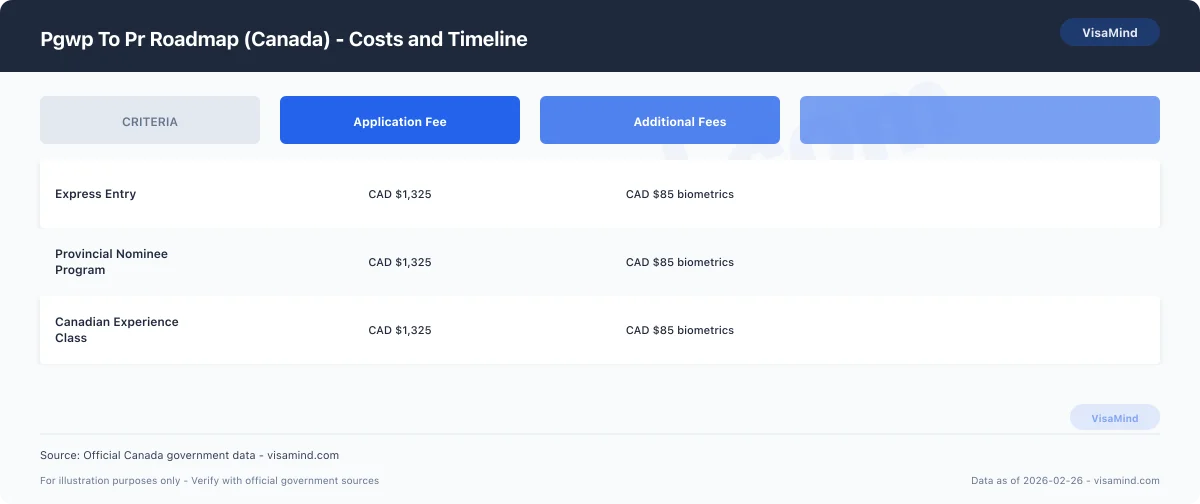
The cost of transitioning from a PGWP to PR can vary depending on the specific PR pathway you choose. Below is a general comparison of some common PR pathways:
| PR Pathway | Application Fee (CAD) | Additional Costs |
|---|---|---|
| Express Entry | 1,325 | Language tests, educational assessments, biometrics |
| Provincial Nominee Program (PNP) | 1,325 + Provincial fees | Language tests, educational assessments, biometrics |
| Canadian Experience Class (CEC) | 1,325 | Language tests, educational assessments, biometrics |
Timeline for Processing
Processing times can vary significantly depending on the PR pathway and current IRCC processing volumes. Here's a general timeline for some common pathways:
| PR Pathway | Estimated Processing Time |
|---|---|
| Express Entry | 6 months |
| Provincial Nominee Program (PNP) | 15 to 19 months |
| Canadian Experience Class (CEC) | 6 months |
Tip: Regularly check the IRCC Processing Times for the most up-to-date information.
What to Expect
-
Document Preparation: Gather necessary documents such as language test results, educational credentials, and work experience confirmations. Refer to the Express Entry Document Checklist for more details.
-
Application Submission: Once your documents are ready, you can lodge your application through the appropriate channels. Ensure all information is accurate to avoid delays.
-
Biometrics and Medical Exams: Be prepared to give biometrics and possibly undergo a medical examination, depending on the specific requirements of your chosen PR pathway. Check out the Medicals And Police Certificates guide for more information.
-
Processing and Decision: After submission, your application will be processed by IRCC. You will receive updates and may be required to provide additional information or attend an interview.
Important: Missing deadlines or providing incomplete information can result in application delays or refusals. Always double-check timelines and requirements.
By understanding the fees, processing timelines, and what to expect, you can better prepare for your transition from a PGWP to PR in Canada. For more detailed guidance, consider reviewing resources like the PR Pathways Overview.
What Experienced Applicants Recommend
#Important: Ensure your Post-Graduation Work Permit (PGWP) is valid when applying for permanent residency (PR). An expired PGWP can complicate your application process and eligibility.
Networking and Building Connections
- Join Professional Networks: Engaging with industry-specific groups can provide valuable insights and opportunities. Consider joining associations related to your field in Canada.
- Attend Workshops and Seminars: Many organizations offer events that focus on immigration pathways and professional development. These can be excellent for expanding your network and understanding the Canadian job market.
- Connect with Alumni: Reach out to alumni from your educational institution who have successfully transitioned from PGWP to PR. They can offer firsthand advice and potentially mentor you through the process.
Preparing Your Application
- Organize Your Documents Early: Begin gathering required documents well before your PGWP expires. Key documents often include proof of work experience, language test results, and educational credentials. Check the Express Entry Document Checklist for specifics.
- Keep Copies of Everything: Maintain copies of all submitted documents and correspondence with IRCC for your records.
- Stay Informed on Eligibility Requirements: Eligibility criteria can change. Regularly check the IRCC website or consult with an immigration consultant to ensure you meet all requirements for programs like Express Entry or the Provincial Nominee Program (PNP).
Utilizing Provincial Nominee Programs (PNP)
- Research Provincial Opportunities: Each province has unique streams that may favor certain occupations or skills. Investigate which province aligns best with your work experience and qualifications.
- Stay Updated on PNP Announcements: Provinces often release updates on their PNPs, including invitations to apply. Regularly check their official websites or sign up for newsletters.
- Tailor Your Application to Provincial Needs: Highlight skills and experiences that meet the specific demands of the province’s labor market.
Managing Timelines and Expectations
- Understand Processing Times: Familiarize yourself with processing times for different PR pathways. Use the Processing Times Explained guide for current estimates.
- Plan for PGWP Expiry: If you anticipate your PGWP will expire before obtaining PR, consider applying for a Bridging Open Work Permit to maintain your work status in Canada.
- Be Patient and Persistent: The journey from PGWP to PR can be lengthy and requires persistence. Stay organized and proactive in following up on your application status.
Tip: Lodge your application online whenever possible to receive immediate confirmation and updates on your submission status. This can help avoid delays and provide peace of mind.
By following these recommendations and staying informed, you'll be better prepared to navigate the transition from a PGWP to PR in Canada.
What Goes Wrong Most Often
#Navigating the transition from a Post-Graduation Work Permit (PGWP) to Permanent Residence (PR) in Canada can be complex. Many applicants face common challenges that can delay or jeopardize their application. Here's how to avoid these pitfalls:
Eligibility Misunderstandings
- Not Meeting Work Experience Requirements: Many candidates apply for PR before accumulating the necessary work experience. Programs like Canadian Experience Class require specific durations and types of work. Make sure to verify the requirements for your chosen pathway.
- Misjudging Language Proficiency: Your language test results must meet the minimum standards of your selected immigration program. Regularly check the IRCC website for the latest language requirements.
Document Errors and Omissions
- Incomplete or Incorrect Documentation: Submitting incomplete documents or errors in your application can lead to delays or refusals. Use the Express Entry Document Checklist to ensure you have all necessary documents.
- Not Updating Personal Information: Changes in your personal information, such as address or marital status, must be updated promptly with IRCC to avoid complications.
Technical and Submission Issues
- Incorrect Form Usage: Using outdated forms or filling them out improperly is a common mistake. Ensure all forms are the latest versions by downloading them directly from the IRCC website.
- Opening Forms on Unsupported Devices: Attempting to open IRCC forms on tablets or mobile phones can cause errors. Always use a computer with Adobe Acrobat Reader.
Tip: Always save a copy of your application and supporting documents in a secure location for your records.
Financial and Proof of Funds Mistakes
- Insufficient Proof of Funds: Some PR pathways require proof of sufficient funds. Make sure your financial documents are up-to-date and meet the required thresholds as outlined on the IRCC website.
- Misunderstanding Fees: Be aware of the various fees associated with your application and ensure they are paid on time to avoid processing delays.
For more detailed processes, consider referencing the PR Pathways Overview to understand the nuances of different programs. Avoiding these common errors can significantly improve your chances of a successful transition from PGWP to PR in Canada.
Real-World Examples
#An IT professional, recently graduated from a Canadian university, was working under a Post-Graduation Work Permit (PGWP). With a strong desire to continue living and working in Canada, the individual aimed to transition to permanent residency through the Canadian Experience Class (CEC). While the PGWP allowed for valuable work experience, the key was meeting the required criteria for the CEC. This involved accumulating at least one year of skilled work experience in Canada under a valid work permit. Once the eligibility was confirmed, the professional created an Express Entry profile through the IRCC portal, which streamlined the application process. The wait for an Invitation to Apply (ITA) was nerve-wracking but finally arrived within six months. After submitting all required documents, including a police certificate and proof of funds, the individual was granted permanent residency within eight months of applying.
Scenario: Navigating the Provincial Nominee Program for Permanent Residency
A civil engineer, employed in a high-demand occupation in Alberta, was on a Post-Graduation Work Permit and sought a pathway to permanent residency. Recognizing that Alberta had a specific need for skilled engineers, the individual targeted the Alberta Immigrant Nominee Program (AINP), a stream within the broader Provincial Nominee Program (PNP). After submitting an Expression of Interest (EOI) to the AINP, the engineer was selected due to their specialized skills and work experience. The nomination significantly boosted their Comprehensive Ranking System (CRS) score in the Express Entry pool. This led to an ITA for permanent residency. The process required careful documentation and adherence to both provincial and federal guidelines, but ultimately resulted in a successful transition to permanent residency status within a year. For more on the PNP, consider exploring the PNP Guide for detailed steps and requirements.
Scenario: Leveraging the Rural and Northern Immigration Pilot for PR
A healthcare worker in a rural community in Manitoba was completing their PGWP period and aimed to secure permanent residency. With the community's endorsement, they applied through the Rural and Northern Immigration Pilot (RNIP), which focuses on attracting newcomers to smaller communities. This process involved gathering support from local employers and demonstrating a deep commitment to the community's growth. The healthcare worker received a job offer from a participating employer and submitted their application through the IRCC portal. After a thorough review, the endorsement was granted, and the application for permanent residency was processed in approximately nine months. This pathway not only fulfilled personal aspirations but also contributed significantly to community development. You can learn more about this program by visiting the Rural Community Immigration section.
FAQs
What do experienced applicants recommend for the Pgwp To Pr Roadmap (Canada) process?
What are common pitfalls in the Pgwp To Pr Roadmap (Canada) process?
Can I switch from a PGWP to PR status in Canada?
How can I ensure my personal information is protected when following the Pgwp To Pr Roadmap (Canada)?
What is the role of IRCC in the Pgwp To Pr Roadmap (Canada)?
How do I download the Canada Pgwp To Pr Roadmap instructions?
What requirements must I meet for the Pgwp To Pr Roadmap (Canada)?
Sources
Last reviewed: March 1, 2026
VisaMind provides informational guidance only and is not a government agency. This is not legal advice. Requirements can change and eligibility depends on your specific facts. If your case is complex or high-stakes, consult a licensed immigration attorney.
Next steps
Requirements vary by nationality, purpose, timeline, and case details. Use Find My Visa to get a personalized checklist for Canada with official sources and deadlines.
Find my visa