On this page
- How to Retire in This Country
- Financial and Pension Requirements
- Medical Coverage for Retirees
- The Application Process
- How Retirement Income Is Taxed
- What Retirees Struggle With
- Where Retirees Live
- How Long You Can Stay
- Path to Permanent Residence
- What Other Retirees Did
- Visa options for this goal
- Guides for Spain
- Other goals for Spain
How to Retire in This Country
#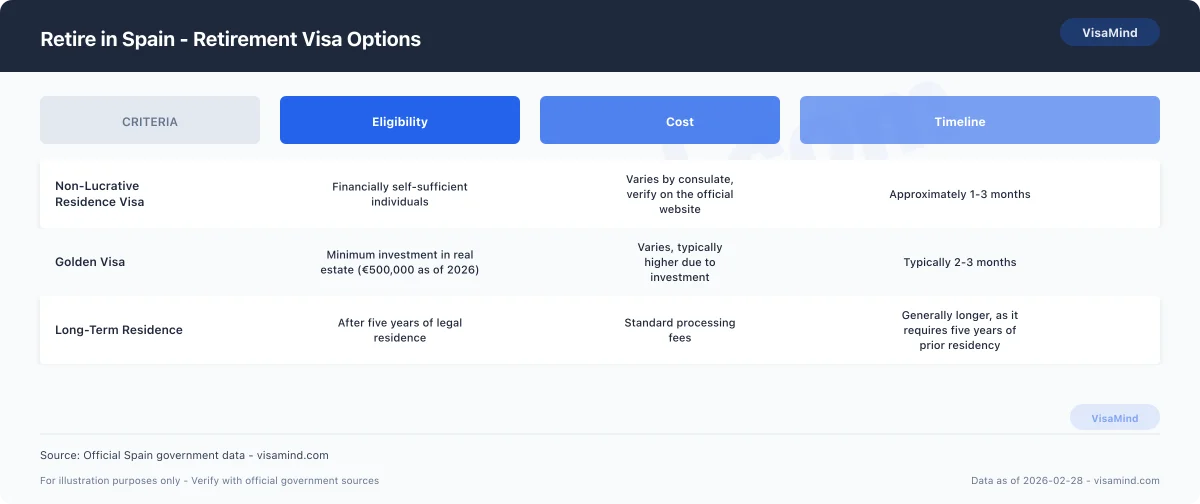
Spain offers enticing options for retirees looking to enjoy their golden years amidst its rich culture and pleasant climate. If you're considering retiring in Spain, understanding the available visa options is essential. Here's a concise overview of the visa categories that cater to retirees wishing to make Spain their home.
Visa Options for Retirees
| Visa Type | Eligibility | Cost | Processing Time |
|---|---|---|---|
| Non-Lucrative Residence Visa | Non-EU nationals with sufficient financial means and no intention to work in Spain | €80 to €123 (as of 2023, verify on the official website) | 3 to 6 months |
| Golden Visa | Investors who purchase property worth at least €500,000 or invest significantly in Spanish businesses or treasury bonds | Starts at €500,000 investment | 2 to 3 months |
| Long-Term Residence | Residents who have lived in Spain for five consecutive years | Varies by consulate | 3 to 6 months |
Understanding the Non-Lucrative Residence Visa
The Non-Lucrative Residence Visa is the most common choice for retirees. This visa requires you to demonstrate sufficient financial resources to support yourself without working in Spain. As a retiree, showing proof of pension income or savings could meet this requirement. Importantly, this visa allows you to stay in Spain longer than the typical 90-day Schengen Tourist Visa, making it ideal for those who wish to settle more permanently.
Tip: Consider opening a local bank account in Spain to streamline the process of transferring your pension or savings.
Exploring the Golden Visa
For those with significant capital, the Golden Visa offers a more flexible path. This visa is particularly attractive for retirees who wish to invest in Spanish real estate. By purchasing property worth at least €500,000, you not only gain residence rights but also create an investment opportunity that could appreciate over time. This visa also allows for family reunification, meaning your spouse and dependents can join you under the same visa.
Long-Term Residence: A Pathway After Five Years
If you have already spent five years in Spain under a residence visa, the Long-Term Residence permit is an option for permanent settlement. This visa offers indefinite residence rights, granting you a similar status to Spanish citizens concerning employment and social services.
Key Considerations
- Financial Proof: Prepare documentation that clearly demonstrates your financial independence, such as pension statements or bank account balances.
- Healthcare Coverage: Ensure you have comprehensive medical insurance, as this is a requirement for most residence visas (Medical Coverage for Retirees).
- Consular Appointment: Lodge your visa application through the Spanish consulate in your home country. It's crucial to book an appointment well in advance to avoid delays (How To Apply).
Important: Ensure your passport remains valid for at least three months beyond your planned departure date from the Schengen Area to avoid application pitfalls.
For those considering retirement in Spain, these visa options offer a variety of pathways to enjoy the vibrant lifestyle and welcoming communities. Whether through financial independence or investment, Spain provides a warm embrace for those ready to start a new chapter in retirement.
Financial and Pension Requirements
#Understanding the financial and pension requirements is crucial. Here’s a breakdown of what you need to know regarding the necessary financial documentation and income levels needed to apply for residency as a retiree.
Financial Requirements for Retiring in Spain
Spain requires retirees to demonstrate sufficient financial means to support themselves. This can be through pensions, savings, or a combination of both. Below is a detailed overview:
| Requirement | Description |
|---|---|
| Minimum Pension/Income | You must show proof of a regular income. As of 2023, the minimum income required is about €27,115 annually. Verify on the State Secretariat for Migration for the most current figures. |
| Savings | If your pension does not meet the minimum requirement, you can supplement it with savings. It is advised to have substantial savings or assets that can be converted into cash if needed. |
| Bank Deposits | You should maintain a bank account in Spain with a sufficient balance to cover living expenses for at least one year. This is often scrutinized to ensure financial stability. |
Proving Financial Stability
To substantiate your financial situation, you'll need to gather various documents:
- Pension Statements: Provide recent pension statements to prove regular income.
- Bank Statements: Show a history of your savings and current balance. Typically, a six-month statement is required.
- Investment Proofs: If applicable, provide documentation of any investments or assets.
Important Considerations
Important: Ensure your financial documentation is translated into Spanish and authenticated if necessary. This can prevent delays in your application process.
For more detailed guidance, consider visiting the Documents Checklist and Financial Requirements guides.
How to Proceed
Once you have your financial documentation in place, the next steps involve lodging your application with the Spanish consulate in your home country. You can also learn more about the Non-Lucrative Residence Visa or explore options like the Golden Visa for those planning to invest significantly in Spain.
Understanding these financial requirements will help ensure a smoother transition to retirement in Spain. Always consult the official Secretaría de Estado de Migraciones website to verify the latest requirements and figures.
Medical Coverage for Retirees
#Spain's healthcare system is known for its high standards and accessibility, making it an attractive destination for retirees. As you consider retiring in Spain, understanding the healthcare options available to you is crucial. Here’s a breakdown of what you need to know about medical coverage.
Public vs Private Healthcare
Spain offers a comprehensive public healthcare system, known as the Sistema Nacional de Salud (SNS), which provides universal coverage. However, access to public healthcare for retirees depends on your residency status and prior contributions to the Spanish social security system. If you are not eligible for public healthcare, you must secure private health insurance.
- Public Healthcare: Provided free or at a low cost, it includes general practitioners, specialists, and hospital care.
- Private Healthcare: Offers shorter waiting times and a wider selection of specialists. Many retirees opt for private insurance to complement public services.
Important: If you are from a non-EU country retiring in Spain, you will likely need private health insurance to cover all eventualities, as you may not initially be eligible for the SNS.
Mandatory Insurance Requirements
For non-EU retirees, securing private health insurance is a mandatory requirement when applying for a residence visa, such as the Non-Lucrative Residence Visa. The insurance must be:
- Comprehensive and cover all healthcare needs without co-payments
- Valid for the entire duration of your stay in Spain
- Issued by an insurance company authorized to operate in Spain
Quality of Medical Facilities
Spain is renowned for its high-quality medical facilities. Hospitals and clinics, both public and private, are equipped with state-of-the-art technology and staffed by highly trained medical professionals.
- Public Hospitals: Known for their expertise and comprehensive services, often affiliated with major universities.
- Private Clinics: Provide personalized care and shorter waiting times, preferred by those with private insurance.
Tip: Consider investing in a private health plan that includes access to private clinics, especially if you prefer quicker service and more personal attention.
Steps to Secure Health Coverage
- Research Insurance Providers: Compare policies from various companies authorized in Spain.
- Assess Your Needs: Determine whether you will rely solely on private insurance or use it to supplement public healthcare.
- Lodge Your Application: Include proof of health insurance when you apply for the Non-Lucrative Residence Visa.
For more detailed guidance on health coverage options and requirements for retirees in Spain, consult our Retirement Guide and Documents Checklist.
The Application Process
#Schedule Your Appointment
To start the application process for retiring in Spain, you need to schedule an appointment with the Spanish consulate in your home country. It is crucial to book this appointment well in advance, as slots can fill up quickly. Ensure you have all necessary documents ready for submission.
Tip: Aim to schedule your appointment at least three months before your intended move to Spain to allow for any unforeseen delays.
Gather Required Documents
Before attending your appointment, gather all necessary documents. This typically includes:
- A valid passport with at least three months' validity beyond your planned departure from the Schengen area
- Proof of sufficient financial means to support yourself during your stay
- Evidence of accommodation in Spain
- Health insurance coverage valid in Spain
- Recent passport-sized photographs that meet ICAO standards
- Proof of intention to return to your home country
Be prepared for the possibility of the consulate requesting additional documentation.
Submit Your Application
Attend your scheduled appointment at the Spanish consulate to submit your application. During this appointment, your fingerprints will be collected, so ensure you are present in person.
Important: Submit your application at least 15 days before your intended journey to ensure timely processing.
Await Processing
Once your application is submitted, the processing time can vary. However, you should generally expect a decision within 15 calendar days. If additional documents are requested, the process may take longer. You can check typical Processing Times for more specific estimates.
Receive Your Visa
If your application is approved, you will be issued a visa that allows you to retire in Spain. Before moving, familiarize yourself with the requirements for obtaining a residence permit once you arrive in Spain, as this is a separate process managed by the Spanish authorities.
For more detailed guidance on retiring in Spain, consider reviewing the Retirement Guide and ensure you understand the Financial Requirements associated with your move.
How Retirement Income Is Taxed
#When retiring in Spain, understanding how your retirement income is taxed is important for financial planning. Spain has specific rules regarding the taxation of retirement income, and these can vary based on your residency status and the existence of tax treaties with your home country.
Tax Residency and Worldwide Income
If you reside in Spain for more than 183 days in a calendar year, you are generally considered a tax resident. As a tax resident, you are subject to Spanish taxation on your worldwide income. This includes pensions, investment income, and any other income sources, regardless of where they originate.
Important: Consider consulting a tax professional familiar with Spanish tax law to ensure compliance with local regulations and optimize your tax liabilities.
Pension Taxation
Pensions received from abroad are taxable in Spain if you are a resident. However, the specific taxation rates and any potential deductions depend on the nature of the pension and any applicable tax treaties. For instance, public pensions may be taxed differently compared to private pensions.
Tax Treaties
Spain has tax treaties with many countries to avoid double taxation on income. These treaties determine which country has the right to tax specific types of income. For retirees, this often means that pensions may be taxed in the country of residence rather than the country of origin, but this can vary. Review the specific terms of the treaty between Spain and your home country to understand your obligations.
Key Tax Considerations
- Residency Status: Affects how and where your income is taxed.
- Worldwide Income: Spanish residents are taxed on global income.
- Tax Treaties: May offer tax relief or exemptions.
- Consultation: Seek professional advice for personalized planning.
For more information on retiring in Spain, you might find our Retirement Guide helpful, along with details on Financial Requirements for retirees. Understanding the taxation of your retirement income is a critical aspect of enjoying a financially secure retirement in Spain.
What Retirees Struggle With
#Important: Navigating the requirements of retiring in Spain involves understanding several challenges, particularly around financial proof and healthcare coverage.
Financial Proof Challenges
- Sufficient Funds: To retire in Spain, you must demonstrate adequate financial resources to support yourself. This can be a hurdle if your pension or investment income does not meet the threshold set by the Non-Lucrative Residence Visa, which is often used by retirees.
- Fluctuating Income Sources: Changes in exchange rates or investment returns can impact your ability to prove ongoing financial stability. It's crucial to maintain documentation and be prepared to show consistent income streams.
Healthcare Gaps
- Access to Public Healthcare: While Spain offers excellent public healthcare, accessing it can be challenging for retirees without prior contributions to the Spanish system. You may need private health insurance to cover gaps, especially during the initial residency period.
- Private Insurance Requirements: Many retirees must secure comprehensive private health insurance that meets Spanish requirements, which can be costly and requires careful selection to ensure adequate coverage.
Annual Reporting Obligations
- Renewal of Residence Permits: Retirees in Spain must renew their residence permits periodically, typically every one to two years, depending on the visa type. This process often involves resubmitting financial documentation and proof of health insurance.
- Tax Reporting: As a resident, you may be subject to Spanish taxation on worldwide income. Understanding and complying with these obligations can be complex and may require professional advice.
Language Barriers
- Official Documentation: Many official documents and procedures are conducted in Spanish, which can pose challenges for non-Spanish speaking retirees. Translating documents or hiring a translator may be necessary.
- Everyday Communication: Beyond legal requirements, language barriers can affect daily life, from healthcare appointments to social interactions. Engaging in language classes or community groups can help ease these challenges.
For more detailed information on managing these aspects, consult the Retirement Guide and consider the Documents Checklist for essential paperwork.
Where Retirees Live
#Spain is a popular destination for retirees looking to enjoy a pleasant climate, rich culture, and vibrant lifestyle. The country offers various locations that cater to different preferences, whether you're looking for bustling cities, serene coastlines, or charming rural areas. Here are some popular retirement destinations in Spain:
Popular Retirement Destinations
-
Costa del Sol: Known for its sunny weather and beautiful beaches, the Costa del Sol is a favorite among retirees. Towns like Marbella and Málaga offer a mix of leisure and cultural activities.
-
Alicante: Located on the Costa Blanca, Alicante is renowned for its lovely beaches and vibrant expat community. The city's pleasant climate and affordable cost of living make it an attractive choice for retirees.
-
Barcelona: While it can be more expensive than other regions, Barcelona offers a cosmopolitan lifestyle with rich cultural experiences, excellent healthcare, and a well-connected transportation network.
-
Valencia: This city combines the benefits of a coastal lifestyle with urban amenities. Valencia is known for its historic architecture, delicious cuisine, and lively cultural scene.
Cost of Living Comparisons
The cost of living in Spain can vary significantly depending on the region. Here's a quick comparison:
| Location | Monthly Rent for 1-bedroom Apartment (City Center) | Monthly Rent for 1-bedroom Apartment (Outside Center) |
|---|---|---|
| Madrid | €1,000 - €1,500 | €700 - €1,000 |
| Barcelona | €900 - €1,400 | €650 - €900 |
| Valencia | €600 - €900 | €450 - €700 |
| Alicante | €500 - €800 | €400 - €600 |
Important: Prices are approximate and can fluctuate; verify on the official website or local listings for the most current information.
Expat Communities
Spain hosts a diverse range of expat communities, providing a support network for retirees. The Non-Lucrative Residence Visa is a popular option for retirees from non-EU countries, allowing them to live in Spain without engaging in any professional activities. The Costa del Sol and Alicante, in particular, are known for their large English-speaking communities, making them ideal for those looking to connect with fellow expats.
Tip: Consider joining local expat groups or forums to get insights and advice from those who have already made the move.
For more detailed guidance on retiring in Spain and the visa options available, you can check the Retirement Guide and learn more about Long-Term Residence.
How Long You Can Stay
#When retiring in Spain, understanding the duration of your stay is crucial for planning your new lifestyle. The validity of your visa, renewal process, and any reporting requirements are important aspects to consider.
Visa Validity and Duration
The Non-Lucrative Residence Visa is a popular option for retirees, allowing you to reside in Spain for a year initially. After the first year, you can apply to renew your visa. The renewal, if granted, extends your stay for an additional two years.
- Initial Duration: 1 year
- First Renewal: 2 years
- Subsequent Renewals: Every 2 years
For those considering a more permanent move, the Long-Term Residence option can be pursued after five years of continuous residence in Spain.
Renewal Process
To renew your residency permit, you must apply within 60 days before or 90 days after its expiration. The renewal process involves:
- Gathering necessary documents, including proof of financial means and health insurance.
- Submitting your renewal application at the relevant immigration office.
- Awaiting confirmation, which can take several weeks.
Important: Failure to apply for renewal within the designated timeframe may result in the loss of your residency status.
Annual Reporting Requirements
Retirees are generally not subject to extensive annual reporting requirements. However, maintaining updated records with the Spanish authorities is crucial. Ensure that your financial and health insurance documents are current and available upon request.
- Financial Documentation: Prove sufficient resources to support yourself.
- Health Insurance: Must cover Spain and be valid for the duration of your stay.
For a comprehensive understanding of the requirements and options available to you, refer to our Retirement Guide and learn more about different visa types such as the Golden Visa if you plan to invest in Spain. These resources can provide further insight into making Spain your perfect retirement destination.
Path to Permanent Residence
#For retirees looking to enjoy their golden years in Spain, understanding the pathway from a retirement visa to permanent residence is key. While Spain offers several visa options conducive to a comfortable retirement, it’s crucial to consider how these can lead to long-term residence or even citizenship.
Retirement Visa and Permanent Residence
Non-EU nationals typically begin their retirement in Spain with a Non-Lucrative Residence Visa. This visa allows you to reside in Spain without engaging in any professional activities. Initially granted for one year, it can be renewed for two subsequent periods of two years each. After a total of five years, you may apply for Long-Term Residence in Spain.
Timeline to Permanent Residence
- Year 1: Obtain the Non-Lucrative Residence Visa.
- Years 2-5: Renew the visa twice (each for a duration of two years).
- Year 5: Apply for Long-Term Residence.
Tip: Ensure you maintain continuous residence in Spain to qualify for Long-Term Residence. Absences should not exceed ten months in five years, with a maximum of six consecutive months.
Transitioning to Citizenship
After obtaining long-term residence, retirees may eventually qualify for Spanish citizenship. Typically, this requires an additional five years of continuous residence, making it a total of ten years in Spain.
- Years 6-10: Maintain your long-term residence status.
- Year 10: Become eligible to apply for Spanish Citizenship.
Key Considerations
- Financial Stability: Continuous proof of financial means is essential throughout your residency.
- Health Insurance: Maintain comprehensive health coverage.
- Cultural Integration: Familiarity with Spanish language and culture can benefit long-term settlement.
Before embarking on this journey, consult the PR Pathway Guide to ensure you meet all the necessary requirements. Always verify the latest details on the official Secretaría de Estado de Migraciones website to ensure compliance with current regulations.
What Other Retirees Did
#A retired teacher from Canada, Jane had long dreamed of spending her golden years basking in the sun-drenched plazas of Málaga. She decided to apply for a Non-Lucrative Residence Visa to make this dream a reality. Initially overwhelmed by the process, Jane carefully gathered her documents, ensuring she had proof of accommodation and financial means, which were crucial to her application. She learned that failing to provide evidence of intention to return to her home country could jeopardize her visa chances. Jane submitted her application at the Spanish consulate in Toronto, following the recommendation to book her appointment early, at least 15 days before her intended departure. Her thorough preparation paid off, and within two months, she received her visa approval, allowing her to start her retirement in Spain.
Scenario: Navigating Medical Coverage and Visa Requirements
Michael, a retired engineer from Australia, wanted to retire in Valencia, drawn by its vibrant culture and mild climate. Aware of the stringent health insurance requirements, he sought a comprehensive medical plan that met the Secretaría de Estado de Migraciones standards for retirees. During his application process, he encountered a request for additional documentation from the consulate, which initially set him back. However, by promptly providing the required evidence and ensuring his health coverage was valid in Spain, Michael successfully navigated the potential pitfalls. He managed to secure his visa within the standard processing time and moved to Spain, where he settled smoothly into his new life by the Mediterranean.
Scenario: Ensuring Financial Compliance for a Seamless Transition
Susan, a former accountant from South Africa, was keen on retiring in the picturesque town of Altea. Her primary concern was demonstrating adequate financial means to support her stay, as specified by the Spanish authorities. She meticulously prepared her financial statements, ensuring they reflected a stable income source that met the Non-Lucrative Visa requirements. Susan also made sure her passport was valid for the necessary period beyond her planned departure from the Schengen area, avoiding common pitfalls. By thoroughly reviewing the Documents Checklist and following the protocol, she lodged her application without a hitch and was able to transition to her new home in Spain smoothly.
FAQs
What is the role of the State Secretariat for Migration in retiring to Spain?
How is retirement income taxed if you retire in Spain?
What common struggles do retirees face when they retire in Spain?
Where do most retirees choose to live when they retire in Spain?
How long can I stay in Spain on a Non-Lucrative Residence Visa?
What happens if my passport expires within the required timeframe after leaving Spain?
How can retirees in Spain combine travel goals with long-term residency?
VisaMind provides informational guidance only and is not a government agency. This is not legal advice. Requirements can change and eligibility depends on your specific facts. If your case is complex or high-stakes, consult a licensed immigration attorney.
Next steps
Requirements vary by nationality, purpose, timeline, and case details. Use Find My Visa to get a personalized checklist for Spain with official sources and deadlines.
Find my visa