Official sources referenced
Before You Start
#To begin your journey towards obtaining a Spanish visa, it's crucial to first determine the appropriate visa category based on your purpose for visiting Spain. The State Secretariat for Migration (SEM) oversees immigration policy and permits, and understanding your eligibility is the initial step.
Choosing the Right Visa Category
Spain offers various visa categories tailored to different needs, such as tourism, work, study, and family reunification. Here are some common visa types:
- Schengen Tourist Visa: Ideal for short stays of up to 90 days for leisure or tourism.
- National Work Visa: Required for employment opportunities in Spain.
- National Student Visa: For individuals planning to pursue academic studies.
- Digital Nomad Visa: Suitable for remote workers wanting to live in Spain.
Choosing the correct category is essential for a successful application. For those seeking long-term residence or specialized employment, consider options like the Golden Visa or Highly Qualified visa.
Verifying Eligibility
Once you've identified the visa category, verify your eligibility. Each visa type has specific requirements regarding financial stability, health insurance, and purpose of stay. For instance, the Schengen Tourist Visa requires proof of sufficient funds and a travel itinerary, while the National Work Visa demands an employment contract with a Spanish company.
Important: Always refer to the specific eligibility criteria on the official website of the Secretaría de Estado de Migraciones before proceeding.
Gathering Necessary Information
Preparation is key. Gather all necessary documentation well in advance of your application. Typical documents include:
- Valid passport with at least two blank pages
- Recent passport-sized photos
- Proof of financial means (bank statements, sponsorship letters)
- Health insurance coverage for the duration of your stay
- Relevant supporting documents (e.g., work contract, university enrollment letter)
For a comprehensive list, refer to the Documents Checklist.
Timelines and Deadlines
Visa processing times can vary. As of 2026, Schengen visas typically take around 15 calendar days, while National visas might require 30 days or more for processing. It's advisable to apply well in advance to accommodate any unforeseen delays. Verify the latest timelines on the official SEM website.
Tip: Keep an eye on submission deadlines and ensure your application is complete to avoid unnecessary delays.
With these initial steps completed, you're now ready to proceed with lodging your application. Understanding these pre-application steps will save time and effort, ensuring a smoother process as you navigate the Spanish visa system.
Step-by-Step Walkthrough
#Applying for a Spanish visa involves a series of steps that must be meticulously followed to ensure a successful outcome. Whether you're planning to visit for tourism, study, work, or other reasons, understanding the process is crucial. Below, you'll find a detailed walkthrough of the application process.
Step-by-Step Walkthrough
-
Determine Your Visa Type
Begin by identifying the specific type of visa you require. Spain offers various visas, including the Schengen Tourist, National Work, and National Student visas. Each has distinct requirements and purposes, so ensure you choose the one that matches your intentions for entering Spain.
-
Gather Required Documentation
Collect all necessary documents as per the guidelines provided by the Secretaría de Estado de Migraciones (SEM). Essential documents typically include a valid passport, recent photographs, proof of financial means, travel insurance, and any additional documents specific to the visa category you are applying for. For a detailed list, refer to the Documents Checklist.
-
Review Eligibility Criteria
Carefully review the eligibility criteria for your chosen visa category. This information is critical to confirm your qualifications and prepare any additional documentation needed for your specific situation.
-
Complete the Application Form
Obtain the official application form titled "How to Apply for a Spanish Visa" from the SEM website. Ensure you fill out all sections accurately, as errors or omissions can lead to delays or rejections.
-
Lodge Your Application
Submit your completed application along with all required documents to the appropriate Spanish consulate in your home country. In some cases, you may need to schedule an appointment to lodge your application. Be sure to verify this detail on the consulate's website.
-
Pay the Application Fee
The application fee varies depending on the type of visa and your nationality. Ensure you have the correct amount ready and verify the current fees on the official SEM website.
-
Attend an Appointment (If Required)
Some visas, particularly those involving work or long-term stays, may require a personal interview at the consulate. Prepare for this meeting by gathering additional supporting documents and reviewing potential questions. The Interview Prep guide can offer valuable insights.
Tip: Consider applying online if the option is available. This approach can expedite the process and provide immediate confirmation of receipt.
-
Track Your Application
After submitting your application, use the tracking system provided by the consulate to monitor the status of your application. This can help you stay informed and address any issues promptly.
-
Receive Your Visa
Once approved, you will receive your visa. Make sure to check the details on your visa sticker for accuracy, including your name, visa type, and validity dates.
Important: Double-check all details on your visa upon receipt. Errors can lead to complications at border controls or during your stay in Spain.
By following these steps, you can navigate the Spanish visa application process with greater confidence. For those considering a move to Spain, whether for work, study, or retirement, consult additional resources like the Retirement Guide or Digital Nomad Guide to ensure a comprehensive understanding of your options and requirements.
What It Costs
#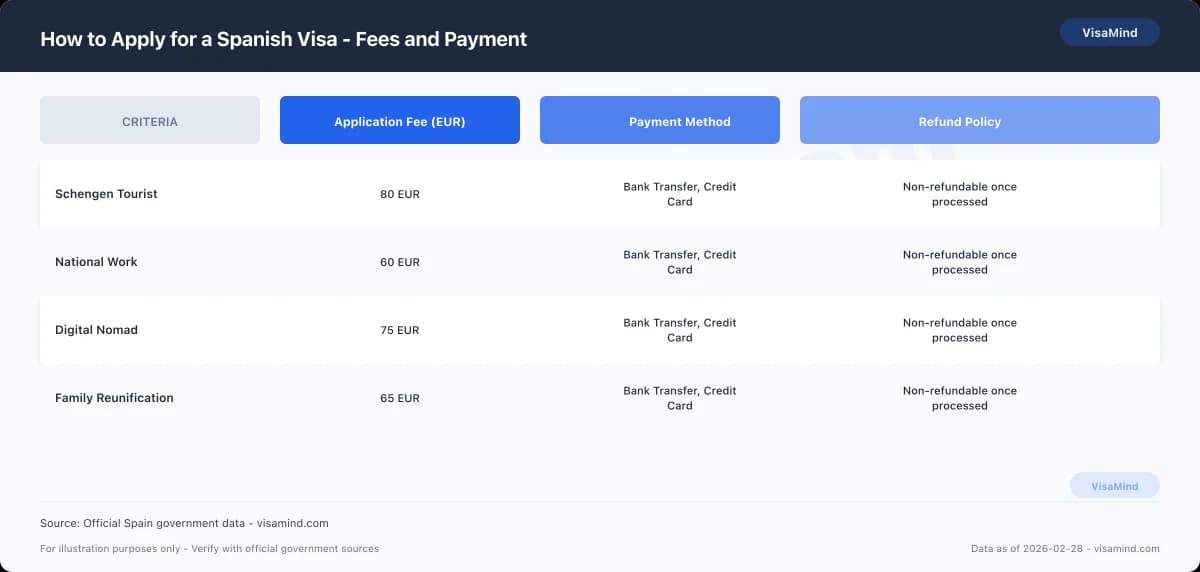
Applying for a Spanish visa involves certain fees that vary depending on the type of visa you are seeking. Understanding these costs will help you plan your application process effectively.
What Are the Visa Fees?
The fees for Spanish visas are set by the Secretaría de Estado de Migraciones and can vary based on the visa category. Below is a general guide to the costs for some common visa types:
| Visa Type | Fee (as of 2023) |
|---|---|
| Schengen Visa | €80 |
| National Work Visa | €60 |
| National Student Visa | €60 |
| Digital Nomad Visa | €75 |
Tip: Fees are subject to change, so always verify the current rates on the official website of the State Secretariat for Migration.
Are There Additional Costs?
In addition to the basic visa fees, some applications may incur extra charges. These can include:
- Service Charges: If you apply through a visa service center, additional service fees may apply.
- Postal Fees: If you opt to have your documents mailed back to you, postal charges will be added.
How Can You Pay the Fees?
The payment methods for Spanish visa fees depend on where you apply. Common payment options include:
- Credit/Debit Card: Available at most consulates and visa centers.
- Bank Transfer: Some consulates may accept fees via bank transfer. Verify the details with your local Spanish consulate.
- Cash Payment: This option might be available if you apply in person at certain locations.
Are Visa Fees Refundable?
Visa fees are typically non-refundable, even if your application is denied. Therefore, it's crucial to ensure all your documents are accurate and complete before lodging your application. For more information on ensuring your application is thorough, refer to the Documents Checklist.
Important: Double-check all payment details and retain your payment receipt as proof of transaction.
By familiarizing yourself with the costs and payment methods, you can streamline the financial aspect of your Spanish visa application. If you're planning to stay longer or apply for a different type of visa, you might also want to explore options like the Long Term Residence or Golden Visa.
After You Submit
#After submitting your Spanish visa application to the Secretaría de Estado de Migraciones (SEM), you can expect to wait for a decision. Here's what you need to know about tracking your application and managing this waiting period.
How to Track Your Application
Once you have lodged your visa application, you should receive a tracking number. This number allows you to monitor the progress of your application through the SEM's online tracking system.
Tip: Regularly check the status of your application online to stay informed about any required actions or updates.
Expected Processing Timeline
The processing time for a Spanish visa can vary depending on the type of visa you have applied for and the volume of applications at the time. Here’s a general timeline for some common visa types:
| Visa Type | Estimated Processing Time |
|---|---|
| Schengen Tourist | Up to 15 days |
| National Work | 1 to 3 months |
| National Student | 1 to 3 months |
| Digital Nomad | 20 to 45 days |
Important: These timelines are estimates as of 2023. Verify on the SEM's official website for the most current processing times.
What to Do While Waiting
While waiting for your visa decision, consider the following:
- Prepare for Next Steps: If you applied for a National Student or National Work visa, start planning your travel and accommodation arrangements in Spain.
- Gather Additional Documents: If you anticipate needing additional documentation, such as financial proof or a Visa Extension Guide, gather these in advance.
- Stay Informed: Keep up with any changes in Spanish immigration policy that might affect your application.
By utilizing the tracking tools and staying proactive, you can better manage the application process and be well-prepared for your move to Spain.
Dealing with Delays or Refusals
#When applying for a Spanish visa through the Secretaría de Estado de Migraciones (SEM), it's possible to encounter delays or refusals. Understanding your options for addressing these issues is crucial to navigate the process effectively.
What to Do if Your Application is Delayed
Visa processing times can vary depending on the type of visa and the time of year. If your application is delayed beyond the expected timeframe, you have several options:
- Check Processing Times: First, consult the Processing Times guide to ensure your application is indeed delayed.
- Contact the Embassy or Consulate: Reach out to the Spanish consulate where you submitted your application. They can provide updates and any required next steps.
- Ensure All Documents Are Submitted: Double-check that all required documents were included in your application. Missing documentation can lead to delays.
Tip: File online to avoid mail delays and get a receipt number immediately, which can be used to track your application's status.
How to Handle a Visa Refusal
If your application is refused, you have the right to appeal or reapply, depending on the reason for refusal. Here are the steps you can take:
- Review the Refusal Letter: The refusal letter will outline specific reasons for the denial. Understanding these reasons is essential for deciding your next steps.
- Appeal the Decision: You can file an appeal with SEM if you believe the refusal was unjust. This must be done within one month of receiving the refusal letter.
- Reapply: If you choose not to appeal, you can reapply for the visa. Address the issues stated in the refusal letter before reapplying.
Refer to the Visa Refusal Reasons guide for common causes of visa denials and tips on how to address them in your application.
Can You Request an Administrative Review?
An administrative review is another option if you believe there was an error in processing your application. This involves a thorough check of your application to ensure all information was correctly assessed.
- Eligibility: Not all refusals are eligible for administrative review. Check your refusal letter or consult with SEM to determine if this option is available.
- Process: If eligible, request an administrative review through the consulate or embassy that issued the refusal. This must be done within a specified timeframe, typically one month.
Important: Missing the appeal or review deadlines means you forfeit the opportunity to contest the decision, so act promptly.
These steps can help you address delays or refusals effectively, enhancing your chances of a successful outcome. For more detailed guidance, explore the Digital Nomad Guide or Family Reunification visa type guides for specific scenarios.
How Long the Process Takes
#Tip: Always check the official website of the State Secretariat for Migration (SEM) for the most current processing times.
How Long Does It Take to Get a Spanish Visa?
Processing times for a Spanish visa can vary significantly based on the type of visa you are applying for. Here is a general overview of the timelines for different visa types:
| Visa Type | Typical Processing Time |
|---|---|
| Schengen Tourist | 15 calendar days |
| National Work | 1 to 3 months |
| National Student | 1 to 3 months |
| Digital Nomad | 1 to 3 months |
Factors Influencing Processing Times
Several factors can impact how long it takes for your visa application to be processed:
- Volume of Applications: High demand periods, such as holiday seasons, may lead to longer processing times.
- Completeness of Documentation: Ensure that all necessary documents are submitted to avoid delays.
- Specific Consulate Workload: Processing times may vary depending on the consulate's location and workload.
What Happens After Submission?
Once your application is submitted, it will be reviewed by the appropriate Spanish authorities. If additional information is needed, you will be contacted. After approval, you will be notified to collect your visa.
Important: If you are applying for a visa like the Digital Nomad Visa or Schengen Business Visa, ensure your application is submitted well in advance of your planned travel dates.
Checking Your Application Status
You can track the status of your visa application through the relevant consulate's online portal or by contacting them directly. It is advisable to keep your application receipt handy for reference.
For more detailed information about specific visas, such as the Schengen Tourist Visa, visit the respective visa pages to ensure you have the most up-to-date details.
Navigating the Application Portal
#- Accessing the Official Portal
To initiate your Spanish visa application, you need to access the official portal provided by the State Secretariat for Migration (Secretaría de Estado de Migraciones or SEM). Navigate to the SEM's official website, where you will find a section dedicated to immigration procedures, including visa applications. Ensure you select the correct category for your situation, such as a Digital Nomad Visa or Family Reunification, to proceed with the specific requirements applicable to you.
- Creating an Account
Once on the portal, you must create a personal account to manage your application. This account will allow you to track your visa application status, receive notifications, and securely upload required documents. Make sure to use a valid email address, as this will be your primary means of communication with the authorities. Choose a strong password to protect your personal information.
- Navigating the Portal
After setting up your account, locate the visa application section. Here, you can explore various visa options, such as the Golden Visa or Research Visa, each with distinct requirements and documentation. Carefully read through the specific instructions related to your visa type, as eligibility criteria and required documents can differ significantly.
- Completing Your Application
Begin the application process by entering all requested information. The portal will guide you through each section, prompting for personal details, travel information, and any supporting documentation. Ensure all information is accurate and complete to avoid delays. Once your application is ready, you can proceed to the submission stage.
Tip: Utilize the Documents Checklist to ensure you have all necessary paperwork before uploading to the portal. This can save you time and prevent unnecessary setbacks.
- Submitting the Application
Upon completing your application, review all details carefully. Once satisfied, submit your application through the portal. You will receive a confirmation email with a reference number for tracking purposes. Keep this reference number safe, as it is essential for any future correspondence regarding your visa application.
Important: Some visa categories, like the Entrepreneur Visa, may require additional documentation or steps. Always verify specific requirements on the SEM portal to ensure compliance.
Fingerprints and Photos
#Scheduling Your Biometrics Appointment
After submitting your visa application, you will need to schedule an appointment for biometric data collection. This involves both fingerprints and a photograph. You can book this appointment at a Visa Application Centre, often managed by VFS Global, or directly at the Spanish consulate or embassy in your country. It's important to arrange this appointment promptly to avoid delays in processing.
Tip: Book your biometrics appointment as soon as you have submitted your application to secure a convenient time slot.
What to Bring to Your Appointment
For your biometrics appointment, ensure you bring the following items:
- A valid passport or travel document
- Your appointment confirmation receipt
- Any official communication from the Spanish consulate or VFS center regarding your visa application
Make sure that the photograph you bring meets the specific requirements outlined by the State Secretariat for Migration (SEM).
At the Appointment
During your appointment, the officials will collect your fingerprints and take a digital photo. This process is quick and generally takes no more than 15 minutes. This biometric data is essential for verifying your identity as part of the visa process. If you are applying for specific visas such as the Schengen Business or the Family Reunification visa, ensuring your biometric data is correctly recorded is crucial.
Important: Failure to attend your biometrics appointment can result in delays or even the refusal of your visa application. Make sure to arrive on time and with all necessary documents.
After the Appointment
Once your biometric data is collected, it will be securely stored and used solely for processing your visa application. The data remains valid for 59 months, enabling future applications without needing to resubmit biometric information during this period. However, if you are applying for a long-term visa such as the Long Term Residence, always verify if new biometrics are required.
Stay informed about the next steps by checking your application status through the portal or directly with the consulate or VFS center where you applied.
Your VFS Appointment
#Booking Your VFS Appointment
Once you've gathered all necessary documents and completed your visa application, the next step is to schedule an appointment with VFS Global or a similar visa application center. VFS Global manages visa application services for Spain in many countries, acting on behalf of Spanish consulates. You can book your appointment through their online portal, ensuring you select the correct visa category, such as the Schengen Business or Non Lucrative visa.
Preparing for the Appointment
On the day of your appointment, ensure you arrive at the VFS center with all required documents. This includes your completed application, passport-sized photos, and any supporting evidence specific to your visa type. For a detailed list of required documents, refer to the Documents Checklist. Arriving with incomplete documentation may result in the need to reschedule your appointment.
Attending the Appointment
At your appointment, you will submit your application and supporting documents. The VFS staff will collect biometric data, such as fingerprints and photographs, which are mandatory for most visa categories. After submitting your application, you will receive a receipt with a tracking number, allowing you to monitor the status of your application online.
Tip: Check processing times for your visa type in advance by visiting the Processing Times guide. This helps you plan your travel dates more accurately.
After Your Appointment
Once your application is submitted, it will be forwarded to the appropriate Spanish consulate for processing. The consulate will make the final decision on your visa application. If additional documents or interviews are required, you will be notified. It's important to keep the contact information you provided up to date to avoid any delays.
FAQs
How can I apply for a Spanish Visa if I want to combine work and study goals?
What are the steps to navigate the application portal for a Spanish Visa?
Can I appeal a visa refusal from the State Secretariat for Migration?
What evidence is required for a National Student Visa application in Spain?
How are fingerprints and photos handled for a Spanish Visa application through VFS?
Can I apply for a Spanish Visa with the intention to work remotely as a digital nomad?
What happens after I submit my Spanish Visa application to the State Secretariat for Migration?
VisaMind provides informational guidance only and is not a government agency. This is not legal advice. Requirements can change and eligibility depends on your specific facts. If your case is complex or high-stakes, consult a licensed immigration attorney.
Next steps
Requirements vary by nationality, purpose, timeline, and case details. Use Find My Visa to get a personalized checklist for Spain with official sources and deadlines.
Find my visa