Visa-Free or Visa Required?
#For many travelers, exploring Spain is a seamless experience thanks to its participation in the Schengen Area, allowing for visa-free travel for many nationalities. However, understanding whether you need a visa or can enter visa-free is the first step in planning your visit.
Visa-Free Entry
Citizens from numerous countries can visit Spain without a visa for up to 90 days within a 180-day period. This applies primarily to nationals from the European Union, European Economic Area, and several other countries. Always verify your eligibility on the official website as requirements can change.
Schengen Visa Requirements
If your nationality does not allow for visa-free entry, you will need to apply for a Schengen visa. This visa permits short stays in Spain and other Schengen countries for tourism, business, or family visits. The Schengen visa is necessary for stays of up to 90 days in a 180-day period.
| Visa Type | Eligibility | Cost (as of 2023) | Processing Time |
|---|---|---|---|
| Visa-Free Entry | EU/EEA/Switzerland, select others | €0 | Immediate upon arrival |
| Schengen Visa | Non-EU requiring visa | €80 | 15-30 days |
| Airport Transit Visa | Certain non-EU nationals | €80 | 15-30 days |
When Is a Visa Required?
A visa is required for travelers from countries not included in the visa-free program. Additionally, if you plan to transit through a Spanish airport en route to another non-Schengen destination, you might need an airport transit visa.
Important: Ensure your passport is valid for at least three months beyond your departure date from the Schengen area.
Preparing for Your Application
Start your visa application process no later than 15 days before your intended travel date but no earlier than six months before. You will need to apply at the Spanish consulate in your home country. Make sure to gather all necessary documents, such as proof of accommodation, travel insurance, and financial means, to support your application.
For more detailed instructions on the visa process, consider visiting the How To Apply and Documents Checklist sections. Additionally, reviewing visa categories like the Schengen Tourist or Schengen Business visas might provide more tailored options for your visit.
By understanding these requirements, you can ensure a smoother journey to Spain, whether your visit is for leisure or business.
Your Visitor Visa Options
#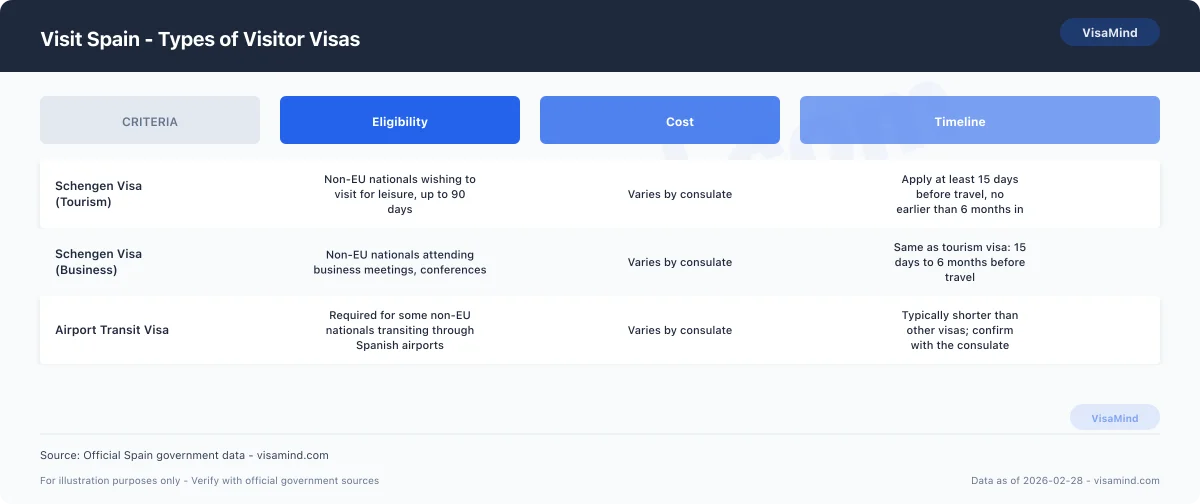
Spain offers several visitor visa options for non-EU nationals wishing to explore the country or transit through its airports. Understanding the key differences between these visa types can help you determine which is most appropriate for your travel plans.
Visitor Visa Comparison Table
| Visa Type | Eligibility | Cost | Timeline |
|---|---|---|---|
| Schengen Visa (Tourism) | Non-EU nationals visiting Spain or Schengen area for tourism purposes | Approximately €80 | Apply at least 15 days before travel, valid for up to 90 days within a 180-day period |
| Schengen Visa (Business) | Non-EU nationals attending business meetings or conferences | Approximately €80 | Apply at least 15 days before travel, valid for up to 90 days within a 180-day period |
| Airport Transit Visa | Non-EU nationals transiting through Spanish airports en route to non-Schengen destinations | Varies by nationality | Apply at least 15 days before travel, typically valid for the day of transit only |
What Are Your Schengen Visa Options?
The Schengen Visa (Tourism) allows you to explore Spain and the broader Schengen Area for up to 90 days within any 180-day period. This visa is perfect for leisure travelers wishing to experience Spain's rich cultural heritage and vibrant landscapes. For more details, visit the Schengen Tourist page.
If you are traveling for business purposes, the Schengen Visa (Business) provides similar benefits, allowing you to attend meetings, conferences, or other professional engagements. Explore further by checking the Schengen Business visa page.
When Do You Need an Airport Transit Visa?
Certain non-EU nationals may require an Airport Transit Visa when connecting through Spanish airports. This visa is necessary if you are traveling from one non-Schengen country to another via a Spanish airport. It permits you to stay within the international transit area for the duration of your layover.
Important: Always verify if your nationality requires an airport transit visa, as exceptions may apply.
Application Requirements
- Schengen Visas require documentation such as proof of travel insurance, financial means, and accommodation reservations. Your fingerprints will be collected as part of the application process. For more detailed guidance, review the Documents Checklist.
- Applications must be lodged at the relevant Spanish consulate at least 15 days before your intended travel date but no earlier than six months in advance.
Tip: It is advisable to schedule your appointment early to avoid last-minute delays, especially during peak travel periods.
By understanding these visitor visa options, you can better plan your visit to Spain and ensure a smooth travel experience. Always consult the official Secretaría de Estado de Migraciones website for the most current information and guidance.
What You Need to Apply
#To visit Spain as a non-EU national, you may need to apply for a Schengen visa, which permits short stays of up to 90 days within a 180-day period. The application process involves gathering specific documents and evidence to support your visit.
Required Documents
-
Valid Passport
- Must be valid for at least three months beyond your planned departure from the Schengen area.
- Must have at least two blank pages for visa stamps.
-
Application Form
- Complete the Schengen visa application form accurately and sign it.
-
Recent Photographs
- Two recent passport-sized photos that meet Schengen visa photo requirements.
-
Travel Itinerary
- Provide a copy of your round-trip flight reservation or travel itinerary.
-
Proof of Accommodation
- Hotel bookings, rental agreements, or an invitation letter from a host in Spain.
Financial Proof
- Proof of Financial Means
- Bank statements from the last three months showing sufficient funds to cover your stay.
- Salary slips or employment contract if applicable.
Important: Ensure that your financial documents demonstrate the ability to support yourself during your stay in Spain. This is crucial to avoid application denial.
Additional Requirements
-
Travel Medical Insurance
- Must cover emergency medical care, hospitalization, and repatriation with a minimum coverage of €30,000.
- The insurance must be valid throughout the entire Schengen area and for the entire duration of your stay.
-
Purpose of Visit
- If visiting for tourism, provide a detailed itinerary of your planned activities.
- For business visits, include an invitation letter from the Spanish company or organization, along with details of the business activities.
-
Biometric Data
- Your fingerprints will be collected at the time of application submission.
Submission and Processing
- Lodge your application at the Spanish consulate at least 15 days before your intended journey, but no earlier than 6 months before your travel date.
- Additional documents may be requested by the consulate, so ensure you follow the specific guidelines for your Schengen Tourist or Schengen Business visa application.
For further guidance on the application process, you can refer to the How To Apply and Documents Checklist pages for a comprehensive overview.
How to Apply Step by Step
#-
Determine Your Visa Type
Begin by identifying which type of visa you require for your visit to Spain. For most short stays under 90 days, you will need a Schengen Visa. Depending on your purpose, you may choose between a Schengen Tourist visa or a Schengen Business visa. Ensure you review the eligibility criteria specific to your country of nationality to confirm whether a visa is required.
-
Gather Required Documents
Collect all necessary documentation before proceeding with your application. Common requirements include a valid passport, proof of accommodation, travel insurance, and financial means to support your stay. Additional documents may be requested based on the purpose of your visit. For a detailed checklist, refer to the Documents Checklist.
-
Choose Your Application Method
You have the option to apply via the Spanish consulate in your country or through a VFS Global center if available. Each method has different procedures and may require you to make an appointment in advance. Confirm the specific requirements for your location.
Tip: Applying through a VFS Global center can offer more convenient appointment scheduling and additional support services.
-
Make an Appointment
Securing an appointment is a crucial step when applying through a consulate or VFS center. It is recommended to book your appointment at least 15 days before your intended departure, but applications can be lodged up to 6 months in advance. Missing this window can lead to delays or denial of your application.
-
Submit Your Application and Biometrics
Attend your appointment with all your documents in order. Your fingerprints will be collected as part of the application process, so ensure you are prepared for this requirement. Submit your application and pay any applicable fees. The consulate or VFS center will inform you about the processing time and when to expect a decision.
Important: Ensure your passport has at least three months' validity beyond your planned departure from the Schengen area to avoid application denial.
-
Track Your Application
After submission, you can track the status of your application online or through the VFS center. Keep your application reference number handy to check for any updates or additional requirements.
For more detailed guidance on the application process, visit the How To Apply guide.
Pitfalls That Get Applications Denied
#It's essential to be aware of common pitfalls that could lead to the denial of your visa application. Understanding these potential issues helps ensure a smoother application process and a successful trip.
Overstaying Your Visa
- 90-Day Limit: Non-EU nationals can stay in Spain and the Schengen area for up to 90 days within a 180-day period. Exceeding this limit can result in fines, deportation, or future entry bans.
- Incorrect Calculation: Misunderstanding the 180-day rolling period can lead to unintentional overstays. Use online calculators or consult with authorities to track your days accurately.
Working on a Tourist Visa
- Prohibition on Employment: Tourist visas, such as the Schengen Tourist Visa, do not permit any form of work. Engaging in employment activities can lead to immediate visa cancellation and potential legal consequences.
- Volunteer Work: Even unpaid work, including volunteering, is often not allowed on a tourist visa. Verify your visa conditions before undertaking any volunteer activities.
Insufficient Financial Means
- Proof of Funds: You must demonstrate sufficient financial resources to cover your stay in Spain. This often involves showing bank statements, proof of income, or sponsorship letters.
- Minimum Requirements: As of 2023, you generally need to show access to at least €100 per day for your stay. Check the Financial Requirements Guide for updated figures and details.
Important: Your application must be lodged at least 15 days before your intended journey. Last-minute applications risk being denied due to insufficient processing time.
Other Common Pitfalls
- Documentation Errors: Ensure your passport is valid for at least three months beyond your departure date from the Schengen area and that all necessary supporting documents are included.
- Medical Insurance: Failing to provide proof of medical insurance that covers emergencies, hospitalisation, and repatriation can lead to application denial. Verify the specific coverage details required.
By carefully preparing and avoiding these common pitfalls, you can improve your chances of a successful visa application and enjoy your visit to Spain. For more detailed guidance, refer to the Visa Refusal Reasons guide.
At the Border
#When you arrive in Spain, you'll encounter several steps at the border to complete your entry process. These procedures are designed to ensure the security and integrity of Spain's borders while facilitating a smooth entry for visitors.
Fingerprinting and Document Checks
Upon arrival, non-EU nationals will have their fingerprints taken. This biometric data is a standard requirement for entry into Spain and the Schengen Area. Alongside fingerprinting, you'll need to present your passport and any applicable visa, such as a Schengen Tourist Visa. Ensure your passport is valid for at least three months past your planned departure from the Schengen zone.
Immigration Interviews
In some cases, you may be required to participate in a brief interview with border officials. This interview might include questions about the purpose of your visit, financial means, and accommodation plans. It's helpful to have supporting documents readily available, such as hotel reservations or an invitation letter if staying with friends or family. For more on preparing for potential interviews, check our Interview Prep Guide.
Navigating E-Gates
Spanish airports offer e-gates for quicker entry processing, available primarily to EU citizens and certain non-EU nationals with biometric passports. If eligible, use these automated gates to speed up your entry. For those not eligible, standard manual checks will be conducted by border agents.
Tip: If you're holding a Schengen Business Visa, keep any relevant documentation related to your business activities on hand, as these may be requested during your interview.
Additional Considerations
- Health Insurance: Ensure your travel insurance covers any medical emergencies during your stay.
- Entry Denial: Be aware that failing to meet entry requirements can result in denial of entry. Familiarize yourself with Visa Refusal Reasons to mitigate any risks.
By understanding what to expect at the border, you can prepare effectively and ensure a smoother entry into Spain. Always verify current requirements on the official website, as procedures can change.
Can You Stay Longer?
#If you wish to extend your stay in Spain beyond the 90 days allowed under a Schengen Visa, there are specific procedures to follow. Extensions are not commonly granted, but in certain circumstances, you may apply for one.
Eligibility for Extension
To be eligible for a visa extension, you must demonstrate compelling reasons, such as:
- Force Majeure: Unforeseen events like natural disasters or medical emergencies.
- Humanitarian Reasons: Situations requiring your presence for humanitarian purposes.
- Serious Personal Reasons: Such as a critical illness in the family.
Important: Extensions are typically considered only when you have valid reasons that prevent you from leaving Spain as initially planned.
How to Apply for an Extension
If you believe you meet the criteria for an extension, you must follow these steps:
- Contact the Local Immigration Office: Visit the nearest office of the State Secretariat for Migration (SEM) in Spain or the corresponding Extranjería to initiate the process.
- Provide Necessary Documentation: Gather and present documents supporting your case, such as medical certificates, proof of unforeseen events, or other relevant evidence.
- Complete the Application Process: Depending on your situation, additional interviews or documentation may be required.
Tip: It is advisable to apply for an extension well before your current visa expires to provide ample time for processing.
Alternatives if Extension is Denied
If your request for an extension is denied, consider other legal avenues to remain in Spain:
- Explore Other Visa Options: You might be eligible for different types of visas, such as a Long Term Residence or a Non Lucrative visa.
- Regularization Processes: In some cases, you may apply for regularization under special circumstances, such as Arraigo Social.
Remember to consult the Visa Extension Guide for more detailed steps and advice. Always verify current requirements and procedures through official sources, as regulations may change.
Real Scenarios
#A business analyst from India was scheduled to attend a crucial industry conference in Barcelona, Spain. As a non-EU national, the analyst needed a Schengen Visa (Business) for this short-term visit. To ensure compliance with Spain's visa requirements, the analyst began the process by gathering necessary documents, including proof of employment, an invitation letter from the conference organizers, and evidence of accommodation bookings. The application was lodged at the Spanish consulate in Mumbai, well in advance of the 15-day minimum requirement. The consulate required the applicant to provide biometric data, including fingerprints, during an in-person appointment. After submitting all the necessary documents and attending the appointment, the analyst received the visa approval within three weeks, allowing ample time to prepare for the trip.
Scenario: Photographer Transiting Through Madrid
A professional photographer from Senegal was traveling to the United States with a layover in Madrid. Due to their nationality, the photographer required an airport transit visa to pass through Spain. The photographer approached the Spanish consulate in Dakar to apply for this visa, ensuring that all required documentation was ready, including a valid passport, flight itinerary, and evidence of onward travel. The consulate requested additional documentation to verify the purpose of the transit. The photographer submitted these promptly, and after a thorough review, the consulate granted the transit visa within two weeks. This ensured the photographer could continue their journey without interruption.
Scenario: Retiree Visiting Family in Spain
A retired teacher from South Africa aimed to visit her daughter residing in Madrid for an extended holiday. Understanding the need for a Schengen Visa (Tourism), the retiree began by reviewing the Documents Checklist. She provided proof of financial means through pension statements, medical insurance covering her stay, and a letter of invitation from her daughter. The application was submitted to the Spanish consulate in Cape Town, and to avoid pitfalls, she booked an appointment well ahead of her travel date. Following the submission, the consulate requested a brief interview to confirm her travel intentions. Within four weeks, the retiree received her visa, allowing her to enjoy a 90-day stay in Spain with family.
FAQs
Can I switch from a tourism to a business visa while visiting Spain?
How long does the Spain visa processing take at the consulate?
What are the common reasons for Spain visa application denials?
Can I extend my stay in Spain beyond 90 days with a Schengen Visa?
Is it possible to apply for a Spain Schengen Visa at any consulate?
What are the additional requirements for connecting flights through Spain?
What is the role of the Secretaría de Estado de Migraciones in the Spain visa process?
VisaMind provides informational guidance only and is not a government agency. This is not legal advice. Requirements can change and eligibility depends on your specific facts. If your case is complex or high-stakes, consult a licensed immigration attorney.
Next steps
Requirements vary by nationality, purpose, timeline, and case details. Use Find My Visa to get a personalized checklist for Spain with official sources and deadlines.
Find my visa