Official sources referenced
Who This Guide Is For
#Non-EU nationals interested in Spain's Digital Nomad Visa can apply for a residence permit specifically allowing international telework, letting you enjoy the vibrant Spanish lifestyle while fulfilling professional obligations remotely. This option opens the door to living in Spain while maintaining a career with a foreign company, provided the Spanish component of your professional activity does not exceed 20%.
Who Can Benefit?
This guide is crafted for non-EU nationals who are looking to relocate to Spain while continuing their remote work. Whether you're a graduate from a prestigious institution or have a minimum of three years of professional experience, you may qualify for this unique opportunity. It is essential that you can prove an ongoing and consistent working relationship with your current employer, having been employed for at least three months before applying.
Why Consider the Digital Nomad Visa?
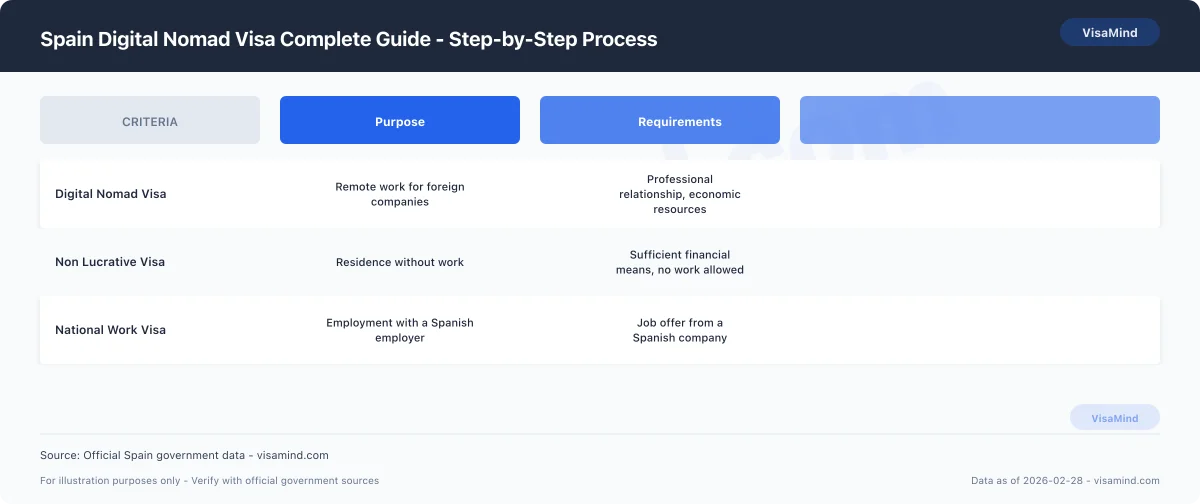
The Digital Nomad Visa is particularly appealing for those who seek the flexibility to work in a new country without changing employers. Unlike the National Work Visa, which ties you to a Spanish employer, this visa allows you to retain your existing employment relationship. This is ideal for professionals who wish to immerse themselves in Spanish culture while contributing to their home country's economy.
Tip: Ensure your employment contract clearly states the possibility of remote work and compile evidence of your ongoing professional relationship, as these are key requirements.
When to Use This Guide
If you are considering a move to Spain to work remotely, this guide will walk you through the initial steps. From understanding eligibility criteria to compiling the necessary documents, these insights will be invaluable as you embark on your journey. Additionally, if you are weighing other options, such as the Non-Lucrative Residence Visa for those not planning to engage in any professional activity, this guide will clarify the distinctions and help you decide on the right path.
Embarking on this journey requires careful planning and alignment with Spain's specific immigration processes. By following the guidelines outlined here, you can make an informed decision about relocating as a digital nomad.
What You Need to Know
#Spain offers an innovative opportunity for non-EU nationals to reside and work remotely through the Digital Nomad Visa. This visa is designed for individuals who wish to perform international telework while enjoying the vibrant culture and lifestyle that Spain has to offer.
What is the Spain Digital Nomad Visa?
The Spain Digital Nomad Visa allows non-EU citizens to live in Spain while working remotely for companies located outside the country. This initiative is part of Spain's efforts to attract global talent and foster a dynamic environment conducive to digital and creative industries. The visa is particularly appealing for those in the tech and creative sectors who can perform their work from anywhere in the world.
Key Features of the Digital Nomad Visa
- Remote Work Flexibility: The visa primarily supports working for non-Spanish companies. However, it permits up to 20% of your professional activity to be with Spanish entities.
- Educational and Professional Requirements: Applicants should either be graduates from reputable universities or possess substantial professional experience (at least three years) in their field. This ensures that the applicants have a solid background suitable for remote work.
- Proof of Remote Work Capability: You need to demonstrate that your job responsibilities can be effectively carried out remotely. This includes showing that your employment relationship has been stable for a minimum of three months before applying.
Eligibility Snapshot
To be eligible for the digital nomad visa, you must meet the following criteria:
- Hold a degree from a recognized university or possess significant professional experience.
- Provide evidence of an existing and continuous remote work arrangement.
- The company you work for must have a real and continuous activity.
Application Process Overview
The application process involves several steps and requires careful preparation of your documents. It is essential to gather all necessary documentation that demonstrates your eligibility and the remote nature of your work. The State Secretariat for Migration (SEM) oversees immigration policy, including the processing of digital nomad visas. While specific details of the process are covered in other sections, ensure you are familiar with the Documents Checklist and How To Apply guides for comprehensive instructions.
Tip: Ensure that your application includes clear evidence of remote work capability to prevent delays in processing.
Related Visas
While exploring the digital nomad pathway, you might also consider other visa options depending on your long-term goals. For instance, the Non-Lucrative Residence Visa might be suitable if you do not intend to work, while the Entrepreneur Visa is ideal for those looking to start a business in Spain.
Understanding the different visa types available and how they align with your professional and personal objectives will help you make an informed decision about your move to Spain.
Do You Meet the Requirements?
#If you're considering applying for the Spain Digital Nomad Visa, it's crucial to determine if you meet the requirements. This visa is designed for non-EU citizens who wish to work remotely for companies located outside of Spain. Here's a detailed breakdown of the key requirements and prerequisites you'll need to meet.
Educational and Professional Qualifications
- Academic Credentials: You must be a graduate or postgraduate from a recognized university, vocational training institution, or business school.
- Professional Experience: Alternatively, having a minimum of three years of professional experience in your field can also qualify you.
Employment and Remote Work Requirements
- Remote Work Capability: You need to provide documentation proving that your job or professional relationship can be executed remotely.
- Existing Employment Relationship: Evidence must be provided showing that your employment or professional relationship has been ongoing for at least three months before your application.
- Employer Activity: You must prove that the company you are contracted with has real and continuous business activity.
Work Restrictions
- Spanish Employment Limitations: While holding this visa, you are allowed to work for a Spanish company, but this work must not exceed 20% of your total professional activity.
Important: Ensure that all documents are properly prepared and translated into Spanish if necessary, as incomplete or incorrect documentation can delay the process.
Additional Considerations
- Financial Requirements: Although specific figures are not provided here, it's important to verify the financial requirements on the official website to ensure you meet the income threshold needed for sustaining yourself while living in Spain.
- Health Insurance: You must have health insurance that covers you in Spain, either through your employer or a private insurance policy.
Before applying, it's advisable to review the detailed instructions for your specific eligibility category. This can be crucial for understanding any additional nuances that might apply to your situation. For more information on related visas, you might consider the Digital Nomad Visa page or explore differences between the Digital Nomad Vs Non Lucrative visas if you're comparing options.
Understanding these requirements is an essential first step in your journey to becoming a digital nomad in Spain. By ensuring you meet these criteria, you'll be better prepared to move forward with your application.
Your Action Plan
#
Determine Your Eligibility
Before you begin the application process for the Spain Digital Nomad Visa, ensure that you meet the necessary eligibility criteria. Applicants must hold a graduate or postgraduate degree from a reputable university, vocational training institution, or business school, or possess a minimum of three years of professional experience. Additionally, your employment or professional relationship should be verifiable and have been active for at least three months.
Gather Required Documentation
Compile all necessary documents that demonstrate your eligibility and support your application. This includes:
- Proof of graduation from a recognized institution or evidence of professional experience.
- Documentation proving a real and continuous activity by the foreign company you are contracted with.
- Evidence that your work can be performed remotely.
Refer to the Documents Checklist for a comprehensive list of documents you may need.
Understand the Application Process
Visit the official Secretaría de Estado de Migraciones (SEM) website to review detailed instructions that pertain specifically to your eligibility category. This step is crucial as it helps tailor your application to meet the specific requirements of the Spain Digital Nomad Visa.
Tip: Carefully review all guidelines on the SEM website to ensure no detail is overlooked, which could delay your application.
Submit Your Application
Once your documents are in order, you can proceed with submitting your application. Ensure that all sections are thoroughly completed and necessary evidence is included. Applications can typically be lodged at your nearest Spanish consulate or embassy. For some applicants, it may be possible to apply online, depending on the consulate's capabilities.
Await Confirmation and Prepare for Arrival
After submission, you will need to wait for a decision. Processing times can vary, so it's advisable to check the current timelines on the SEM website. Once approved, you will receive a visa which allows you to enter Spain. Upon arrival, you will need to register with the local authorities and obtain a Foreigner’s Identity Number (NIE).
Important: Failing to register with local authorities upon arrival in Spain can result in complications with your residency status.
Secure Your Residency Permit
After arriving in Spain, apply for a residency permit. This step involves visiting the local immigration office or National Police station to provide biometric data and other necessary documentation. The residency permit will formalize your stay in Spain as a digital nomad.
For more information on the differences between this visa and others, such as the Non-Lucrative Residence Visa or Entrepreneur Visa, consider visiting the Digital Nomad Vs Non Lucrative guide.
By following these steps, you can successfully navigate the process of applying for and obtaining a Spain Digital Nomad Visa, allowing you to enjoy working remotely while experiencing the vibrant culture of Spain.
What It Costs and How Long It Takes
#The Spain Digital Nomad Visa offers a compelling opportunity for non-EU nationals to live and work remotely in Spain. Understanding the costs and processing times is crucial for a smooth application experience. Here’s a detailed look at what to expect:
Costs and Processing Times
When considering the Digital Nomad Visa, you should be prepared to manage both the financial and time commitments involved. Here's a quick comparison:
| Visa Type | Eligibility Criteria | Cost Estimate | Processing Timeline |
|---|---|---|---|
| Digital Nomad Visa | Graduates/postgraduates, or 3+ years of professional experience | €75-€100 | 1-3 months |
| Non-Lucrative Residence | Sufficient financial means, no employment in Spain | €80-€120 | 2-3 months |
| Self-Employment Visa | Business plan, financial means, professional qualifications | €200-€350 | 2-4 months |
What You Need to Know About Fees
Fees for the Digital Nomad Visa can vary slightly depending on your location and method of application. As of the latest information, the typical cost ranges from €75 to €100. Keep in mind that fees are subject to change, so it’s advisable to verify current rates on the official State Secretariat for Migration (SEM) website.
Tip: Additional fees may apply for translations and document certifications. Always confirm these requirements with your local Spanish consulate.
Processing Time Expectations
The processing time for the Digital Nomad Visa typically ranges from 1 to 3 months. This timeline can be influenced by several factors, including the completeness of your application and the current volume of applications being processed. It’s prudent to plan ahead and apply well in advance of your intended move to Spain.
Important: Ensure that your application is thoroughly prepared and all supporting documents are included to avoid delays.
For more information on comparing the Digital Nomad Visa with other types of visas, you can refer to the Digital Nomad Vs Non Lucrative guide. Additionally, consult the Processing Times guide for further insights into what to expect during the application process.
Practical Advice
#-
Prove Your Experience: Ensure you have documentation of your educational background or work experience. Graduates from prestigious institutions or those with three years of professional experience meet eligibility requirements. Keep academic certificates or letters from past employers ready.
-
Remote Work Verification: Collect evidence showing you can perform your job duties remotely. Your employer needs to provide a declaration or contract stipulating the remote nature of your job. Ensure this documentation is clear and detailed.
-
Continuity of Employment: Verify that your work relationship has been ongoing for at least three months. This can be shown through employment contracts, pay stubs, or other official documents demonstrating consistent work history.
Navigating the Process
-
Check Eligibility Categories: Before starting, understand the specific category under which you're applying. Different categories might have nuanced requirements, so review the instructions pertinent to your situation.
-
Official Channels: Always use the official Secretaría de Estado de Migraciones website for the latest guidance. Avoid third-party sites that might have outdated information or incorrect procedures.
Tip: If your application is rejected, consult the Visa Refusal Reasons guide to understand common pitfalls and prepare for a potential reapplication.
Timing and Logistics
-
Plan for Processing Times: As of the latest guidelines, processing times can vary. Check the Processing Times guide for current estimates, and plan accordingly to avoid disrupting your work schedule.
-
Appointment Scheduling: Once in Spain, you'll need to schedule an appointment with the National Police to obtain your NIE (Número de Identidad de Extranjero) or TIE (Tarjeta de Identidad de Extranjero). This is crucial for legal residency and work authorization.
Common Pitfalls
-
Document Accuracy: Double-check the accuracy of all documents. Discrepancies, even minor ones, can delay or jeopardize your application.
-
Language Barriers: Official documents should be translated into Spanish if they are in another language. Consider hiring a certified translator to ensure accuracy.
Important: Missing documents or incorrect submissions can significantly delay your application. Use the Documents Checklist to ensure completeness.
By carefully preparing and understanding these key aspects, you can navigate the application smoothly and increase your chances of securing a digital nomad visa in Spain.
Pitfalls to Avoid
#-
Incomplete Documentation: A common mistake is not providing all required documents. Ensure you have proof of a remote work contract, evidence of professional qualifications or three years of experience, and documents showing the relationship's continuity for at least three months.
-
Incorrect Format: Documents must be in the correct format and language. Any documents not in Spanish should be translated by a certified translator. Check the Documents Checklist to ensure all paperwork is correctly prepared.
Tip: Double-check each document against the Digital Nomad Visa requirements before submitting them to avoid unnecessary delays.
Eligibility Misunderstandings
-
Misinterpreting Professional Qualifications: Ensure you meet the educational or professional experience requirements. Graduates from prestigious institutions or those with a minimum of three years of relevant experience qualify, but you must present proper evidence to the State Secretariat for Migration (SEM).
-
Employment Relationship Requirements: You need to demonstrate an ongoing professional relationship with the company you work for. This includes proof that the employment can be carried out remotely.
Process Mistakes
-
Ignoring Specific Instructions: Each eligibility category might have unique requirements. Always review instructions carefully for your specific category on the How To Apply guide provided by SEM.
-
Missing Deadlines: Be aware of all relevant deadlines, especially the initial application and subsequent renewals. Missing these can result in having to restart the application process.
Application Submission Errors
-
Submitting Incomplete Applications: An incomplete application can lead to outright denial. Ensure all sections are thoroughly completed, signed, and accompanied by the necessary evidence before submission.
-
Overlooking the 20% Work Limit: If you plan to work for a Spanish company, remember that this cannot exceed 20% of your overall professional activity. Not adhering to this limit can lead to complications or denial.
Important: Always consult the official SEM website or the nearest Spanish consulate to verify the most current requirements and procedures.
Real Scenarios
#A freelance graphic designer residing in Canada wanted to move to Spain to enjoy its vibrant culture and warm climate while maintaining her contract with a U.S.-based design agency. She needed to ensure compliance with the Spain Digital Nomad Visa requirements. To do this, she gathered documentation proving her employment relationship, which had already existed for over three months. She also provided evidence of her ability to work remotely, such as a detailed project portfolio and communication logs with her client. She applied for the visa through the State Secretariat for Migration (SEM). After submitting the application and supporting documents, she received approval within three months, allowing her to live and work remotely from Spain while contributing to her international projects.
Scenario: Software Developer Balancing Work with a Spanish Company
A software developer based in India sought to work remotely from Spain for his current employer, a tech company headquartered in Germany. Interested in expanding his professional network, he also wanted to engage with a local Spanish startup, ensuring that this additional work did not exceed 20% of his overall professional activities. He submitted his application to the Secretaría de Estado de Migraciones, including proof of his employment with the German company and a proposed agreement with the Spanish startup. His application was approved in approximately four months, allowing him to legally work remotely in Spain while maintaining compliance with the 20% rule for Spanish companies.
FAQs
According to the Spain Digital Nomad Visa Complete Guide, how long does the State Secretariat for Migration take to process the visa?
Can I switch from a Non-Lucrative Residence Visa to a Digital Nomad Visa as per the Spain Digital Nomad Visa Complete Guide?
What specific documents does the Spain Digital Nomad Visa Complete Guide require for proving professional experience?
According to the Spain Digital Nomad Visa Complete Guide, what is the application process for non-EU foreigners?
What costs are associated with the Spain Digital Nomad Visa application as per the guide?
Is it possible to combine an Entrepreneur Visa with a Digital Nomad Visa in Spain?
How does the Spain Digital Nomad Visa Complete Guide suggest handling work contracts for application?
VisaMind provides informational guidance only and is not a government agency. This is not legal advice. Requirements can change and eligibility depends on your specific facts. If your case is complex or high-stakes, consult a licensed immigration attorney.
Next steps
Requirements vary by nationality, purpose, timeline, and case details. Use Find My Visa to get a personalized checklist for Spain with official sources and deadlines.
Find my visa