Visa-Free or Visa Required?
#
Foreign nationals from 24 countries can enter Vietnam without a visa for stays ranging from 14 to 90 days, depending on the visitor's nationality. However, travelers from other countries must apply for a visa or an E Visa to enter Vietnam.
Visa-Free Entry
| Country | Duration of Stay |
|---|---|
| Japan | Up to 15 days |
| South Korea | Up to 15 days |
| Norway | Up to 15 days |
| Sweden | Up to 15 days |
| Denmark | Up to 15 days |
| Finland | Up to 15 days |
| Russia | Up to 15 days |
| United Kingdom | Up to 15 days |
| France | Up to 15 days |
| Germany | Up to 15 days |
| Italy | Up to 15 days |
| Spain | Up to 15 days |
| Belarus | Up to 30 days |
| Others | Varies |
Important: Make sure to verify your eligibility for visa-free entry as policies are subject to change. Always consult the Immigration Department of Vietnam for the most current information.
E-Visa and Visa Requirements
For travelers not eligible for visa-free entry, Vietnam offers an E Visa option. This electronic visa is valid for 30 days and can be used for both single and multiple entries.
| Visa Type | Eligibility | Cost | Timeline |
|---|---|---|---|
| E Visa | Valid passport, not under suspension | Varies by country | 3 business days |
| Tourist Visa | Sponsorship required for longer stays | Varies | Varies |
| Business Visa | Requires an invitation from a Vietnamese entity | Varies | Varies |
When Is a Visa Required?
You will need to apply for a visa if:
- Your nationality is not on the visa-free list.
- You plan to stay longer than the visa-free period allows.
- You are entering for purposes other than tourism, such as Business or Study.
Application Tips
Tip: Submit your visa application well in advance of your travel dates to avoid processing delays. Use the E Visa Vs Visa On Arrival guide to determine the best option for your needs.
For more information on different visa types and their requirements, consult the Immigration Department of Vietnam. Always check their official site for the latest updates and requirements.
Your Visitor Visa Options
#Important: Ensure your passport is valid and all information is accurate when applying for a visa to avoid rejections.
Visitor Visa Options for Long Stay in Vietnam
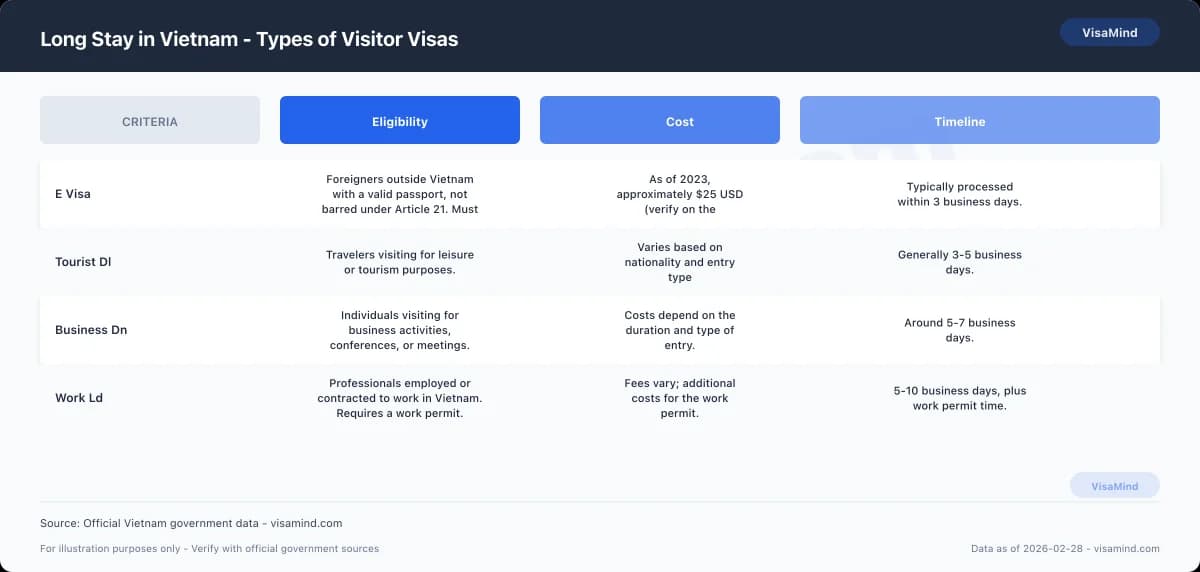
When considering a long stay in Vietnam, it's crucial to understand the different types of visitor visas available. Each visa type has specific eligibility requirements, costs, and timelines. Below is a comparison of the primary visitor visas for Vietnam:
| Visa Type | Eligibility | Cost | Timeline |
|---|---|---|---|
| E-Visa | Foreigners outside Vietnam with a valid passport; must not fall under entry suspension cases | Varies; check current rate on the official website | Approximately 3 working days |
| Tourist Dl | Tourists visiting Vietnam for leisure purposes | Varies depending on the country of origin | Typically 5-7 working days |
| Business Dn | Business travelers with an invitation or sponsorship from a Vietnamese entity | Varies by nationality and processing speed | 3-5 working days |
| Visa On Arrival | Travelers with pre-arranged visa approval letters | Service fee plus stamping fee upon arrival | Approval letter in 2-3 days; stamp on arrival |
What Are the Key Differences?
-
E-Visa: This is ideal for those who prefer handling the process entirely online through the national immigration portal. It allows for both single and multiple entries and is a convenient option for tourists and business travelers alike.
-
Tourist Dl Visa: This is a good option for travelers planning a leisure trip to Vietnam. Applications are often made through Vietnamese embassies or consulates, requiring more preparation time compared to the E-Visa.
-
Business Dn Visa: Designed for professionals visiting Vietnam for business purposes, it necessitates an invitation or sponsorship from a Vietnamese company. This visa can be processed relatively quickly if all documents are in order.
-
Visa On Arrival: This option is suitable for those who couldn't obtain a visa beforehand. It requires an approval letter obtained online before flying to Vietnam, and the visa is issued at the airport upon arrival.
Tip: Check the E Visa Vs Visa On Arrival guide to decide which option best fits your travel plans.
Each visa type serves different purposes, so ensure you select the one that aligns with your visit's objectives. For detailed application processes and required documents, refer to the How To Apply guide.
What You Need to Apply
#To apply for a long stay in Vietnam, it is important to gather specific documents and meet certain requirements as outlined by the Immigration Department of Vietnam. Below, you'll find a detailed list of what you need to prepare for your application.
Required Documents
-
Passport Information
- A clear image of your passport's data page.
- Ensure the passport has at least six months of validity remaining from the date of entry.
-
Photograph
- A recent portrait photo without glasses.
- The photo must meet size specifications: less than 50KB for the portrait and less than 200KB for the passport image.
-
E-Visa Application Details
- Personal information as required in the application process.
- Payment of the e-visa fee through the e-visa portal's e-payment gateway.
Important: Providing inaccurate or dishonest information will result in the denial of your application. Double-check all details before submission.
Financial Proof
- Sufficient Financial Resources
- While specific amounts are not mandated, you should be able to demonstrate financial stability to cover your stay in Vietnam. This can include bank statements or proof of income.
Tip: Consult the Financial Requirements guide for more details on what might be considered adequate financial proof.
Country-Specific Considerations
-
Eligibility Criteria
- Ensure you are not subject to entry suspension under Article 21 of the Law on Foreigners' Entry, Exit, Transit, and Residence in Vietnam.
- Confirm that you will enter and exit Vietnam through designated international border gates.
-
Invitation or Guarantee
- If applying for an extension while in Vietnam, you may need an invitation or guarantee from a Vietnamese authority, organization, or individual. This is relevant for those considering applying for a new visa type, such as a Temporary Residence Card.
For a comprehensive overview of the visa types that can be applied for in Vietnam, including differences between options like E Visa Vs Visa On Arrival, please explore the linked resources for more guidance.
How to Apply Step by Step
#It's important to follow the proper application process through the Immigration Department of Vietnam (Cục Quản lý xuất nhập cảnh). This section provides a step-by-step guide on applying for a Long Stay E-visa, both online and through embassies or VFS centers.
Online Application Process
-
Access the National Immigration Portal: Begin by visiting the official immigration portal to start your application. Ensure you have a stable internet connection and a valid email address.
-
Verify Eligibility: Confirm that you meet the eligibility criteria, such as holding a valid passport and not being listed under the suspension cases in Article 21 of the Law on Foreigners' Entry, Exit, Transit, and Residence in Vietnam.
-
Prepare Required Documents: Gather all necessary documents including:
- A scanned image of your passport data page
- A recent photograph (straight looking, without glasses) adhering to size requirements
-
Complete the Online Form: Fill in the required information accurately. Any missing or incorrect information can lead to rejection.
-
Upload Documents: Attach the scanned passport data page and photograph. Ensure the photograph is less than 50KB and the passport image is less than 200KB.
-
Pay the E-Visa Fee: Make the payment through the e-visa portal's e-payment gateway. The fee can vary, so verify the amount on the official website.
-
Submit and Track Your Application: Submit your application and use your registration code, email, and date of birth to track your application status through the E-visa search menu.
-
Print Your E-Visa: If approved, print your E-visa and keep it ready for your entry and exit from Vietnam.
Important: Ensure all information is accurate to avoid application denial.
Applying Through Embassies or VFS Centers
-
Locate the Nearest Vietnamese Embassy or VFS Center: Identify the closest location to you for submitting your application in person.
-
Book an Appointment: Contact the embassy or VFS center to schedule an appointment. This step may be necessary depending on the location and current COVID-19 protocols.
-
Prepare Documentation: Similar to the online process, gather all necessary documents and ensure they meet the specified requirements.
-
Visit the Embassy or VFS Center: Attend your appointment with all documentation and the required visa fee. Embassy procedures may vary slightly, so it’s advisable to check specific requirements beforehand.
-
Await Processing and Approval: The processing time can vary, so inquire during your appointment. Once approved, collect your visa and prepare for your stay in Vietnam.
Tip: Applying online can expedite the process and provide you with a receipt number immediately.
Important Considerations
-
Border Gates: E-visa holders must enter and exit Vietnam through designated international border gates. Check the list of border gates to ensure compliance.
-
Extending Your Stay: If you wish to extend your stay, you may be eligible to apply for a new visa while in Vietnam if invited or guaranteed by an authority or organization in Vietnam. Refer to the Visa Extension Guide for more detailed information.
For further assistance, visit the Documents Checklist and Processing Times to ensure you have all necessary information and are aware of current processing durations.
Pitfalls That Get Applications Denied
#Important: Double-check your application details before submission. Even a minor mistake can lead to denial.
Common Mistakes
-
Incorrect or Missing Information: Applications with errors or missing details are frequently rejected by the Immigration Department of Vietnam. Ensure all information is accurate and complete.
-
Improper Photo Submission: Photographs must meet specific size requirements—less than 50KB for portraits and less than 200KB for passport images. Failing to adhere to these specifications will result in application denial.
-
Dishonest Information: Providing false or misleading information is a serious offense. All statements must be truthful and verifiable.
Visa Misuse
-
Overstaying: Staying beyond your visa's validity is a common reason for future visa application denials. It is crucial to monitor your visa expiry date and leave the country or apply for an extension in a timely manner. For guidance, refer to the Visa Extension Guide.
-
Working on a Tourist Visa: Engaging in employment while on a tourist visa is illegal and can lead to immediate deportation or bans on future entries. Those intending to work should apply for a Work Ld Visa.
Financial Requirements
- Insufficient Financial Proof: Applicants must demonstrate adequate financial resources for their stay. Insufficient funds can lead to application denial. Consult the Financial Requirements for detailed criteria.
Tip: Ensure you have documentation, such as bank statements, ready to prove your financial stability when applying.
By avoiding these pitfalls, you can improve your chances of a successful application for a long stay in Vietnam. If you need further assistance, consult the Visa Refusal Reasons for more in-depth information on common application issues.
At the Border
#When traveling to Vietnam and planning a long stay, you should be prepared for certain procedures at the border. Understanding what to expect during this process can help you navigate it smoothly.
Entry Procedures at Vietnamese Borders
Upon arrival in Vietnam, you'll go through the immigration checkpoint, where several procedures are standard:
-
Document Verification: Present your passport and e-Visa. Make sure your documents are valid and match the information submitted during your visa application process. Check your visa status before departure to ensure there are no discrepancies.
-
Fingerprinting: As part of the entry process, you may be required to undergo fingerprinting. This is a routine security measure and applies to most foreign nationals entering Vietnam.
-
Interviews: While not always required, a brief interview with an immigration officer may occur. They might ask about your purpose of visit, duration of stay, and other relevant details. Be honest and clear in your responses to avoid any issues.
E-Gates and Processing Times
Vietnam has implemented e-gates at major international airports to expedite entry procedures for those with electronic visas:
-
E-Gates: These automated systems allow for faster processing and are available at select international border gates. If you are eligible, using an e-gate can significantly reduce waiting times.
-
Processing Times: Generally, processing through e-gates is quicker than traditional lines, but exact times can vary based on the airport and time of day. It's advisable to allow some extra time for unexpected delays.
Tip: If you're using an e-Visa, ensure you enter and exit through designated international border gates. Using a non-designated gate could result in entry denial.
Common Pitfalls to Avoid
To ensure a seamless entry into Vietnam, be mindful of these potential pitfalls:
-
Incorrect Documentation: Double-check that your passport and visa documents are correct and up-to-date. Any discrepancies can lead to delays or refusal of entry.
-
Unclear Purpose of Visit: Be prepared to clearly state your visit's purpose, as ambiguous answers can raise red flags with immigration officers.
-
E-Visa Misuse: Remember that e-Visas are only valid at specific points of entry. Verify this information on the official portal to avoid complications.
By understanding these procedures and preparing accordingly, you can facilitate a smoother entry into Vietnam for your long stay. For further details on managing your visa and potential extensions, consult the Visa Extension Guide or explore options like the Temporary Residence Card.
Can You Stay Longer?
#If you're already in Vietnam and wish to extend your stay, there are several options to consider. The Vietnam Immigration Department allows certain visa holders to apply for an extension or a new visa to remain in the country longer. Here's how you can navigate this process:
Are Extensions Possible?
Yes, many visa types in Vietnam can be extended. However, the specific eligibility for extension depends on the type of visa you hold. For example, e-Visa holders may apply for a new visa if they are invited or guaranteed by an authority, organization, or individual in Vietnam. It's important to check specific eligibility conditions based on your current visa type.
How to Apply for an Extension
To extend your stay in Vietnam, follow these general steps:
-
Verify Eligibility: Ensure your current visa type is eligible for extension or renewal under Vietnamese law.
-
Gather Required Documents: Prepare necessary documents, which typically include:
- A valid passport or international travel document
- A photograph that meets the size and quality requirements
- Any supporting documents from a sponsor if applicable
-
Submit Your Application: Lodge your application with the Immigration Department of Vietnam, either directly or through a sponsoring entity.
-
Pay Applicable Fees: Fees vary depending on the visa type and duration of the extension. Verify the current fees on the official website.
-
Await Processing: Processing times can vary, so it’s advisable to apply well before your current visa expires. You can check processing times here.
Alternatives to Visa Extensions
If extending your current visa is not possible, you might consider other options such as:
-
Temporary Residence Card: Suitable for foreigners who plan to stay in Vietnam for an extended period, often through employment or investment. Learn more about the Temporary Residence Card.
-
Permanent Residence Card: A more permanent solution for those intending to reside in Vietnam long-term. Details are available here.
Important: Providing dishonest information or failing to meet document requirements can lead to application denial. Always ensure accuracy and completeness when submitting your application.
Staying informed about the latest immigration policies and ensuring your documents are in order can significantly ease the process of extending your stay in Vietnam. For more comprehensive guidance, refer to the Visa Extension Guide.
Real Scenarios
#An entrepreneur from Canada, interested in exploring business opportunities in Vietnam's growing tech sector, decided to stay longer than a typical tourist visa would allow. They initially applied for a Vietnam Long Stay e-Visa through the national immigration portal, ensuring all required documentation was in order, including a digital photograph and a scanned image of their passport data page. After entering Vietnam through one of the designated international border gates, the entrepreneur realized the need to extend their stay further to finalize business arrangements. By engaging with a local business consultancy, they were able to secure a Business Dn Visa, which required an invitation from a Vietnamese business entity. This successful collaboration allowed them to stay beyond their initial e-Visa period, facilitating the establishment of their business ventures within a realistic two-month timeline.
Scenario: Retiree Planning a Long-Term Stay
A retiree from Australia, captivated by the culture and lifestyle of Vietnam, wished to spend an extended period in the country. They commenced their journey by applying for a Vietnam Long Stay e-Visa to facilitate their initial entry. Upon arrival, they explored various options for extending their stay legally. By contacting the Immigration Department of Vietnam, they were informed about the possibility of transitioning to a Temporary Residence Card if they met specific conditions, such as securing a local sponsor. After gathering the necessary documentation and submitting a comprehensive application, they successfully obtained a Temporary Residence Card, allowing for a long-term stay. This process, including application and approval, spanned approximately three months.
Scenario: Digital Nomad Navigating Extended Stay Options
A digital nomad from the United States, working remotely while traveling, initially entered Vietnam on a Tourist Dl Visa. As their work assignments allowed flexibility, they decided to extend their stay to explore Vietnam's vibrant cities and landscapes more thoroughly. Upon nearing the expiration of their current visa, they sought advice from the Immigration Department of Vietnam about potential visa options. By utilizing the Visa Extension Guide and consulting with local immigration experts, they applied for a Tourist Dl Visa extension. This process involved submitting an application and waiting for approval, which typically took around two weeks, allowing them to continue their remote work while enjoying their extended time in Vietnam.
FAQs
How much does the Long Stay e-Visa application fee cost at the Immigration Department of Vietnam?
Can I extend my stay in Vietnam beyond the Long Stay e-Visa period?
What should I do if my Long Stay e-Visa application is denied by the Immigration Department of Vietnam?
How can I check the status of my Long Stay e-Visa application for Vietnam?
Can I enter through any border gate with a Long Stay e-Visa in Vietnam?
Is a photograph required for the Long Stay e-Visa application in Vietnam?
What eligibility criteria must be met for a Long Stay e-Visa in Vietnam?
VisaMind provides informational guidance only and is not a government agency. This is not legal advice. Requirements can change and eligibility depends on your specific facts. If your case is complex or high-stakes, consult a licensed immigration attorney.
Next steps
Requirements vary by nationality, purpose, timeline, and case details. Use Find My Visa to get a personalized checklist for Vietnam with official sources and deadlines.
Find my visa