Official sources referenced
Pre-Application Checklist
#Before you start your visa application process for Canada, it's crucial to ensure your eligibility and gather the necessary information. The Immigration, Refugees and Citizenship Canada (IRCC) manages all visa applications, and understanding the pre-application requirements can set you on the right path.
Determine Your Visa Category
The first step is to identify the appropriate visa category for your situation. Canada offers a variety of visas, each catering to different needs, such as tourism, work, study, or permanent residence. Here are some common categories:
- Temporary Resident Visa (TRV): For short visits, like tourism or business.
- Study Permit: For international students attending educational institutions in Canada.
- Work Permits: Various types, including the Open Work Permit and LMIA Work Permit.
- Permanent Residence Pathways: Through programs like Express Entry and Provincial Nominee Program (PNP).
Check Eligibility Requirements
Each visa category has specific eligibility criteria that you must meet before applying. For instance:
- Financial Proof: You might need to demonstrate sufficient funds to support yourself during your stay.
- Language Proficiency: Some visas require proof of language skills in English or French.
- Health and Character Checks: These may include medical exams and police certificates.
To avoid potential pitfalls, always review the eligibility requirements for the specific category you are interested in. For detailed guidance, consider referring to resources like the Express Entry Guide or Study Permit Guide.
Gather Necessary Information and Documents
Once you've determined your visa category and checked your eligibility, compile the required documents. These may include:
- Passport: Valid for the duration of your intended stay.
- Photographs: Meet the specifications outlined by IRCC.
- Supporting Documents: Depending on the visa type, these could involve proof of employment, educational certificates, or invitation letters.
Tip: Keep scanned copies of all important documents to streamline the application process and ensure nothing is overlooked.
Review the Application Instructions
Before proceeding to apply, it's essential to thoroughly read the instructions provided by IRCC for your specific visa category. This includes understanding the forms you need to fill out and any additional evidentiary requirements.
By carefully completing these pre-application steps, you can better prepare for a successful visa application process. Always verify the most current information on the official IRCC website to account for any updates or changes in the requirements.
How to Submit Your Application
#Gather Required Documents
To begin the visa application process, you must first assemble all necessary documents. The specific documents required can vary depending on the type of visa you are applying for, such as a Study Permit or a Temporary Resident Visa. Common documents include a valid passport, photographs that meet IRCC standards, proof of financial support, and in some cases, medical examinations or police certificates. Review the detailed instructions provided by IRCC for your specific visa category to ensure you have all required documentation.
Tip: Make sure all your documents are up-to-date and translated into English or French if necessary.
Download and Prepare Forms
Visit the official IRCC website to download the necessary application forms. Ensure you are using a computer to download the forms, as attempting to open them on tablets or mobile phones can cause issues. You will need Adobe Acrobat Reader version 10 or higher to open and fill out the forms correctly.
Important: Using an outdated version of Adobe Acrobat Reader may lead to errors in your application. Always ensure you have the latest version installed.
Review Eligibility Requirements
Before filling out the application, carefully review the eligibility requirements for your chosen visa category. This step is crucial to avoid submitting an incomplete application. For instance, if you're considering the Express Entry system, verify your eligibility and gather all necessary supporting evidence, such as language test results and educational credential assessments.
Complete the Application
Once you have gathered all necessary documents and reviewed the eligibility criteria, proceed to complete the application form. Fill out each section carefully, providing accurate and truthful information. Be sure to sign the form where required.
Submit Your Application
After completing the application form, you can submit it either online through the IRCC's official portal or by mail, depending on the requirements for your specific visa. Remember to include all supporting documents and the appropriate processing fee. Submitting online is recommended, as it allows for quicker processing and provides you with an immediate receipt number.
Pay the Application Fee
The application fee varies based on the type of visa you are applying for. For example, as of 2023, the fee for a Work Permit application is CAD $155. Always verify the current fees on the official IRCC website to ensure you are paying the correct amount. Payment can typically be made online via credit card or through other accepted payment methods.
Await Confirmation
Once your application is submitted, you will receive a confirmation from IRCC. This confirmation will include a unique tracking number, which you can use to monitor the progress of your application. The processing times can vary, so it's essential to be patient while waiting for a decision. For more information, you may refer to the Processing Times Explained.
By following these steps and ensuring all information is accurate and complete, you can enhance your chances of a successful visa application. Always use the resources available on the IRCC website to stay informed about any updates or changes to the application process.
Application Costs
#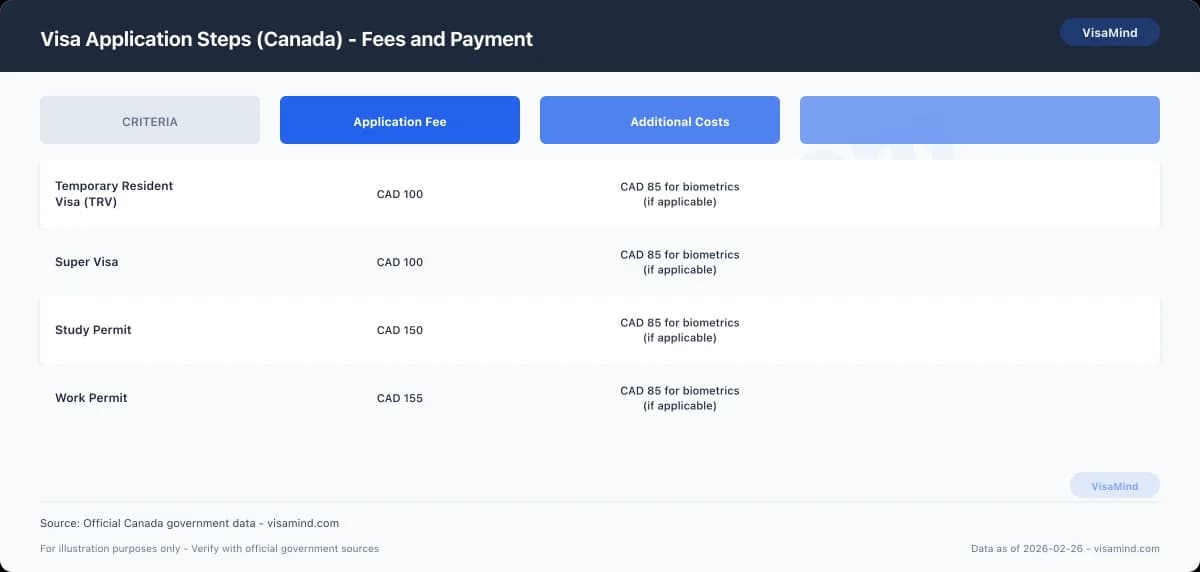
Applying for a Canadian visa involves understanding the associated costs, fees, and payment methods. This section outlines what you need to know about the financial aspects of your visa application process.
What Are the Application Fees?
Different types of visas and permits have varying application fees. Here’s a quick overview of some common categories:
- Visitor Visa (including Super Visa): CAD 100 per person
- Work Permits: CAD 155
- Study Permits: CAD 150
- Permanent Residence Applications (Express Entry): CAD 1,325
Important: Fees are subject to change. As of 2023, verify the most current fees on the official IRCC website.
Are There Additional Costs?
In addition to application fees, you might encounter other costs such as:
- Biometrics Fee: CAD 85 per person or CAD 170 for a family of two or more
- Right of Permanent Residence Fee: CAD 515
These fees are typically required when you apply for a Study Permit or Express Entry, among others.
How Can You Pay?
IRCC accepts several payment methods for your visa application fees:
- Online Credit Card Payment: The most common and efficient method.
- Bank Draft: Offered by some Canadian banks and international financial institutions.
- Debit Card: Available for online applications.
Ensure that you receive a receipt after payment, as you will need to include it with your application.
Tip: Paying online with a credit card provides immediate confirmation and a receipt number, which can help track your application.
What Is the Refund Policy?
Understanding the refund policy is crucial to managing your application expenses:
- Non-Refundable Fees: Most application fees are non-refundable, even if your visa is denied.
- Refundable Fees: Some fees, such as the Right of Permanent Residence Fee, may be refunded if your application is unsuccessful.
For more details on which fees might be refundable, consult Visa Refusal Reasons to better understand the risks and conditions.
When planning your visa application, consider these costs and payment methods carefully to ensure a smooth process.
Tracking Your Application
#Tracking your visa application with Immigration, Refugees and Citizenship Canada (IRCC) is an important step to stay informed about the progress and status of your application. IRCC offers several tools and resources to help you monitor your application effectively.
How to Track Your Application
Once you have lodged your application, IRCC provides an online tool known as the Client Application Status (CAS) system. You can use this tool to check the status of your application anytime:
- Visit the IRCC Website: Go to the official IRCC website and navigate to the "Check your application status" page.
- Log In: Use your unique application number and personal information to log in.
- View Status: Once logged in, you can see the current status of your application and any updates.
Tip: Regularly checking the CAS system can help you stay on top of any additional requirements or requests from IRCC.
Expected Timeline
Processing times can vary significantly depending on the type of visa you have applied for. Here's a general idea of what to expect:
- Temporary Resident Visa (TRV): Typically processed within a few weeks.
- Study Permit: Generally takes a few months, but check the Study Permit Guide for specifics.
- Express Entry: The Express Entry Guide notes that applications are often processed within six months.
For the most accurate information, always refer to the Processing Times Explained guide on our site.
What to Do While Waiting
While waiting for a decision, there are several proactive steps you can take to prepare for your potential move to Canada:
- Gather Necessary Documents: Ensure you have all important documents ready, such as medical records and financial statements. Refer to the Medicals and Police Certificates guide for more details.
- Plan Finances: Understand the financial requirements and plan your budget accordingly. The Proof of Funds guide can provide insight into financial expectations.
- Stay Informed: Keep up-to-date with any updates from IRCC or changes in immigration policies.
Important: If you receive any requests for additional information from IRCC, respond promptly to avoid delays.
By staying informed and prepared, you can navigate the waiting period more smoothly and be ready for the next steps once your visa is approved.
If Something Goes Wrong
#Sometimes, despite your best efforts, things can go wrong in the visa application process for Canada. Understanding the steps you can take if you face issues is important to manage your situation effectively.
What If Your Application Is Refused?
If your visa application is refused by Immigration, Refugees and Citizenship Canada (IRCC), you generally have the right to appeal or reapply, depending on your situation. It's crucial to carefully read the refusal letter to understand the reasons behind the decision.
-
Reapplication: Often, the simplest option is to address the issues cited in your refusal letter and submit a new application. This may involve gathering additional documents or providing more detailed information.
-
Appeal Rights: Not all visa refusals come with appeal rights. Generally, if you are applying for a Temporary Resident Visa (TRV), you do not have the right to appeal the decision. However, you may seek a judicial review in Federal Court, which requires legal assistance.
Important: Always verify the specific appeal or reapplication process on IRCC's official website, as procedures can change.
How to Request an Administrative Review
In some cases, you may feel that a refusal was due to an administrative error. If you believe an error was made, you can request an administrative review. This involves submitting a formal request to the IRCC, highlighting why you believe the decision was incorrect.
- Steps for Review:
- Gather all relevant documentation supporting your claim.
- Draft a concise letter explaining the perceived error.
- Submit your request to the IRCC, following their specified guidelines.
Accessing Information
To better understand your refusal, you may request access to your personal information held by the Canadian government using the Consent for an Access to Information and Personal Information Request (IMM 5744) form. This can provide insights into why your application was refused.
- Requirements:
- Ensure you have Adobe Acrobat Reader version 10 or higher to open the form.
- Include personal details like your telephone, email, and any relevant identification numbers.
Tip: Use the Visa Refusal Reasons guide to understand common pitfalls and how to avoid them in future applications.
By taking these steps, you can address any issues in your visa application process and increase your chances of a successful outcome in the future.
Expected Timeline
#Understanding the expected processing times for Canadian visas is crucial for planning your application. The timeline can vary based on the visa type, the applicant's country of residence, and the completeness of the application. Here's a general overview of what you can expect:
| Visa Type | Eligibility & Application | Cost | Timeline |
|---|---|---|---|
| Temporary Resident Visa (TRV) | Requires proof of purpose and ties to home country | CAD $100 | Approximately 8-14 weeks |
| Study Permit | Proof of acceptance from a DLI | CAD $150 | Approximately 8-20 weeks |
| Work Permit | Valid job offer from a Canadian employer | CAD $155 | Approximately 10-16 weeks |
| Express Entry | Based on CRS score and eligibility | Varies with program | Around 6 months after ITA |
| Parent and Grandparent Sponsorship | Must be invited to apply | CAD $1,050 | 20-24 months |
Important: Processing times are subject to change and may be longer due to unforeseen circumstances. Always verify the latest processing times on the official IRCC website.
Factors Affecting Processing Times
Several factors can influence how quickly your application is processed:
- Completeness of Application: Missing documents or incorrect information can delay processing.
- Biometrics Requirement: You may need to provide biometrics, which can add time to the process. Check the Biometrics Guide for details.
- Country of Residence: Processing times can vary depending on where you are applying from.
- IRCC Backlog: High volumes of applications can increase processing times.
Tip: Ensure all documents are correctly prepared and submitted to avoid unnecessary delays.
For more detailed information on processing times and possible delays, visit the Processing Times Explained guide.
Which System to Use
#-
Determine Your Eligibility
Before you begin the visa application process, you need to determine which immigration program or visa category is appropriate for you. Visit the Temporary Resident Permit, Study Permit, or Express Entry pages to assess your eligibility. This will guide you to the correct application process and portal. -
Use the IRCC Online Portal
Most applications for Canadian visas and permits are processed through the Immigration, Refugees and Citizenship Canada (IRCC) online portal. This system is designed to streamline the application process, allowing you to apply for a visa from the comfort of your home. You will need to create an account or sign in to your existing account to access the application forms and upload your documents. -
Install Required Software
To ensure you can access and complete forms correctly, download and install Adobe Acrobat Reader, version 10 or higher. This software is necessary to open and fill out various forms used during the application process. Attempting to complete forms on mobile devices or using outdated software may result in errors.
Tip: Filing your application online through the IRCC portal is generally faster than mailing paper forms, and you receive immediate confirmation of receipt.
Navigating the Application Instructions
-
Review the Detailed Instructions
Once logged into the IRCC online portal, you'll find specific instructions related to your visa category. It’s important to carefully read these guidelines as they detail the documents required and the steps to follow. Whether you are applying for a Work Permit or Parent Grandparent Sponsorship, each category has unique requirements. -
Gather Your Documents
Use the instructions provided to gather all necessary personal information and documentation. This may include personal identification, travel history, proof of funds, and any other documents specified for your visa type. Make sure all documents are up to date and comply with the specified guidelines.
Common Pitfalls
-
Avoid Mobile Devices for Form Completion
Always use a computer to download and complete your application forms. Attempting to open and fill forms on tablets or mobile phones can lead to errors and incomplete submissions. -
Ensure Software is Up to Date
Ensure you have the latest version of Adobe Acrobat Reader installed. Using outdated software can prevent you from opening or correctly filling out the forms, potentially delaying your application process.
Important: Always verify the most current application requirements and instructions on the official IRCC website, as procedures and forms may change.
Your Biometrics Appointment
#Once you have initiated your visa application with Immigration, Refugees and Citizenship Canada (IRCC), you may be required to provide biometrics as part of the process. Biometrics collection is an important step and must be completed promptly to avoid delays in your application.
-
Receive Biometrics Instruction Letter: After submitting your initial application, you will receive a biometric instruction letter from IRCC. This letter will provide details on how and where to give your biometrics. Keep this letter safe, as you will need to present it at your appointment.
-
Locate a Biometrics Collection Point: Biometrics can be provided at designated Visa Application Centers (VACs) or Application Support Centers (ASCs) if you are outside Canada. In Canada, you may visit a Service Canada location. It's important to choose a location that is convenient for you and to check their availability.
-
Book Your Appointment: Use the information in your biometrics instruction letter to book an appointment at your chosen location. It’s best to book your appointment as soon as possible, as appointment slots can fill up quickly. Ensure you have your valid passport or travel document, as it will be required for identification.
Tip: Some VACs offer walk-in services, but booking an appointment is recommended to avoid long wait times.
Preparing for Your Appointment
Before attending your biometrics appointment, ensure you have all necessary documents ready.
- Required Documents: Bring your biometric instruction letter and a valid passport or travel document. Check if the VAC or Service Canada point requires any additional documents.
- Fee Payment: If you haven’t already paid the biometrics fee, ensure you’ve made the payment and bring proof of this payment.
Attending the Appointment
On the day of your appointment, arrive at the center at least 15 minutes early to allow time for check-in procedures.
- Biometric Collection: The process typically involves fingerprinting and taking a digital photograph. The entire process is quick, usually taking about 15-30 minutes.
- Verification: Ensure all your details are correctly recorded before leaving the center. This will help prevent any discrepancies that could delay your application.
Important: If you miss your appointment, contact the location as soon as possible to reschedule. Delays in giving your biometrics can impact your application timeline.
For more detailed information on biometrics and what to expect, consider reviewing our comprehensive Biometrics Guide. If your visa type requires additional steps, such as those involved with a Temporary Resident Permit or Super Visa, ensure you follow those specific guidelines as well.
How the Points System Works
#Canada's immigration system uses a points-based assessment to evaluate applicants for certain visas, such as the Express Entry program. Understanding how this system works can help you maximize your score and improve your chances of success.
How the Points System Works
The points system assesses various factors to determine your eligibility. These factors include age, education, work experience, language proficiency, and adaptability. Here is a breakdown of how these elements contribute to your overall score:
| Factor | Maximum Points | Key Considerations |
|---|---|---|
| Age | 110 | Points decrease as you age, with the highest scores for applicants aged 20-29. |
| Education | 150 | Higher education levels, such as a master's degree or Ph.D., earn more points. |
| Work Experience | 80 | Canadian work experience scores higher than foreign work experience. |
| Language Proficiency | 160 | Proficiency in English and/or French is evaluated through standardized tests like IELTS or TEF. |
| Adaptability | 100 | Points for adaptability can be gained through factors like a spouse's language skills or previous Canadian work/study experience. |
Tips to Maximize Your Score
-
Improve Language Skills: Language proficiency is a critical factor. Consider taking language courses or retaking tests to achieve higher scores. Tests such as the IELTS and TEF are commonly used.
-
Enhance Education Credentials: If possible, pursue higher education or get your foreign credentials evaluated to meet Canadian standards. This can significantly increase your education points.
-
Gain Canadian Experience: Work permits such as the Open Work Permit or programs like the International Experience Canada can provide valuable Canadian work experience that boosts your score.
-
Explore Provincial Nominee Programs (PNPs): Some PNPs prioritize candidates with skills in demand in specific provinces, which can offer additional points and expedite the process.
Tip: Regularly update your profile in the Express Entry pool to reflect any changes in your circumstances, such as additional work experience or language test results. This keeps your score as high as possible.
Understanding the Impact of Different Factors
To effectively navigate the points system, focus on areas where you can make the most impact. For instance, if you're younger and have strong language skills, prioritize gaining Canadian work experience. Conversely, if you have substantial work experience but less language proficiency, improving your language scores could be more beneficial.
By strategically enhancing your profile, you increase your chances of receiving an Invitation to Apply (ITA) through the points-based system. For more detailed guidance, check the Express Entry Guide.
FAQs
What are the application costs for different visas in the Visa Application Steps (Canada)?
Can I switch visa categories during the Visa Application Steps (Canada)?
What is the role of the points system in the Visa Application Steps (Canada)?
How do I track my application in the Visa Application Steps (Canada)?
What should I do if my Visa Application Steps (Canada) process encounters issues?
Can I combine study and work goals through the Visa Application Steps (Canada)?
How does the biometrics appointment fit into the Visa Application Steps (Canada)?
Sources
Last reviewed: March 1, 2026
VisaMind provides informational guidance only and is not a government agency. This is not legal advice. Requirements can change and eligibility depends on your specific facts. If your case is complex or high-stakes, consult a licensed immigration attorney.
Next steps
Requirements vary by nationality, purpose, timeline, and case details. Use Find My Visa to get a personalized checklist for Canada with official sources and deadlines.
Find my visa