Official sources referenced
Who Should Read This
#For many individuals applying to enter or stay in Canada, the requirement to provide biometric information is a critical step. Biometric data, which includes fingerprints and a photo, is generally required for those applying for a visitor visa, study permit, work permit, or permanent residence. Effective as of 2023, most applicants between the ages of 14 and 79 need to provide biometrics if they are applying from outside Canada. This guide is essential for those preparing to lodge an application that necessitates biometrics, as it will help you understand who needs to provide this information, when and how to do so, as well as the costs involved.
Who Needs to Provide Biometrics?
Individuals applying for a range of visas and permits, including Study Permits and Work Permits, will typically need to submit biometrics. This requirement is also applicable to those applying for a Temporary Resident Visa or seeking Permanent Residence. Ensure you verify the specific biometric requirements linked to your visa category to avoid delays.
When Is Biometrics Collection Required?
Biometrics collection is usually part of your application process. You'll receive a Biometrics Instruction Letter from Immigration, Refugees and Citizenship Canada (IRCC) once your application is lodged, directing you to provide your biometrics at a local collection point. It's important to complete this step promptly to avoid delays in processing your application.
Costs and Validity
As of 2023, the fee for biometrics is CAD 85 per person, or up to CAD 170 for a family applying together. This fee is subject to change, so verify the latest costs on the official IRCC website. Biometric information is valid for 10 years, meaning if you've provided biometrics for a previous application, you may not need to do so again within this period.
Important: Failing to provide biometrics when required can result in application delays or refusals. Always check your specific visa or permit requirements.
The Big Picture
#Biometrics collection plays a crucial role in Canada's immigration process, overseen by Immigration, Refugees and Citizenship Canada (IRCC). As part of ensuring the integrity and security of Canada's immigration system, biometrics are required for most foreign nationals applying for a visitor visa, work or study permit, permanent residence, or refugee or asylum status. The collection of biometrics refers to capturing fingerprints and a photograph, which helps IRCC verify identity, manage entry into Canada, and facilitate processing at the border.
Why Biometrics Matter
Biometrics serve as a reliable and secure method of identification. They are used to:
- Confirm your identity when you enter Canada.
- Simplify the re-entry process for future visits.
- Help prevent identity fraud and maintain the integrity of the immigration system.
The process of collecting biometrics is streamlined to ensure efficiency and security. Once your biometrics are collected, they are valid for 10 years, making future applications within this timeframe easier.
Important: Failure to provide biometrics when required can lead to delays or denial of your application.
Who Needs to Provide Biometrics?
Most applicants for a visitor visa, work permit, study permit, or permanent residence are required to provide biometrics. This requirement applies to applicants aged 14 to 79, with certain exemptions such as U.S. visa holders entering Canada directly from the U.S.
- Visitor visa applicants
- Work permit and study permit applicants (excluding U.S. nationals)
- Permanent residence applicants
- Asylum seekers and refugee claimants
Tip: If you have provided biometrics in the last 10 years for a previous application, you may not need to provide them again for a new temporary residence application.
How Biometrics Are Collected
Biometrics are collected at designated locations known as Visa Application Centres (VACs) or Application Support Centers (ASCs) for those in the United States. The process involves:
- Scheduling an appointment at a VAC or ASC.
- Attending the appointment to provide fingerprints and a photograph.
- Receiving confirmation that your biometrics have been collected.
What to Expect Next
Once your biometrics are submitted, they are processed by IRCC and linked to your application. This step assists in identity verification and helps streamline the application process. It is important to note that:
- Biometrics collection is a separate process from your visa or permit application.
- Processing times for applications may vary, and it's advisable to verify processing times on the official IRCC website.
For those planning to apply for various Canadian visas, it is beneficial to understand the role of biometrics in the application process. Whether you are applying for a Temporary Resident Visa (TRV) or transitioning from a Post-Graduation Work Permit (PGWP) to Permanent Residence, being well-informed about biometrics requirements can facilitate a smoother application experience.
Who Qualifies
#To qualify for biometrics as part of your immigration process with Immigration, Refugees and Citizenship Canada (IRCC), there are specific requirements and prerequisites you need to meet. Biometrics involves providing your fingerprints and a photo, and it is essential for most types of visa and permit applications.
Who Needs to Provide Biometrics?
-
Temporary Resident Visa (TRV) Applicants: If you are applying for a TRV, you will likely need to provide biometrics. This includes those applying for a Visitor Visa or Super Visa.
-
Work Permit Applicants: Those seeking a Work Permit or a Bridging Open Work Permit must provide biometrics unless exempted.
-
Study Permit Applicants: If you are applying for a Study Permit, you will generally need to submit biometrics.
-
Permanent Residence Applicants: This includes applicants for Express Entry, Provincial Nominee Program (PNP), and other pathways to permanent residency.
Key Requirements
-
Age Criteria: Applicants between 14 and 79 years old typically need to provide biometrics. Exceptions may apply for certain categories, such as asylum seekers.
-
Previous Biometrics: If you have provided your biometrics in the last 10 years for a visa application, you may not need to provide them again for a new application. Always verify your specific situation with IRCC.
-
Fee Payment: A biometrics fee must be paid when you apply for your visa or permit. As of 2023, the fee is CAD $85 for an individual applicant. For a family applying together at the same time, the maximum fee is CAD $170. Verify the current fee on the official website.
Important Considerations
-
Exemptions: Certain applicants are exempt from providing biometrics, including those under 14 or over 79 (with some exceptions), and certain diplomatic or official visa holders.
-
Biometrics Collection Points: You must have your biometrics collected at an authorized Visa Application Center (VAC) or Application Support Center (ASC). It is important to schedule an appointment as soon as you receive your biometrics instruction letter from IRCC.
Important: Failing to provide biometrics when required can result in delays or refusal of your application. Ensure you understand whether you are required to provide biometrics and follow the instructions provided by IRCC carefully.
For more detailed information on specific visa categories and their requirements, you can explore additional resources such as the Visitor Visa ETA Guide or the Express Entry Guide.
The Process from Start to Finish
#Determine If You Need to Provide Biometrics
Before you begin the biometrics process, determine if biometrics are required for your application. Generally, fingerprints and a photo are required for most visitors, students, and workers applying for a Canadian visa. However, there are exceptions, such as for Canadian citizens and certain visa-exempt individuals. Check the Visitor Visa ETA Guide for specific exemptions.
Receive the Biometrics Instruction Letter
Once you apply for a visa or permit, you will receive a Biometrics Instruction Letter from Immigration, Refugees and Citizenship Canada (IRCC). This letter is crucial as it includes your unique Biometrics Instruction Number and details on how to proceed with providing your biometrics.
Book an Appointment at a Visa Application Centre (VAC)
After receiving the instruction letter, book an appointment at a nearby Visa Application Centre (VAC). You can find a list of VACs on the official IRCC website. It’s important to note that appointments are mandatory, and the availability might vary by location.
Pay the Biometrics Fee
The biometrics fee is CAD 85 per person as of 2023. Family applications, however, can benefit from a maximum fee of CAD 170, covering all members. Ensure to verify this information on the official IRCC website as fees are subject to change.
Attend Your Biometrics Appointment
On the day of your appointment, bring your Biometrics Instruction Letter and a valid passport. At the VAC, your fingerprints and photo will be taken. This process usually takes around 15 minutes, but it’s advisable to arrive a bit early.
Tip: Ensure your hands are clean and free of any temporary markings or henna, as these can interfere with fingerprint scanning.
Wait for Confirmation
Once you have provided your biometrics, the VAC will submit them directly to IRCC. You will receive confirmation from IRCC that your biometrics have been successfully processed. This step is essential for the continuation of your visa or permit application.
Follow Up on Your Application
Keep track of your application status through the IRCC online portal. Processing times can vary based on the type of visa or permit you are applying for. For detailed timelines, refer to the Processing Times Explained.
Receive Your Decision
Finally, IRCC will notify you of their decision regarding your application. If approved, follow the specific instructions provided for your next steps. If additional information is needed, respond promptly to avoid delays.
Important: If you plan to apply for permanent residence or renew a temporary status, you may need to provide biometrics again. Always check the latest IRCC guidelines for your specific application type.
For more information on related visa categories, explore options like Express Entry or the Provincial Nominee Program for pathways to permanent residence in Canada.
Costs and Timeline
#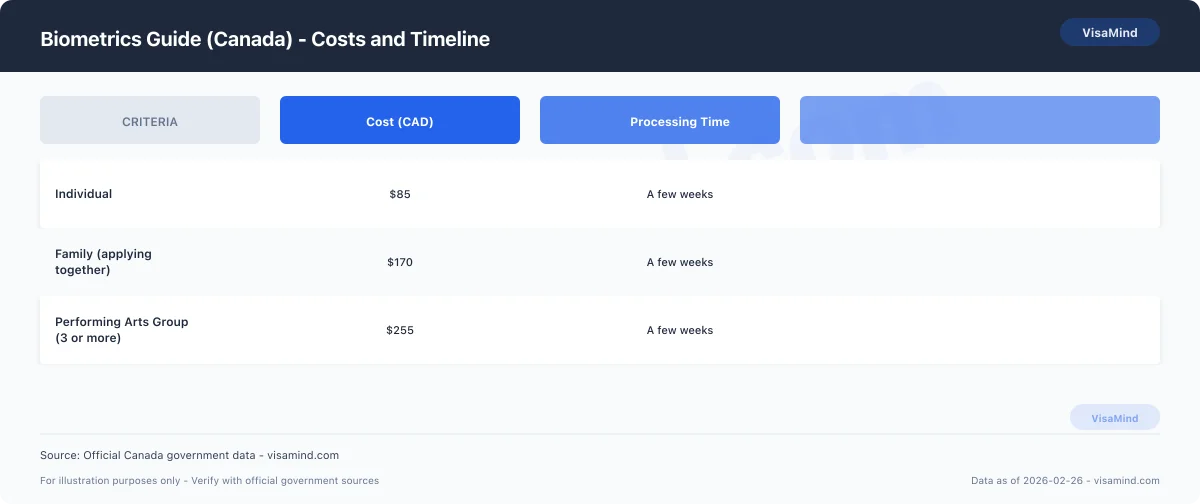
You will likely need to provide biometrics. Understanding the associated costs and timelines can help you plan effectively. Below is a comparison of the costs and timelines for different types of Canadian visas and permits requiring biometrics.
Costs and Timelines for Biometrics
| Visa/Permit Type | Biometrics Fee | Processing Time |
|---|---|---|
| Visitor Visa | CAD 85 | Typically processed within a few weeks after submission. For detailed timelines, check the Processing Times Explained. |
| Study Permit | CAD 85 | Processing times vary. Generally, it can take several weeks. See the Study Permit Guide for more info. |
| Work Permit | CAD 85 | Processing times depend on the application type. Refer to the Work Permits Overview for specific timelines. |
| Family Sponsorship | CAD 170 for two or more applicants | The timeline can extend to several months. Visit the Family Sponsorship Guide for detailed information. |
What to Expect After Submitting Biometrics
After submitting your biometrics, the information is used by Immigration, Refugees and Citizenship Canada (IRCC) to verify your identity and background. Typically, this step is crucial for security checks and can impact the overall processing time of your application. Biometrics must be submitted at a designated location, such as a Visa Application Centre (VAC).
Important: Missing your biometrics appointment can delay your application. Make sure to attend the earliest available appointment to avoid processing delays.
Additional Considerations
- Validity: Your biometrics are generally valid for 10 years. If you have previously submitted biometrics for another application, you may not need to provide them again. This can expedite your application process.
- Fee Waivers: In certain circumstances, such as applying for asylum, biometrics fees may be waived. Always confirm your specific situation on the IRCC website.
By understanding these costs and timelines, you can better manage your expectations and prepare for your next steps in the immigration process. For more detailed information, refer to guides specific to your visa type, such as the Express Entry Guide or the Visitor Visa ETA Guide.
Tips and Best Practices
#Tip: When scheduling your biometrics appointment, choose a location close to your residence to avoid unnecessary travel stress.
Preparing for Your Biometrics Appointment
- Gather Required Documents: Ensure you have all necessary documents ready, such as your valid passport or travel document and your Biometrics Instruction Letter. This letter will confirm your appointment details and provide instructions.
- Check Facility Details: Verify the address and hours of operation for the biometrics collection facility. This information can be found on the appointment confirmation email or the IRCC website.
- Plan for Wait Times: Arrive at the biometrics collection center early to account for potential wait times. Some centers may be busier than others, depending on their location.
Common Pitfalls to Avoid
- Technical Issues: Avoid using tablets or mobile phones to access the Biometrics Instruction Letter or other documents. These devices often lead to compatibility issues. Use a computer and ensure you have Adobe Acrobat Reader version 10 or higher installed.
- Incorrect Information: Double-check that the personal details on your Biometrics Instruction Letter match your identification documents. Discrepancies can delay your application process.
After Your Appointment
- Keep Proof of Submission: After completing your biometrics, you will receive a receipt as proof of submission. Keep this document safe, as it may be required for future reference or inquiries with IRCC.
- Track Application Status: Regularly check the status of your application through your IRCC account. Monitoring your application can help you quickly address any issues that may arise.
Important: Missing your scheduled biometrics appointment could result in delays or refusal of your application. If you need to reschedule, contact the IRCC immediately to secure a new appointment slot.
For more detailed information on specific applications, such as the Express Entry system or Spousal Sponsorship, consider reviewing the relevant guides. These resources offer additional insights into the visa or permit processes you may be navigating.
Additional Considerations
- Accessibility Needs: If you have specific accessibility needs, contact the biometrics center in advance to ensure they can accommodate you.
- Travel Considerations: If you're applying for a Temporary Resident Permit or any other permit involving travel, ensure your biometrics appointment aligns with your travel plans to avoid complications.
By following these tips and best practices, you can help ensure a smoother experience when dealing with the biometrics process for your Canadian immigration application.
Common Mistakes
#Applicants often encounter obstacles when providing biometrics for their Canadian immigration applications. Here are some common mistakes and how to avoid them.
Technical Issues
-
Using Incompatible Devices: Attempting to open forms on tablets or mobile phones can lead to technical issues. Forms must be downloaded and opened using Adobe Acrobat Reader version 10 or higher on a computer.
Tip: Always save the form on your computer before opening to ensure all features work correctly.
Document Handling
-
Incomplete Forms: Failing to complete all required sections can delay processing. Ensure every section, especially those requiring personal information (like telephone, email, and financial details), is filled out accurately.
-
Misplacing Forms: Save your forms in a memorable location on your computer to easily access them when needed. This prevents unnecessary delays if you need to reference them later.
Procedural Missteps
-
Skipping Instruction Review: It's crucial to review the instructions specific to your eligibility category before starting the application process. This helps avoid submitting incorrect or incomplete information.
-
Ignoring Eligibility Requirements: Not all visa types require biometrics. Ensure that your specific visa category requires biometrics by reviewing relevant guides such as the Express Entry Guide or the PR Pathways Overview.
Timing Errors
-
Missing Deadlines: Biometrics appointments must be completed within a specific timeframe, usually 30 days from the date of the request. Missing this deadline can result in application delays.
Important: If you cannot meet the deadline, contact IRCC immediately to request an extension.
By being aware of these common mistakes and taking steps to avoid them, you can prevent unnecessary delays in your immigration process. For more detailed information about the various visa types, you can explore resources like the Visitor Visa Vs Super Visa guide.
What Other Applicants Experienced
#A remote worker living in a rural part of Canada faced challenges when required to provide biometrics for their Spousal Sponsorship application. With the nearest Service Canada office over 200 kilometers away, scheduling and attending an appointment seemed daunting. They used the IRCC online portal to book a biometrics appointment at a suitable location. By planning a day trip, they managed to complete the biometrics process without impacting their work schedule. The IRCC confirmed the receipt of their biometrics within two weeks, allowing their application to proceed smoothly.
Scenario: Addressing Concerns Over Multiple Applications
An applicant seeking both a Study Permit and a Work Permit was concerned about how biometrics requirements might overlap. They were worried about having to provide biometrics more than once, leading to potential delays in their study plans. After consulting the IRCC guidelines, they discovered that biometrics are valid for 10 years for most applicants. By providing biometrics for the study permit application, they were able to use the same biometrics for subsequent applications without additional appointments, saving them both time and effort. Their study permit was approved within the expected timeline, allowing them to start their studies in Canada as planned.
FAQs
How do I ensure eligibility before starting the Canadian biometrics process?
Can I switch between visa categories while following the Biometrics Guide (Canada)?
What is the timeline for processing biometrics through IRCC in Canada?
Is it possible to combine goals like study and work while using the Canada Biometrics Guide?
What are the costs associated with the IRCC biometrics process in Canada?
Why is Adobe Acrobat Reader required for the Biometrics Guide (Canada) forms?
How can I avoid common mistakes in the Canada Biometrics Guide process?
Sources
Last reviewed: March 1, 2026
VisaMind provides informational guidance only and is not a government agency. This is not legal advice. Requirements can change and eligibility depends on your specific facts. If your case is complex or high-stakes, consult a licensed immigration attorney.
Next steps
Requirements vary by nationality, purpose, timeline, and case details. Use Find My Visa to get a personalized checklist for Canada with official sources and deadlines.
Find my visa