On this page
Who Moves Here and Why
#Japan welcomes a diverse range of immigrants each year, with a significant portion arriving as skilled professionals. In 2022, Japan issued over 70,000 Highly Skilled Professional and Engineer/Specialist visas, underscoring its need for expertise in technology, engineering, and academia. The Highly Skilled Professional Visa offers substantial benefits, such as a fast-tracked path to permanent residency and the ability to sponsor family members, making it an attractive option for many.
Family Connections
Japan also sees a considerable number of immigrants coming to join family members. The Spouse or Child of Japanese National Visa is designed for individuals married to or children of Japanese citizens. This visa provides a pathway for family reunification, allowing spouses and children to live, work, and study in Japan without additional work permits. Additionally, those who have lived in Japan for an extended period may qualify for Permanent Residence, which grants similar rights to those of Japanese citizens, excluding voting rights.
Business and Investment
Entrepreneurs and investors are increasingly drawn to Japan, taking advantage of the country's stable economy and strategic location in Asia. The Business Manager Visa is tailored for individuals looking to start or manage a business in Japan. This visa requires applicants to demonstrate a viable business plan and an investment of at least 5 million yen. For those interested in innovative ventures, the Startup Visa offers a one-year residence permit to establish a new business with the potential for extension.
Retirement and Long-Term Stay
Japan is also becoming a popular destination for retirees due to its high standard of living and excellent healthcare system. While Japan does not have a specific retirement visa, long-term residency options like the Long Term Resident Visa allow for extended stays under certain conditions. Retirees often explore these options, especially if they have family ties or investments in Japan.
Important: Before applying for any visa, review the specific eligibility requirements and gather necessary documents. Visit the official Immigration Services Agency of Japan website for the most up-to-date information.
For more detailed guidance on different visa types and processes, explore our How To Apply and Documents Checklist pages.
Joining Family Members
#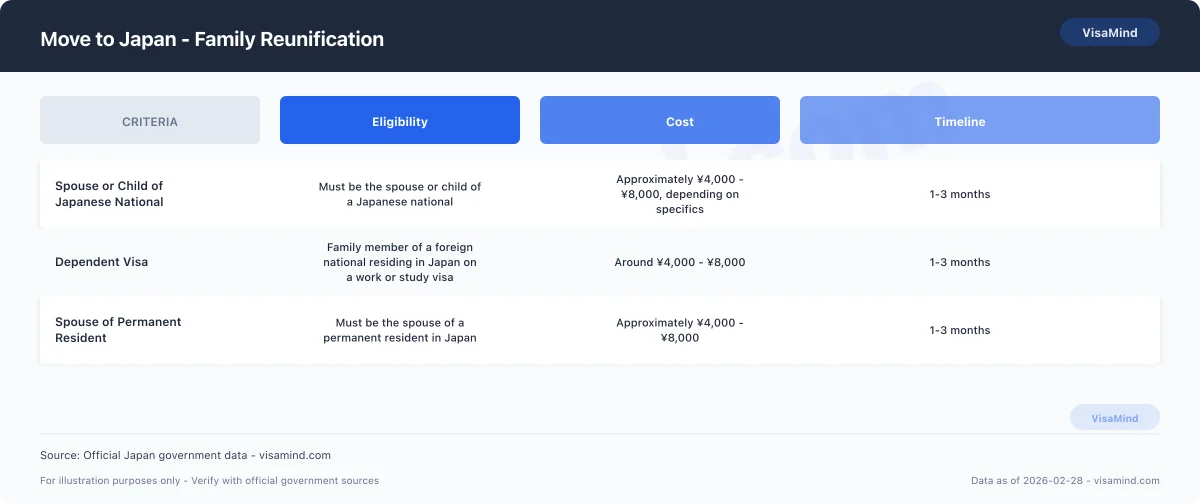
If you're planning to move to Japan to join family members, several visa pathways are available depending on your relationship with the person already residing there. Below, we detail options for spouses, partners, parents, and children, outlining eligibility, costs, and processing times.
| Visa Type | Eligibility | Cost | Timeline |
|---|---|---|---|
| Spouse or Child of Japanese National | Spouse or child of a Japanese national. Proof of marriage or parentage is required. | Approximately ¥4,000 for single-entry as of 2023 (verify on the official website). | Processing typically takes 1-3 months. |
| Dependent | Spouse or child of a foreign national residing in Japan. The principal visa holder must have an appropriate residence status. | Approximately ¥4,000 for single-entry as of 2023 (verify on the official website). | Processing typically takes 1-3 months. |
| Spouse or Child of Permanent Resident | Spouse or child of a permanent resident. Similar documentation to the Spouse of Japanese National visa is required. | Cost is similar to the spouse visa, approximately ¥4,000 for single-entry as of 2023 (verify on the official website). | Processing typically takes 1-3 months. |
Key Considerations
When applying for a family-related visa in Japan, it is crucial to prepare the necessary documentation thoroughly. This often includes proof of relationship, financial stability, and, in some cases, a Certificate of Eligibility (COE), which must be obtained before entering Japan.
Tip: The Spouse or Child of Japanese National and Dependent visas require a strong demonstration of the familial relationship and sometimes a COE. Make sure to gather all required documents early to avoid delays.
Application Process
- Gather Documents: Collect all necessary documentation, including proof of relationship (e.g., marriage or birth certificates) and financial statements.
- Apply for COE: For some visa types, you must first apply for a Certificate of Eligibility through the regional Immigration Bureau in Japan.
- Lodge Your Application: Submit your visa application along with the COE (if required) at the Japanese embassy or consulate in your country of residence.
- Await Processing: Processing times can vary, but you should generally expect a period of 1-3 months.
For more detailed guidance on preparing your application, you can refer to our Documents Checklist and How To Apply guides.
Moving Forward
Once your visa is approved, you can join your family in Japan and enjoy the opportunities the country offers. If you're considering a long-term stay, you might explore pathways to Permanent Residence after residing in Japan for a significant period.
Skilled Migration Pathways
#Japan offers several pathways for skilled migrants looking to establish permanent residence. These pathways cater to different needs and qualifications, allowing professionals to contribute to the Japanese economy through various visa options.
| Visa Type | Eligibility | Cost | Timeline |
|---|---|---|---|
| Highly Skilled Professional | Points-based system; requires a score of 70 points or more. Professionals with advanced skills or high-level qualifications. | Approx. ¥4,000 for the Certificate of Eligibility (COE), additional fees for visa application. | COE processing: 1-3 months; Visa processing: 5-10 days |
| Engineer Specialist | Requires a job offer in specific fields like humanities, international services, or engineering. | Approx. ¥4,000 for COE, plus visa application fees. | COE processing: 1-3 months; Visa processing: 5-10 days |
| Specified Skilled Worker 1 | Requires passing a skills exam and Japanese language proficiency test. | Approx. ¥4,000 for COE, plus visa application fees. | COE processing: 1-3 months; Visa processing: 5-10 days |
What Is the Points-Based System?
The Highly Skilled Professional visa utilizes a points-based system to attract top talent. Points are awarded based on criteria such as academic background, professional experience, age, and Japanese language proficiency. Achieving a score of 70 or more qualifies you for this visa, which offers advantages such as a faster track to permanent residency, typically within one year.
Tip: Utilize the Pr Pathway Guide to maximize your points and understand the benefits of this expedited pathway to permanent residency.
Employer-Sponsored Visas
Employer sponsorship is a common route for skilled migration to Japan. The Engineer Specialist visa requires you to have a job offer from a Japanese employer in a specified field. This pathway is ideal for individuals with expertise in engineering, humanities, or international services.
- Requirements:
- A confirmed job offer in one of the eligible fields
- Relevant professional qualifications and experience
- A Certificate of Eligibility (COE) from the employer
Independent Skilled Workers
The Specified Skilled Worker 1 visa allows workers to enter Japan independently, although it still mandates passing specific skills and language tests. This visa is particularly suited for roles in industries facing labor shortages.
- Requirements:
- Pass industry-specific skills exams
- Demonstrate Japanese language proficiency
- Obtain a Certificate of Eligibility (COE)
Transitioning to Permanent Residency
Securing a skilled visa is often the first step toward obtaining Permanent Residence in Japan. While each visa type has its specific pathway and timeline, skilled workers, especially those on the Highly Skilled Professional visa, may benefit from accelerated processes.
Important: Ensure you maintain compliance with all visa requirements and renewals. Missing deadlines or failing to fulfill conditions can impact your ability to transition to permanent residency.
For detailed guidance on each visa type, including necessary documents and application procedures, refer to the Documents Checklist and How To Apply guides. Always verify the latest information on the official Immigration Services Agency of Japan website to ensure compliance with current regulations.
Getting PR Step by Step
#-
Understand Eligibility Requirements
To qualify for permanent residence in Japan, you typically need to have resided in the country for a significant period. For most visa holders, this is generally ten years. However, certain categories, such as the Highly Skilled Professional, may qualify sooner, sometimes in as little as one to three years, depending on points accrued in their field. Ensure you review the specific eligibility criteria for your visa category on the Permanent Residence page.
-
Gather Necessary Documentation
Prepare essential documents such as proof of continuous residence, tax records, and a valid passport. You'll also need to demonstrate financial stability and good conduct. Verify the complete list of required documents on the Documents Checklist to ensure you have everything ready before lodging your application.
-
Lodge Your Application with ISA
Submit your application to the Immigration Services Agency of Japan. It's crucial to include all required documents to avoid delays. The processing of permanent residence applications can take several months, so plan accordingly. For detailed guidance on the process, refer to the Pr Pathway Guide.
-
Await Processing and Final Decision
After submission, the ISA will review your application. The processing time varies, but it generally takes six months to a year. During this period, ensure your current visa remains valid. If your application is successful, you will receive a permanent residence permit, granting you the right to live and work in Japan indefinitely without needing to renew your visa.
Tip: Maintaining a clean tax and legal record increases your chances of a successful application. Ensure all your taxes are up to date and that you have no legal issues in Japan.
-
Receive Your Permanent Residence Card
Once approved, you will be issued a permanent residence card. This card serves as proof of your status and should be carried at all times. Remember that, unlike other residence cards, the permanent residence card does not need regular renewal, although updates may be necessary if your personal details change.
What If You Are a Spouse of a Japanese National?
If you are applying as a Spouse or Child of Japanese National, the timeline can be shorter, generally around three years of continuous residence. The requirements still include proof of marriage and residence, along with the other standard documentation.
Important: Failing to comply with residency obligations or committing legal offenses can jeopardize your permanent residence status, even after approval.
Considerations for Highly Skilled Professionals
As a Highly Skilled Professional, you may be eligible for an expedited pathway to permanent residence. The points-based system favors individuals with significant professional achievements, academic qualifications, and salaries. Keep track of your points and consult the ISA's guidelines to understand your eligibility.
By following these steps and preparing accordingly, you can navigate the process of obtaining permanent residence in Japan with confidence. Always consult the official ISA website for the most up-to-date information and requirements.
Becoming a Citizen
#To become a Japanese citizen, you typically need to reside in Japan for a continuous period of at least five years. This requirement applies to most applicants, though there are exceptions for those with special circumstances, such as being married to a Japanese national. During this period, your residency status should be either a permanent resident or a long-term resident visa, like the Spouse or Child of Japanese National or Permanent Residence. It's crucial to maintain lawful residence and employment throughout your stay.
Citizenship Requirements
In addition to the residency requirement, there are several criteria you must meet to be eligible for Japanese citizenship:
- Age: You must be at least 20 years old and legally competent.
- Good Conduct: Demonstrating good behavior and compliance with Japanese laws is essential.
- Financial Stability: You should have a stable means of support, either through employment or other means.
- Renunciation of Previous Nationality: Japan does not allow dual citizenship, so you must agree to renounce your current nationality upon gaining Japanese citizenship.
Naturalization Process
Once you meet the basic eligibility criteria, you can start the naturalization process. Here is a general outline of the steps involved:
- Gather Documents: Prepare necessary documentation, including proof of residence, employment, and finances.
- Lodge Application: Submit your application with the Immigration Services Agency of Japan. You may need to attend an interview as part of this process.
- Language Proficiency: Demonstrating sufficient proficiency in the Japanese language is usually required.
Important: The naturalization process can be lengthy, often taking several months to over a year. Ensure all documentation is accurate and complete to avoid delays.
Tests and Interviews
As part of the naturalization process, you may be required to attend an interview and pass a written test. The test typically evaluates your knowledge of the Japanese language, culture, and basic laws. Preparing for this test is crucial, and you may find resources online or through language schools to assist with your preparation.
For more detailed guidance on preparing for the naturalization process, consider reviewing the Japanese Citizenship guide.
Tip: Engage with community programs or local events to immerse yourself in Japanese culture and improve your language skills, which can be beneficial during the interview and test stages.
Obstacles to Watch For
#Several potential obstacles can arise during the immigration process. Being aware of these challenges can help you better prepare and navigate the system effectively.
Processing Times
- Lengthy Waits: Obtaining a visa can be time-consuming. The processing time for different visas varies, often taking several months. For example, Permanent Residence applications can take up to a year or more. It's crucial to start your application well in advance of your intended move date.
- Seasonal Delays: During peak times, such as the start of the academic year or major holidays, expect additional delays. Plan accordingly to avoid last-minute issues.
Tip: Check the Processing Times guide for updated information on current wait times and plan your timeline around these estimates.
Financial Requirements
- Proof of Funds: Many visa categories require you to demonstrate sufficient financial resources to support yourself in Japan. The Financial Requirements guide can help you understand the specific amounts needed.
- Sponsorship: If applying for a work-related visa, such as the Engineer Specialist, ensure your employer provides the necessary financial sponsorship documentation.
Language Tests
- Japanese Language Proficiency Test (JLPT): For visas like the Specified Skilled Worker 1, you might need to pass language exams. The JLPT is a common requirement, and passing levels N1 or N2 can be advantageous.
- Preparation Time: Allocate sufficient time for language study and test preparation. Language proficiency can significantly impact your application success.
Important: Failing to meet language requirements can result in application denial, so verify the specific needs for your visa category.
By understanding these potential obstacles, you can better prepare your application and increase your chances of a successful move to Japan.
Moving Through Investment
#For those looking to make Japan their home through business or investment, the Business Manager Visa is an essential consideration. This visa is designed for individuals who wish to engage in the management of a business or start a company in Japan.
What is the Business Manager Visa?
The Business Manager Visa allows you to reside in Japan to manage or operate a business. To qualify, you typically need to demonstrate a significant investment in your company. While there’s no official “golden visa” equivalent in Japan, substantial financial investment in a Japanese business is a key pathway for residency.
Key Requirements for the Business Manager Visa
When applying for the Business Manager Visa, you should prepare the following:
- Investment Proof: A minimum of ¥5 million (approximately $45,000 USD as of 2023) must be invested in the business.
- Business Plan: A comprehensive business plan detailing your company’s operations and future projections.
- Office Space: Evidence of a physical office space in Japan, not just a virtual office.
- Company Registration Documents: Official documentation proving the company's registration with Japanese authorities.
- Financial Stability: Demonstrate sufficient financial means to support the business and your stay in Japan.
Tip: Ensure your business plan is detailed and aligns with Japanese market needs to strengthen your application.
How to Apply for the Business Manager Visa
-
Lodge an Application: Submit your application to the Immigration Services Agency of Japan (ISA). Ensure all documents are up-to-date and meet ISA requirements.
-
Obtain a Certificate of Eligibility (COE): A COE is typically required before applying for the visa itself. For more details, refer to the COE Application Guide.
-
Submit Visa Application: Once you have the COE, you can apply for the visa at a Japanese embassy or consulate in your home country.
-
Residence Card Issuance: Upon arrival in Japan, you will receive a Residence Card at the airport.
For those interested in exploring other visa options related to business and skilled migration, consider the Highly Skilled Professional Visa or the Startup Visa. Each pathway offers unique benefits and requirements, tailored to different professional backgrounds and goals.
Important: Keep track of processing times and financial requirements by reviewing the Processing Times Guide and Financial Requirements Guide on the official ISA website.
Options for Retirees
#Japan does not currently offer a specific retirement visa, a detail that may impact those seeking to retire in the country. However, there are alternative pathways you can explore if your goal is to spend your retirement years in Japan.
Permanent Residence Option
One viable option for retirees is to apply for Permanent Residence. To be eligible, you must have lived in Japan continuously for at least ten years. This pathway is advantageous because it allows you to live in Japan indefinitely without the need for frequent renewals. The application process for Permanent Residence involves demonstrating financial stability and a clean legal record. For more details on this route, you can refer to our Permanent Residence guide.
Long Term Resident Visa
Another potential option is the Long Term Resident Visa. This visa is typically granted under special circumstances and allows for extended stays in Japan. While not specifically designed for retirees, it could be a feasible option if you have family ties or other qualifying connections in Japan. It's important to consult with the Immigration Services Agency of Japan to understand if your situation qualifies for this visa type.
Tip: Consider consulting with an immigration specialist to explore all possible visa options tailored to your unique circumstances.
Alternative Visa Options
If the above options do not suit your situation, you might consider other visas such as the Spouse or Child of Japanese National if applicable, or the Business Manager Visa if you plan to invest or start a business. Each of these has its own set of requirements and application processes, which you can learn more about on our Visa Types page.
Important: Always verify the most current requirements and processes on the official ISA website, as immigration policies can change.
The Financial Side of Moving
#When moving to Japan, understanding the financial requirements is crucial for a successful relocation. Different visa categories have varying financial thresholds that you must meet. Below is a comparison of some key visa types and their associated financial considerations:
Financial Requirements for Different Visas
| Visa Type | Eligibility | Financial Requirements | Investment Amount |
|---|---|---|---|
| Spouse or Child of Japanese National | Married to or child of a Japanese national | Demonstrate sufficient financial means to support yourself in Japan | N/A |
| Highly Skilled Professional | Points-based system for skilled workers | Must meet a point threshold that includes income level | N/A |
| Business Manager | Establishing a business in Japan | Must have at least ¥5 million available for investment | ¥5 million |
| Startup Visa | Entrepreneurs starting a new venture | Requires a business plan and proof of funds for startup costs | Varies depending on business plan |
Understanding Income and Settlement Fund Requirements
When applying for a visa like the Specified Skilled Worker 1, you may need to demonstrate that you can maintain a certain level of income. This typically involves providing evidence of employment and salary, or other sources of income. For family-related visas, like the Dependent, the primary visa holder must also show the ability to financially support family members joining them in Japan.
Important: Ensure that all financial documents are up-to-date and translated into Japanese or English, as required by the Immigration Services Agency of Japan.
Investment Visas and Financial Commitments
For those moving to Japan through investment, such as the Business Manager or Startup Visa, it's essential to prepare a detailed business plan. The amount of investment required can vary significantly based on your business plan and the local market conditions.
Tip: Consult with a financial advisor familiar with Japanese regulations to ensure your financial plans meet all the necessary criteria.
For more detailed information on financial requirements and how they apply to your situation, refer to the Financial Requirements Guide. Always verify current requirements on the official Immigration Services Agency of Japan website, as regulations can change.
Real Migration Journeys
#"I was anxious about moving to Japan with my family, especially about gathering all the necessary documents for the Dependent Visa. The prospect of uprooting our lives was daunting, and I worried about missing something crucial in the application process. To address this, I meticulously organized all our documents, including marriage and birth certificates, and consulted the Documents Checklist to ensure nothing was overlooked. We also prepared a detailed explanation of my job and housing arrangement in Japan. Thankfully, our application was approved, and the Immigration Services Agency confirmed our family's eligibility to join me. This preparation was key to a smooth transition."
"Facing the challenge of applying for a Permanent Residence status, I was concerned about meeting the stringent requirements, especially the length of stay and income criteria. I decided to thoroughly research each requirement and attended a local seminar on Japan's immigration policies. This helped me understand the nuances of the application process. Additionally, I kept detailed records of my employment history and financial stability, consulting the PR Pathway Guide for clarity. The effort paid off when I received my permanent residence status, giving me the security to build a long-term future in Japan."
"As someone planning to start a business in Japan, I was initially worried about the Business Manager Visa application process and proving the viability of my business plan. My main concern was whether my startup would be seen as credible enough. To prepare, I collaborated with a local Japanese partner and conducted market research to create a robust business plan. I also attended workshops on Japanese business etiquette and legal requirements. By providing a comprehensive business plan and demonstrating my commitment, my application was successful, allowing me to establish my business in Japan."
FAQs
What are the steps to get PR in Japan through the Immigration Services Agency?
Can I switch from a Skilled Worker Visa to a Spouse Visa when I Move to Japan?
Is investing in Japan a viable option to Move to Japan?
What financial requirements should I consider when planning to Move to Japan?
How can retirees apply to Move to Japan?
What obstacles should I watch for when trying to Move to Japan?
Can I combine business investment with skilled migration when I Move to Japan?
Sources
Last reviewed: March 1, 2026
VisaMind provides informational guidance only and is not a government agency. This is not legal advice. Requirements can change and eligibility depends on your specific facts. If your case is complex or high-stakes, consult a licensed immigration attorney.
Next steps
Requirements vary by nationality, purpose, timeline, and case details. Use Find My Visa to get a personalized checklist for Japan with official sources and deadlines.
Find my visa