Official sources referenced
Pre-Application Checklist
#To successfully apply for a Japanese visa, it is essential to first confirm your eligibility and gather the necessary documentation. The Immigration Services Agency of Japan (ISA) manages the visa application process. Understanding the requirements specific to your situation can help streamline your preparation.
Determine Your Visa Category
Before you begin, identify the appropriate visa category for your intended stay in Japan. The main categories include:
- Short-Term Stay: Up to 90 days for tourism, business, or visiting friends. No remunerative activities allowed.
- Work or Long-Term Stay: Requires a Certificate of Eligibility (COE) from the ISA.
- Japan eVISA: Available for nationals residing in specific countries for short-term tourism.
Each category has different requirements and processes. For instance, if you plan to work or study, you'll need a Certificate of Eligibility before applying for a visa.
Gather Required Documentation
Once you've determined the appropriate visa category, compile the necessary documents. Typically, you will need:
- Visa Application Form: Ensure you have the correct form for your visa type.
- Invitation Letter: Required for certain visas, especially if an inviting organization or guarantor is involved.
- Itinerary in Japan: Detailed travel plans outlining your stay.
- Certificate of Eligibility: Required for work or long-term stay visas.
Important: Ensure that all documents are complete and accurate. Submitting incorrect or incomplete documents can delay your application.
Check Your Eligibility
Verify your eligibility based on the visa category you are applying for:
- Short-Term Stay: Confirm that your activities fall within the non-remunerative scope.
- Work or Long-Term Stay: Obtain the Certificate of Eligibility from the ISA.
- Japan eVISA: Check if your nationality is eligible for this option.
For detailed information on specific visa types and to ensure you meet all criteria, explore links like Short Stay or Engineer Specialist.
Pre-Application Tips
- Visa Issuance: Remember, a visa does not guarantee entry into Japan. Entry is determined by the landing permission granted at the port of entry.
- Inviting Organization: For certain visas, ensure that any required documents from an inviting organization are sent directly to you, not to the Ministry of Foreign Affairs or the Diplomatic Mission of Japan.
Tip: Organize your documents and confirm details before lodging your application to avoid potential delays.
By following these pre-application steps, you can position yourself for a smoother visa application process with the Immigration Services Agency of Japan.
How to Submit Your Application
#Determine Your Visa Type
Begin by identifying the specific type of visa you need based on your purpose of stay in Japan. Common visa types include the Short Stay Visa for tourism or business, and the Engineer/Specialist in Humanities/International Services Visa for work. Each visa type has distinct requirements, so ensure you meet the eligibility criteria as outlined by the Immigration Services Agency of Japan. For longer stays involving work, you will need a Certificate of Eligibility (COE).
Gather Required Documents
Collect all necessary documents before lodging your application. This typically includes:
- A completed visa application form.
- A valid passport.
- A recent passport-sized photograph.
- An invitation letter and itinerary if applicable.
- Proof of financial stability.
- A Certificate of Eligibility for work or long-term stay visas.
It's crucial to ensure all documents are accurate and complete to avoid delays or rejections.
Review and Prepare Your Application
Carefully review the instructions related to your visa category on the official Immigration Services Agency of Japan website. Ensure that all sections of the application form are accurately completed and that your documents align with the requirements.
Important: Incorrect or incomplete submissions can lead to processing delays or application denial.
Submit Your Application
Submit your application at the appropriate Japanese diplomatic mission or consulate in your area. In some cases, applications must be lodged through accredited travel agencies in certain countries. Ensure that you follow the specific submission guidelines for your region.
Tip: If you qualify, consider using the Japan eVISA system for a streamlined online application process.
Wait for Processing
After submission, your application will be processed by the Immigration Services Agency of Japan. Processing times can vary, so it’s advised to apply well in advance of your planned travel. Refer to our Processing Times Guide for more details.
Receive Your Visa
Once your application is approved, you will receive your visa. It’s essential to check the visa details for accuracy. For short-term stays, ensure you have a copy of the 'Visa issuance notice' to present upon entry into Japan.
By following these steps, you can successfully navigate the application process for a Japanese visa. Be sure to check the specific requirements and guidelines related to your visa type and stay informed of any updates from the Immigration Services Agency of Japan.
Application Costs
#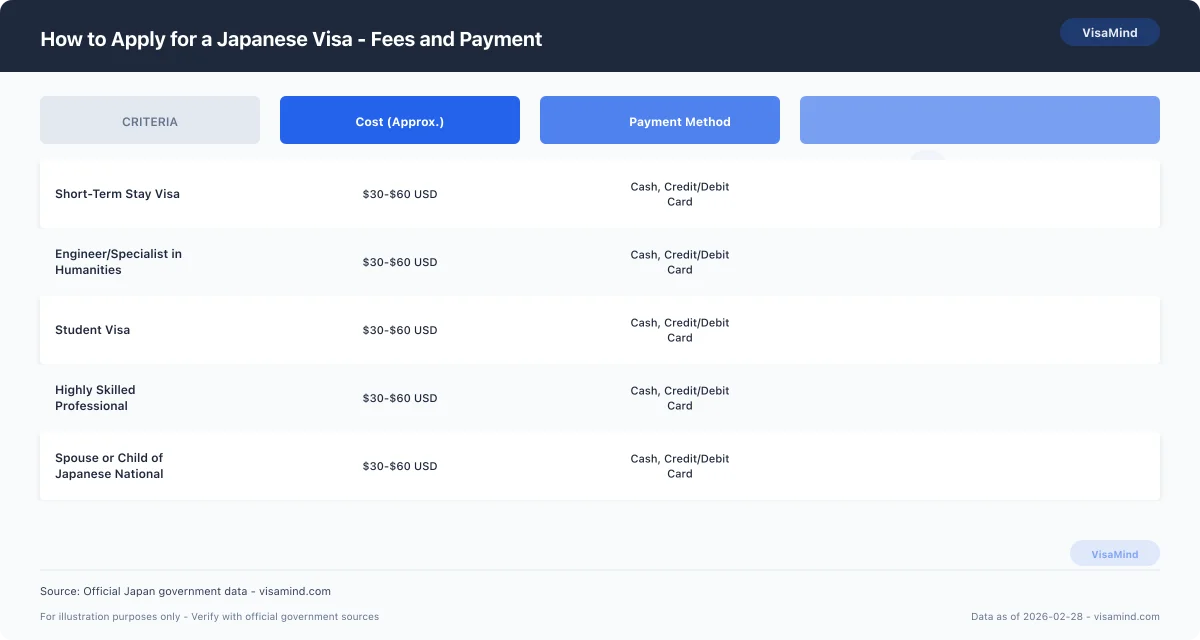
It's crucial to be aware of the associated costs. The fees differ based on the type of visa you are applying for. For instance, as of 2023, the visa fee for a Short-Term Stay visa is approximately 3,000 JPY, while a Work or Long-Term Stay visa may cost around 6,000 JPY. Please verify these numbers on the official website, as fees are subject to change.
Additional Costs and Surcharges
In addition to the basic visa application fee, there may be additional costs. These can include service charges if you are required to apply through an accredited travel agency in your country. It's essential to confirm with your local Diplomatic Mission of Japan if any extra charges apply.
Payment Methods
Visa fees can typically be paid in the local currency at the Japanese embassy or consulate where you lodge your application. The accepted payment methods may vary by location, but they generally include cash or bank drafts. It's advisable to verify the specific payment options available at your local Japanese diplomatic mission.
Refund Policy
Important: Visa application fees are generally non-refundable. Even if your application is denied or you decide to withdraw your application, you will not be able to recover the fees paid. Therefore, ensure all your documents are in order before submitting your application to avoid unnecessary costs.
Tips on Managing Costs
To manage your application costs effectively, gather all required documents and double-check them for accuracy to prevent delays or reapplication. For more detailed guidance on necessary documentation, you can refer to the Documents Checklist. Additionally, understanding the expected Processing Times can help you plan better and avoid last-minute expenses.
Tracking Your Application
#Once you have lodged your application for a Japanese visa through the appropriate channel, it is important to stay informed about the status of your application. This section outlines how you can track your application, what to expect regarding timelines, and recommended actions while you wait.
How to Track Your Visa Application
Most Japanese embassies and consulates provide a means to track your visa application status online. You will typically receive a tracking number or a reference number when you submit your application. Use this number on the embassy or consulate's website to check the current status of your application.
Tip: If you applied through an accredited travel agency, contact them for updates, as they may have additional insights into your application's progress.
Expected Timeline
The processing time for a Japanese visa can vary based on the type of visa you have applied for and your country of residence. Generally, the processing time ranges from 5 to 10 business days. However, for visas requiring a Certificate of Eligibility, processing may take longer. It's advisable to verify the specific processing times on the official website or with the relevant Japanese diplomatic mission in your area.
| Visa Type | Estimated Processing Time |
|---|---|
| Short-Term Stay | 5-10 business days |
| Work or Long-Term | Varies (check online) |
| Japan eVISA | Varies by country |
What to Do While Waiting
While waiting for your visa to be processed, there are several steps you can take to ensure a smooth transition once your visa is granted:
- Prepare for Your Stay: Gather information about Japan's culture, customs, and laws to better prepare for your stay. Consider learning some basic Japanese phrases.
- Review Your Itinerary: Double-check your travel arrangements and accommodation bookings to ensure there are no conflicts or errors.
- Stay Informed: Keep an eye on updates from the Immigration Services Agency of Japan and your local Japanese embassy or consulate for any changes in visa regulations or processing timelines.
Important: Always have a copy of your visa issuance notice and any related documents with you when you travel. Failure to present these at the point of entry could result in denial of entry into Japan.
For specific details on processing times, visit our Processing Times Guide or check the Documents Checklist to ensure you have all necessary documentation ready.
If Something Goes Wrong
#When navigating the Japanese visa application process, it's important to be prepared for potential challenges. If your application encounters issues, understanding your options can help you respond effectively.
What to Do If Your Visa Application Is Denied
If your Japanese visa application is denied, you will receive a notification explaining the reasons for the refusal. It's crucial to carefully review this information to determine your next steps:
- Appeal Rights: Unfortunately, there is no formal appeal process for visa refusals through the Immigration Services Agency of Japan. However, you can address the specific issues cited in your denial and submit a new application.
- Reapplication: If you choose to reapply, ensure that you have corrected any errors or omissions noted in your initial application. Gather any additional documentation that may strengthen your case. Refer to the Visa Refusal Reasons guide for common pitfalls to avoid.
Administrative Review and Seeking Assistance
While Japan's visa process does not include a formal appeal mechanism, you may still seek clarification or assistance:
- Contacting the Japanese Embassy or Consulate: If you have questions about the refusal or require guidance, consider reaching out to the diplomatic mission where you applied. They may provide insights into the decision or suggest how to enhance your application.
- Seeking Professional Advice: Consulting with a professional immigration advisor familiar with Japanese visa requirements can be beneficial. They can offer personalized advice and help ensure your application meets all necessary criteria.
Important Considerations
Important: Submitting incomplete or incorrect documents can lead to significant delays or outright cancellation of your application. Always double-check your materials before submission.
If you're applying for specific visas like the Short Stay Visa or Highly Skilled Professional Visa, be sure to review the requirements and guidelines specific to your visa category. For those interested in work-related visas, understanding the Engineer/Specialist in Humanities/International Services visa might be helpful.
Tip: Refer to the Documents Checklist to ensure you have all necessary documents ready before you lodge your application.
By being proactive and thorough, you can better navigate any challenges in your Japanese visa application process.
Expected Timeline
#Important: Processing times can vary greatly depending on your location and the visa type applied for. Always check the most recent information on the Immigration Services Agency of Japan website.
Expected Timeline Overview
Applying for a Japanese visa involves several steps, each with its own timeline. It's crucial to plan ahead and account for potential delays. Below is a visual-friendly summary of the expected timeline for different visa categories.
| Visa Type | Eligibility | Expected Processing Time | Additional Requirements |
|---|---|---|---|
| Short-Term Stay | Tourism, business, visiting friends or relatives up to 90 days | Approximately 5-10 working days | Invitation letter, itinerary |
| Work or Long-Term Stay | Employment or long-term activities in Japan | 1-3 months (requires Certificate of Eligibility) | Certificate of Eligibility |
| Japan eVISA | Available for nationals from specific countries for tourism | 5-7 working days | Apply through the JAPAN eVISA website |
Key Considerations
- Short-Term Stay Visas: These typically take around 5-10 working days to process. Ensure your invitation letter and itinerary are complete to avoid delays.
- Work or Long-Term Stay Visas: These require a Certificate of Eligibility, which can take 1-3 months to process. Coordination with your employer or inviting organization is essential.
- Japan eVISA: Processing generally takes 5-7 working days. This option is available only for nationals residing in certain countries.
Additional Tips
Tip: Consider applying through a travel agency accredited by a Japanese overseas establishment if you're in a country where this is required. This can streamline the process and provide additional support.
You can find more information on specific visa types like the Highly Skilled Professional or Student Visa by visiting the dedicated visa pages. Always verify processing times and requirements on the Immigration Services Agency of Japan website to ensure you have the most accurate and up-to-date information.
Which System to Use
#It is crucial to use the correct system or portal to ensure that your application is processed efficiently. Here’s a step-by-step guide to help you navigate the available systems for lodging your visa application.
1. Determine Your Visa Type
Before accessing the appropriate portal, identify your visa category. Japan offers various visa types, such as Short Stay for tourism or business, Highly Skilled Professional, or Student Visa. Each visa type has specific requirements and may use different application methods.
2. Use the Japan eVISA System (for Eligible Short-Term Stays)
For nationals residing in specific countries, the Japan eVISA system is available for short-term tourism visas. To access the eVISA system:
- Visit the official Japan eVISA website.
- Create an account using your email address and set up a password.
- Log in and follow the prompts to enter your personal details, travel itinerary, and upload required documents.
Tip: The Japan eVISA system is designed for convenience and can be accessed from anywhere with an internet connection, reducing the need for physical visits to a diplomatic mission.
3. Apply Through a Japanese Diplomatic Mission
For other visa types, such as work or long-term stays, you will need to lodge your application through a Japanese diplomatic mission. Here’s how to proceed:
- Visit the website of the Japanese embassy or consulate in your country to find specific instructions and application forms.
- Gather necessary documents, including a Certificate of Eligibility for work or long-term visas.
- Submit your application in person or through a designated travel agency, if required by the mission in your country.
4. Access the Immigration Services Agency of Japan (ISA) Portal
For applications involving a Certificate of Eligibility or other long-term visa processes, the Immigration Services Agency of Japan (ISA) is your primary resource. You can:
- Review detailed visa guidelines and requirements on the ISA website.
- Download forms and instructions specific to your visa type, such as the COE Application.
- Follow the instructions carefully to avoid common pitfalls, such as incomplete submissions, which can lead to significant delays.
Important: Always double-check the latest information and verify details on the official ISA website, as processes and requirements may change.
Your Biometrics Appointment
#Scheduling Your Biometrics Appointment
Once you have gathered your necessary documents, the next step is to schedule a biometrics appointment. This is a required step for most visa categories, including those for a Student Visa or Specified Skilled Worker. You will typically arrange your biometrics appointment through the VFS Global centers, which handle the collection of biometric data on behalf of the Japanese authorities.
Preparing for the Appointment
Important: Ensure you bring all necessary identification documents to your appointment to avoid any delays.
Before attending your biometrics appointment, you'll need to prepare accordingly. Make sure to have your passport, visa application documents, and the appointment confirmation. It is crucial to arrive at the designated VFS center or diplomatic mission at least 15 minutes early to allow time for any unforeseen circumstances. Be aware that biometric data collection involves taking fingerprints and a digital photograph, so be prepared for this process.
What to Expect During Your Appointment
During the appointment, trained staff will assist you in the biometric data collection process. This generally involves scanning your fingerprints and taking a digital photograph. The process is straightforward and should take no more than 30 minutes. If you have specific needs or require assistance, inform the staff beforehand to ensure a smooth experience.
Next Steps After Your Appointment
After your biometrics appointment, your data will be forwarded to the Immigration Services Agency of Japan for processing. It is advisable to keep a copy of your biometrics receipt as proof of completion.
Tip: Check the Visa Refusal Reasons guide to understand potential pitfalls and how to avoid them.
Your application will continue to be processed, and you will be informed of any further steps or decisions. Keep an eye on any communications from the agency or the diplomatic mission to ensure you do not miss critical updates regarding your visa status.
The COE Step
#The Certificate of Eligibility (COE) is a crucial document for those planning to work or stay long-term in Japan. The COE is issued by the Immigration Services Agency of Japan and must be obtained before applying for a visa. Here's a step-by-step guide to navigating the COE process:
Steps to Obtain a Certificate of Eligibility
-
Determine Eligibility and Visa Type
Before applying for a COE, confirm that your intended stay in Japan requires one. Typically, this includes work or long-term stay visas, such as the Engineer Specialist Visa or Highly Skilled Professional Visa. Short-term visas, like the Short Stay Visa, usually do not require a COE.
-
Gather Required Documents
The specific documents needed can vary depending on the visa category. Commonly required items include:
- A completed COE application form.
- A detailed description of your planned activities in Japan.
- Proof of your relationship with any inviting organization or guarantor.
- Relevant certifications or proof of qualifications for work-related visas.
Important: Ensure all documents are complete and accurate to avoid delays or rejection of your application.
3.This representative will handle the application process on your behalf.
Tip: Coordinate closely with your sponsor to ensure that all necessary documents are prepared and submitted correctly.
-
Wait for Processing
The processing time for a COE can vary, but it typically takes between 1-3 months. It's advisable to verify the current processing times on the Processing Times Guide.
After Receiving Your Certificate of Eligibility
Once you receive your COE, your next step is to apply for the appropriate visa at your local Japanese embassy or consulate. Be sure to bring the COE along with other necessary documents, such as your passport and visa application form.
Remember, the COE is a prerequisite for your visa application but does not guarantee entry into Japan. Final entry approval is granted by immigration officers upon arrival. For more information on potential visa refusal reasons, consult the Visa Refusal Reasons Guide.
Booking Your Appointment
#Choose the Right VFS Global Center
Before booking your appointment, identify the VFS Global center or similar service provider that handles visa applications for Japan in your country. These centers facilitate the submission of documents and biometric data. You can find the nearest center by visiting the official VFS Global website or contacting the Japanese embassy or consulate in your area.
Schedule Your Appointment
Once you have identified the appropriate VFS Global center, you need to schedule an appointment. Visit their website and use the online appointment system to select a suitable date and time. Ensure that you have all the necessary documents ready, such as your passport, visa application form, and any supporting documents like an invitation letter or itinerary in Japan.
Tip: Book your appointment well in advance, as slots can fill up quickly, especially during peak travel seasons.
Prepare for Your Appointment
On the day of your appointment, arrive at the VFS Global center with all required documents neatly organized. You may need to undergo a brief interview or present additional documents if requested. Ensure that you have the appointment confirmation with you, as well as any fees that need to be paid at the center.
Important: Double-check that all your documents are complete and correct to avoid any delays or potential rejection of your visa application.
For more detailed information on the types of visas you can apply for, consider exploring options like the Highly Skilled Professional or Spouse or Child of Japanese National. If you're pursuing a work visa, ensure you have the necessary Certificate of Eligibility before your appointment.
FAQs
What is the processing time for a Japanese Student Visa application at the ISA?
How can I apply for a Japanese eVISA for short-term tourism?
Can I extend my Short-Term Stay Visa while in Japan?
What documents are required for a Spouse or Child of Japanese National Visa?
How do I check the status of my Japanese visa application?
What should I do if I lose my Certificate of Eligibility before applying for a Japanese visa?
Can I apply for a Japanese visa through a travel agency?
VisaMind provides informational guidance only and is not a government agency. This is not legal advice. Requirements can change and eligibility depends on your specific facts. If your case is complex or high-stakes, consult a licensed immigration attorney.
Next steps
Requirements vary by nationality, purpose, timeline, and case details. Use Find My Visa to get a personalized checklist for Japan with official sources and deadlines.
Find my visa