Official sources referenced
Latest Processing Estimates
#
The average processing time for a Short-Term Stay Visa in Japan is approximately 5 business days. However, for those applying for a Certificate of Eligibility, which is necessary for many long-term visas, processing can take up to 3 months. It's important to consider these timelines when planning your visit or move to Japan.
Visa Processing Times
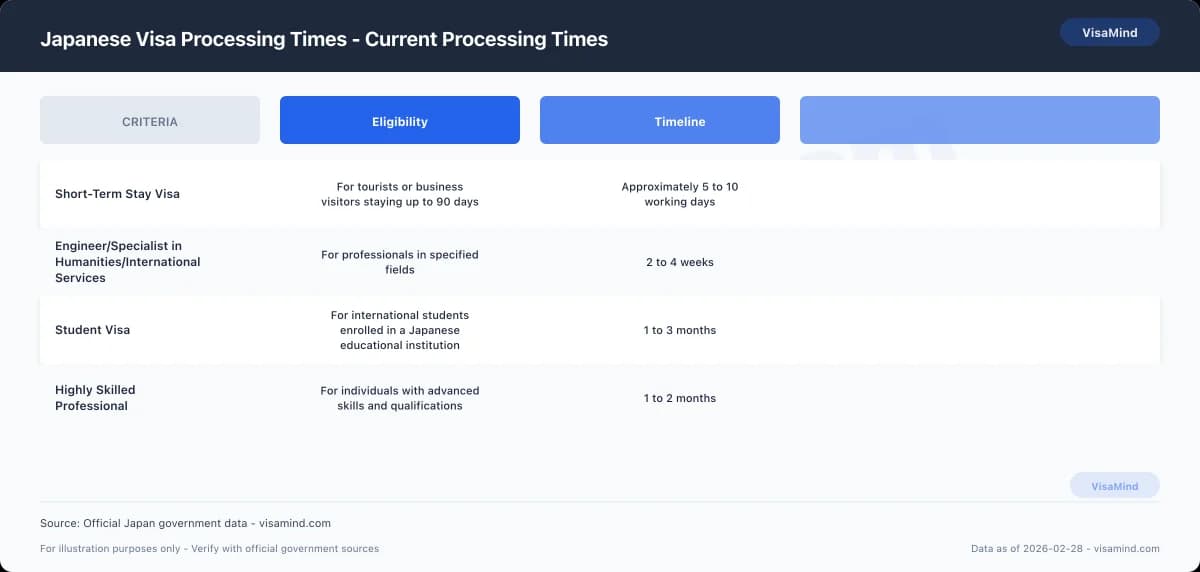
The table below provides a snapshot of current processing estimates for different types of Japanese visas. These times are subject to change and depend on various factors, including your application’s completeness and the volume of applications submitted.
| Visa Type | Eligibility Requirement | Average Processing Time |
|---|---|---|
| Short-Term Stay Visa | None required | Approximately 5 business days |
| Student Visa | Certificate of Eligibility | Up to 3 months |
| Engineer/Specialist in Humanities/International Services | Certificate of Eligibility | Up to 3 months |
| Highly Skilled Professional | Certificate of Eligibility | Up to 3 months |
Tip: Ensure all required documents are submitted accurately to avoid delays. Missing a Certificate of Eligibility can significantly extend your processing time.
Understanding the Certificate of Eligibility
For many long-term stays, such as working or studying in Japan, obtaining a Certificate of Eligibility is a crucial step before applying for a visa. This document verifies that the applicant meets the entry requirements set by the Immigration Services Agency of Japan.
- Who Needs It: Primarily required for long-term visas like the Student Visa and Engineer/Specialist in Humanities/International Services Visa.
- Processing Time: The certificate itself can take up to 3 months to process.
- Application Process: Typically, a proxy in Japan, such as a school or employer, applies for the certificate on your behalf.
Common Pitfalls and How to Avoid Them
-
Not Applying Early: Start the process as soon as you have planned your trip or move to Japan. Visa processing can be unpredictable, and unforeseen delays may impact your travel plans.
-
Incomplete Documentation: Double-check that all required documents, especially the Certificate of Eligibility, are complete and correctly submitted to the Immigration Services Agency of Japan.
By understanding these timelines and requirements, you can better prepare for your visa application process and avoid unnecessary delays. For a comprehensive guide on preparing your application, consider visiting our How To Apply page.
What Affects Your Timeline
#The processing time for a Japanese visa can vary based on several factors, each influencing how swiftly your application is reviewed by the Immigration Services Agency of Japan (ISA). Understanding these factors can help you better anticipate the timeline for your visa application.
Certificate of Eligibility
- Significance: For those intending to work or reside long-term in Japan, obtaining a Certificate of Eligibility is crucial and can significantly impact processing times. This certificate serves as preliminary approval, allowing your visa application at the Japanese consulate to proceed more smoothly.
- Application Process: The Certificate of Eligibility must be applied for at a regional Immigration bureau in Japan, typically through a proxy if you are not already in the country. This step can be time-consuming, so early action is recommended.
- Impact on Processing: Without this certificate, expect longer processing times for your visa application as additional documentation and scrutiny will be required.
Type of Visa
- Short-Term Stay Visa: Generally involves a quicker processing time compared to visas requiring a Certificate of Eligibility, such as the Highly Skilled Professional Visa or Engineer/Specialist in Humanities/International Services Visa.
- Student Visa: Processing can be delayed if there are issues with enrollment verification or if the educational institution is not recognized by the Japanese government.
- Specialized Visas: Visas like the Specified Skilled Worker 1 may require additional verifications, thus affecting timelines.
Application Completeness and Errors
- Documentation: Ensuring all required documents are submitted accurately is critical. Missing or incorrect documents can cause significant delays.
- Attention to Detail: Double-checking forms and documents before submission can prevent common mistakes that lead to extended processing times.
Important: Failing to submit a Certificate of Eligibility when required can lead to considerable delays, as additional steps will be needed to assess your eligibility.
External Factors
- Volume of Applications: During peak travel seasons or in periods of high demand, processing times may be extended due to increased volume. Planning your application around these times can help you manage expectations.
- Administrative Backlogs: Occasionally, administrative backlogs at the ISA can occur, impacting how quickly applications are processed. This is often beyond the applicant's control, but staying informed through the How To Apply guide can offer insights into current processing trends.
By keeping these factors in mind, you can better prepare for the Japanese visa application process and potentially mitigate delays. Always consult the official ISA website for the most current information and guidelines.
How to Track Your Application
#To track your visa application status with the Immigration Services Agency of Japan (ISA), several tools and options are available. This section outlines how you can efficiently monitor your visa processing progress.
Online Tracking Portals
The ISA provides an online tracking system for applicants to monitor the status of their visa applications. Once you have lodged your visa application and received a receipt number, you can use this number to check your application status online.
- Website: Visit the official Immigration Services Agency of Japan website.
- Tracking Number: Use the receipt number provided upon application submission.
- Updates: Regularly check for updates to stay informed about your application status.
Tip: Always keep your receipt number handy and bookmark the tracking page for easy access.
Contacting the Regional Immigration Bureau
If your application is taking longer than expected or you encounter issues with online tracking, you may contact the regional Immigration bureau where your application was lodged. This is especially useful for applications involving a Certificate of Eligibility, such as the Highly Skilled Professional visa.
- In-person Visits: Visit during office hours for direct inquiries.
- Phone or Email: Use the contact details provided on the ISA website for your specific regional bureau.
Key Documents to Have Ready
When checking your application status, it is crucial to have the following documents available:
- Receipt Number: Essential for online tracking and inquiries.
- Passport: The number may be required for verification.
- Certificate of Eligibility: If applicable, this document plays a crucial role in processing times.
Important: Failing to have a Certificate of Eligibility when required can significantly delay processing times. Ensure you apply for one well in advance if needed.
For more detailed information on visa types and specific processes, refer to our guides on How To Apply and Documents Checklist. Tracking your application effectively ensures that you are informed and prepared for the next steps in your journey to Japan.
Your Rights While Processing
#Understanding your rights during the processing period is crucial. Knowing these rights can help you navigate the waiting period effectively.
Bridging Visas and Implied Status
Japan does not offer a formal "bridging visa" as seen in some other countries. However, if you are already residing in Japan and have applied for a visa extension or change of status, you are typically allowed to remain in the country under "implied status" until a decision is made on your application. This means you can continue your current activities, provided your application was submitted before your existing status expired.
Important: Ensure you apply for extensions or changes to your status well before the expiry date of your current visa to maintain your implied status.
Work Rights While Pending
While your visa application is pending, your work rights depend on your current visa type. For instance:
- Temporary Visitor Visa: You are not allowed to work.
- Working Visa (e.g., Engineer/Specialist in Humanities/International Services): You can continue working in your current role if you have applied for an extension before your visa expiration.
- Student Visa: You may continue part-time work if it was permitted under your current visa conditions.
If you wish to engage in activities outside your current visa's scope, you must apply for Permission to Engage in Activity Other Than That Permitted.
Certificate of Eligibility and Its Role
For those applying for long-term visas such as the Highly Skilled Professional or Spouse of a Japanese National, obtaining a Certificate of Eligibility (CoE) is a critical step. This certificate, issued by the regional Immigration bureau in Japan, confirms your eligibility for the visa category you're applying for. Having a CoE can significantly reduce the processing time of your visa application.
What If Your Application Takes Longer?
If the processing of your application is delayed beyond standard times, you can contact the Immigration Services Agency of Japan for updates. It's also advisable to review the Visa Extension Guide for tips on managing extended wait times.
Staying informed about your rights and requirements during the visa processing period can help you maintain compliance with Japanese immigration laws and regulations.
If It Is Taking Longer Than Expected
#If your visa application is taking longer than expected, there are several steps you can take to address the delay. Here are some options to consider:
1. Contact Immigration Services Agency of Japan
First, reach out to the Immigration Services Agency of Japan (ISA) for an update on your visa application status. You can contact the regional Immigration bureau where your application was submitted. Ensure you have your application reference number ready for a more efficient inquiry. This step is particularly important if your application for a Short Stay or Student Visa is time-sensitive.
Tip: When contacting the ISA, clearly explain your situation and any urgent reasons for the need to expedite your visa processing.
2. Seek Assistance from a Local Representative
If contacting the ISA does not resolve the delay, you may consider reaching out to a local representative, such as a Member of Parliament (MP), who can make inquiries on your behalf. MPs can sometimes facilitate communication with government agencies, including the ISA, to help speed up the processing of your visa application.
3. File a Complaint with the Ombudsman
As a last resort, if your application delay is causing significant issues, you can escalate the matter by filing a complaint with the Ombudsman. The Ombudsman can investigate delays and ensure that your application is being processed in accordance with the standard procedures. This step can be particularly useful if you have applied for a visa with complex requirements, such as the Highly Skilled Professional or Specified Skilled Worker 2.
Important: Always retain copies of all correspondence and application documents when escalating your case. This documentation may be necessary to support your complaint or inquiry.
By following these steps, you can gain more clarity on your application status and potentially expedite the processing of your Japanese visa. Always verify the latest procedures and contact details on the official Immigration Services Agency of Japan website.
FAQs
Are Japanese Visa Processing Times affected if I don't have a Certificate of Eligibility?
How to track the status of my Japanese Visa application with the Immigration Services Agency of Japan?
What are the Japanese Visa Processing Times for combining a work and study visa?
Can I apply for a Short-Term Stay Visa and a Student Visa simultaneously in Japan?
What is the role of a proxy in the Japanese Visa application process?
How can I expedite my Japanese Visa Processing Times if it's taking longer than expected?
What should I do if the Japanese Visa Processing Times exceed the estimated duration?
Sources
Last reviewed: March 1, 2026
VisaMind provides informational guidance only and is not a government agency. This is not legal advice. Requirements can change and eligibility depends on your specific facts. If your case is complex or high-stakes, consult a licensed immigration attorney.
Next steps
Requirements vary by nationality, purpose, timeline, and case details. Use Find My Visa to get a personalized checklist for Japan with official sources and deadlines.
Find my visa