On this page
- Paths to Working Legally
- Does Your Employer Need to Do Anything?
- The Application Process
- Your Rights as a Worker
- Transitioning to Permanent Residence
- Why Work Visa Applications Fail
- Skills and Qualifications
- Salary and Cost Considerations
- Your Tax Situation Abroad
- Real-World Work Visa Stories
- Visa options for this goal
- Guides for Japan
- Other goals for Japan
Paths to Working Legally
#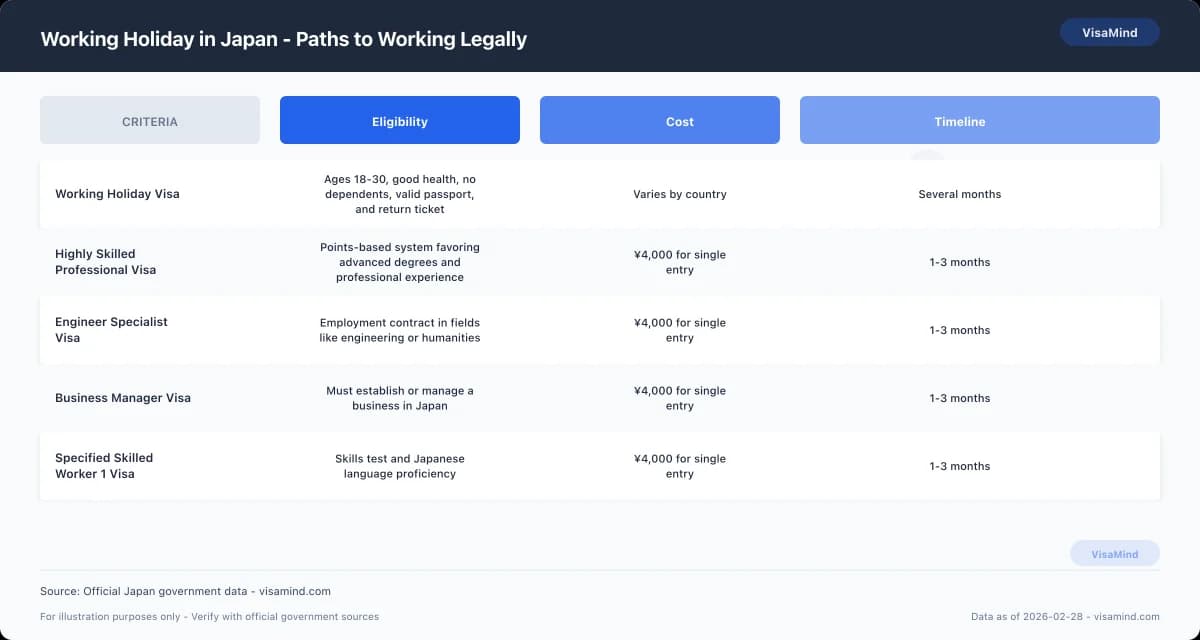
Japan offers several visa categories for those seeking to work legally in the country, each tailored to different professional backgrounds and objectives. Understanding these options is crucial if you plan to experience Japan through its diverse work environments. Notably, the Working Holiday Programme is a unique opportunity for young travelers. Let's explore the main work visa categories available in Japan.
| Visa Type | Eligibility | Cost | Processing Time |
|---|---|---|---|
| Working Holiday Visa | Ages 18-30, partner countries only, good health | Varies by country | Several months |
| Highly Skilled Professional | Points-based system for advanced degree holders | Varies | 1-3 months |
| Engineer Specialist | Specific skills in engineering, IT, etc. | Varies | 1-3 months |
| Specified Skilled Worker 1 | Skills test and Japanese language proficiency | Varies | 1-3 months |
| Business Manager | Business investment or management experience | Varies | 1-3 months |
Working Holiday Visa
This visa is designed for young people aged 18 to 30 from partner countries to experience life in Japan. The primary purpose is cultural exchange, allowing travelers to fund their stay through short-term employment. Key requirements include holding a valid passport, possessing a return travel ticket or enough funds to purchase one, and having no prior issuance of a Japanese Working Holiday Visa. Applications should be lodged with the Embassy or Consulate-General of Japan in your home country.
Important: Ensure you don't engage in work at prohibited establishments such as bars or nightclubs, as this breaches visa conditions.
Other Work Visas
Japan also offers several specialized work visas tailored to different professional qualifications. The Highly Skilled Professional Visa is part of a points-based system rewarding high-level expertise and academic achievements. This visa provides a faster path to permanent residence. The Engineer Specialist Visa caters to individuals with skills in fields like engineering, IT, and international services.
The Specified Skilled Worker 1 Visa is tailored for individuals with specific vocational skills and a certain level of Japanese language proficiency. This category is part of Japan's initiative to fill labor shortages in various sectors.
Business Manager Visa
For those aiming to start or manage a business in Japan, the Business Manager Visa requires evidence of business experience and financial investment. This visa supports entrepreneurs and business leaders looking to expand their ventures into Japan's market.
Tip: To streamline your application, consult the Documents Checklist and ensure you have all the necessary paperwork in place.
Each of these visas has specific eligibility criteria and application processes governed by the Immigration Services Agency of Japan. Whether you are looking to engage in short-term work experiences or establish a long-term professional presence, understanding your visa options will help you navigate the requirements more effectively. For detailed guidance on how to proceed with your application, you can refer to the How To Apply guide.
Does Your Employer Need to Do Anything?
#Understanding your employer's potential role is important. This visa is primarily intended for cultural exchange, allowing you to explore Japan while supporting your stay through temporary employment. Unlike other visa types in Japan, the Working Holiday Visa does not require employer sponsorship or a Certificate of Eligibility (COE). Here’s what you need to know about employer requirements:
Employer Requirements
For the Working Holiday Visa, Japanese employers do not need to provide sponsorship, which is a common requirement for other work visas like the Engineer Specialist or Highly Skilled Professional. This means that employers hiring individuals on a Working Holiday Visa are not required to undertake complex procedures such as obtaining a COE or proving labor market needs.
However, employers should still ensure that the work offered complies with the visa’s conditions. It’s important for employers to avoid offering employment in prohibited establishments, such as bars or nightclubs, which are not allowed under the Working Holiday Visa terms.
Understanding Employment Conditions
While the visa allows for temporary work to supplement travel funds, it’s crucial to understand the restrictions and opportunities for employment. Here's a quick overview:
- Allowed Employment: Temporary or part-time jobs in sectors like tourism, hospitality, or teaching.
- Prohibited Employment: Jobs in adult entertainment industries, as per the conditions of the visa.
Important: Ensure that the employment offered adheres to the legal stipulations of the Working Holiday Visa to avoid potential issues with the Immigration Services Agency of Japan.
Employer Documentation and Notifications
Employers hiring individuals on a Working Holiday Visa should be aware of their obligation to comply with Japanese labor laws, which include proper documentation and fair employment practices. Although the visa does not require employer sponsorship, employers should still maintain records of employment and verify the visa status of their employees.
Additionally, once you find a place to settle in Japan, you are required to notify the Ministry of Justice within 14 days. This is a key compliance step to maintain your legal status while working in Japan.
For further details on employment conditions and visa compliance, consider reviewing the Working Holiday Guide or visiting the Documents Checklist for a comprehensive list of required documentation.
By understanding these requirements, both you and your potential employers can ensure a smooth and compliant experience while participating in Japan's Working Holiday Program.
The Application Process
#-
Determine Your Eligibility
Before you begin the application process for the Working Holiday Visa, ensure that you meet the eligibility requirements set by the Immigration Services Agency of Japan. You must be between 18 and 30 years old, possess a valid passport, be in good health, and have not previously been issued a Japanese working holiday visa. Additionally, you'll need a return travel ticket or sufficient funds to purchase one. Note that eligibility criteria may vary slightly depending on your nationality.
-
Prepare Your Application
Start by gathering all necessary documents. These typically include your valid passport, evidence of sufficient funds, and any required verification documents. These documents are crucial as they demonstrate your ability to support yourself financially while in Japan. Review the Documents Checklist to ensure you have all required paperwork ready before proceeding.
-
Lodge Your Application
Submit your application to the Japanese Embassy or Consulate-General in your home country. It’s important to note that you cannot apply for this visa from within Japan. Make sure to review the instructions for your specific nationality, as there might be additional country-specific requirements.
Tip: Schedule your application submission well in advance, as processing times can take several months. Verify the current processing times on the official website to plan accordingly.
-
Receive Your Visa and Travel to Japan
Once your application is approved, you will receive your Working Holiday Visa, allowing you to enter Japan. Upon arrival, ensure you notify the Ministry of Justice within 14 days of finding a place to settle down. This notification is a legal requirement to maintain your visa status.
-
Understand Your Work Limitations
While the Working Holiday Visa allows you to work in Japan, there are restrictions on the types of employment you can engage in. For example, working in establishments like bars, cabarets, and nightclubs is prohibited. Familiarize yourself with these restrictions to avoid jeopardizing your visa status.
For more in-depth guidance on the Working Holiday Visa, check out our Working Holiday Guide, and compare it with other options like the Student Visa if you're considering different pathways to experience Japan.
Your Rights as a Worker
#When participating in Japan's Working Holiday Program, understanding your rights as a worker is crucial to making the most of your experience while ensuring compliance with local regulations.
Can You Change Employers?
Yes, you can change employers during your stay in Japan under the Working Holiday Visa. This flexibility allows you to explore different employment opportunities and gain diverse work experiences. However, it's important to remember the fundamental restrictions of your visa. You are prohibited from working at certain establishments such as bars, cabarets, and nightclubs. Always ensure any new employment is within the permissible work categories to avoid legal issues.
Can Family Join You?
Unfortunately, the Working Holiday Visa does not permit family members to accompany you as dependents. This visa is designed for individual applicants seeking cultural exchange experiences. If your family wishes to join you, they would need to apply for their own visas, such as the Dependent Visa, which has its own set of requirements and limitations.
Can You Study?
You can engage in short-term study activities while on a Working Holiday in Japan, but the primary purpose of your stay should remain cultural exchange through travel and work. If you intend to pursue more extensive educational programs, it may be more appropriate to apply for a Student Visa. This visa allows for full-time study and provides a pathway to more structured educational opportunities in Japan.
Important: If you decide to change your primary activities, such as transitioning from work to study, ensure you have the appropriate visa status to avoid violating immigration rules.
Summary of Rights
| Activity | Permission Status |
|---|---|
| Change Employers | Allowed, with restrictions |
| Family Accompaniment | Not permitted under this visa |
| Short-term Study | Allowed, but not primary activity |
For those interested in exploring further or changing their visa type, you may consult the Visa Extension Guide to understand your options. Always ensure that your activities align with the visa's guidelines to maintain legal status during your stay.
Transitioning to Permanent Residence
#Transitioning from a Working Holiday Visa to a more permanent status in Japan is an appealing option for many young travelers who wish to extend their stay. While the Working Holiday Visa is designed for temporary cultural exchange and employment to support travel, it can also serve as a stepping stone towards longer-term residency and possibly permanent residence in Japan.
Pathway to Permanent Residence
Successfully switching from a Working Holiday Visa to a more stable work visa is often the first step. Common transitions include moving to a Specified Skilled Worker 1 visa or a Business Manager visa, each with distinct requirements and processes. This initial change allows you to establish a more permanent work presence in Japan, which is essential for those considering permanent residence.
Permanent residence applications typically require a demonstrated commitment to living and contributing in Japan. Here’s a simplified pathway overview:
- Working Holiday Visa: Initial entry under cultural exchange.
- Switch to Work Visa: Transition to a skilled work visa like Engineer Specialist or Highly Skilled Professional.
- Meet Residency Requirements: Maintain stable employment and residency in Japan for several years.
- Apply for Permanent Residence: Once eligible, submit your Permanent Residence Application.
Timelines for Transition
The timeline to transition from a Working Holiday Visa to permanent residence can vary greatly depending on the type of work visa obtained and individual circumstances. Here’s a general guide:
- Work Visa Duration: Typically 1-5 years, renewable based on employment status and compliance with visa conditions.
- Permanent Residence Eligibility: Generally requires 10 years of continuous residence in Japan, but this can be shorter for those with a Highly Skilled Professional visa due to a point-based system.
Important: Always confirm the latest eligibility criteria and timelines on the official Immigration Services Agency of Japan website as policies can change.
Key Considerations
-
Employment Stability: Ensure your employment aligns with the visa category requirements for a smooth transition. For example, a Highly Skilled Professional visa demands specific qualifications and income thresholds.
-
Legal Compliance: Adhering to all immigration and employment laws is crucial. Failing to notify the Ministry of Justice of changes in your status or employment can impact your eligibility for permanent residence.
-
Documentation: Gather and maintain comprehensive records of your employment, residence, and contributions to Japan. This will be essential when applying for permanent residence.
For those committed to making Japan their long-term home, understanding the pathway from a Working Holiday Visa to permanent residence is crucial. Review the Pr Pathway Guide for detailed steps and consult official sources regularly to ensure compliance with the most current immigration policies.
Why Work Visa Applications Fail
#Visa applications for the Working Holiday Program in Japan can be unsuccessful for several reasons. Understanding these pitfalls can help you avoid common mistakes and increase your chances of obtaining a visa.
Eligibility Issues
- Age and Nationality Restrictions: You must be between 18 and 30 years old at the time of application and hold a passport from a country participating in the Working Holiday Program. Ensure you meet these criteria before applying.
- Previous Visa: If you have been issued a Japanese working holiday visa in the past, you are not eligible to apply again. Double-check your visa history.
Documentation Errors
- Incomplete Documentation: Providing all necessary documents, such as a valid passport and proof of sufficient funds for a return ticket, is crucial. Incomplete or incorrect documentation can lead to rejection.
- Health Requirements: You must be in good health to qualify. Ensure that any required health checks or declarations are completed and accurate.
Application Process Mistakes
- Prohibited Employment: Engaging in work at prohibited establishments like bars, cabarets, and nightclubs can result in visa denial. Be clear about the types of employment you plan to pursue.
- Incorrect Notifications: You must notify the Ministry of Justice within 14 days of finding a place to settle down in Japan. Failing to do so can impact your visa status.
Financial Proof
- Insufficient Funds: The Immigration Services Agency of Japan requires proof of sufficient funds to support your stay and purchase a return ticket. Ensure you have clear evidence of financial capacity.
Important: Always verify specific requirements based on your nationality, as these may affect your eligibility and application process.
For further details on the application process, refer to the Working Holiday Guide and How To Apply sections. Understanding these guidelines can help you prepare a stronger application and avoid common pitfalls.
Skills and Qualifications
#Important: Your eligibility for a Working Holiday Visa in Japan may depend on fulfilling specific requirements related to skills and qualifications. Always verify the latest guidelines on the official Immigration Services Agency of Japan (ISA) website.
Skills Needed for the Working Holiday Visa
While the primary purpose of the Working Holiday Visa is for cultural exchange and tourism, certain skills can enhance your experience in Japan:
- Language Skills: Basic Japanese language skills can be beneficial, especially for customer-facing roles or jobs requiring interaction with locals. While not mandatory, they can enrich your cultural experience and improve job prospects.
- Cultural Awareness: Understanding Japanese culture and work etiquette is essential. Familiarity with customs and societal norms will aid in smoother interactions and better integration.
- Adaptability: The ability to adapt to different work environments and cultures is highly valued. This skill will help you navigate the diverse job opportunities available under the Working Holiday Programmes.
Qualifications and Educational Background
Having relevant educational qualifications can sometimes influence the type of employment opportunities available:
- Higher Education: A degree is not a strict requirement for the Working Holiday Visa, but it can be advantageous for certain roles, especially if you wish to transition to a more formal work visa later, such as the Skilled Labor Visa.
- Vocational Training: Practical skills obtained through vocational training can open up opportunities in sectors like hospitality, retail, or teaching English as a second language.
Assessing Your Qualifications
Before applying for a Working Holiday Visa, consider how your qualifications align with potential job opportunities:
- Self-Assessment: Reflect on your skills and how they may be utilized in Japan. This will help you target suitable employment sectors.
- Documentation Preparation: Gather any documents that verify your qualifications, such as diplomas or certificates. These may not be required at the visa application stage but can be useful when seeking employment in Japan.
Tip: If you aim to work beyond the scope of the Working Holiday, exploring the Specified Skilled Worker 2 Visa could provide long-term opportunities.
For more detailed information on the application process and document requirements, consult the How To Apply guide. Additionally, consider reading the Student Vs Working Holiday comparison to understand different pathways to experiencing life in Japan.
Salary and Cost Considerations
#Understanding the financial aspects is crucial. This involves evaluating the potential salary, costs, and visa application fees. Here's a breakdown to guide you:
Salary and Income Expectations
The Working Holiday Program in Japan allows you to engage in various jobs to support your stay. However, it's important to note that the salary can vary significantly depending on the type of work you secure. Common jobs include positions in hospitality, retail, and language teaching, with hourly wages ranging from ¥900 to ¥1,500 as of 2023. Always verify current rates and ensure compliance with Japan’s minimum wage regulations, which vary by prefecture.
Application Fees and Costs
Before embarking on your working holiday, be prepared for various costs associated with your stay and application. Here's a comparative table to help you understand the financial commitments:
| Item | Cost (Approximate) | Notes |
|---|---|---|
| Visa Application Fee | ¥0 | No fee for most partner countries under the Working Holiday Program. Verify specifics per country. |
| Initial Travel Funds | ¥200,000 - ¥300,000 | Required to prove you can support yourself until you secure employment. |
| Return Ticket or Funds | ¥100,000 - ¥150,000 | Must show a return ticket or sufficient funds to purchase one. |
| Living Expenses (Monthly) | ¥100,000 - ¥150,000 | Includes accommodation, food, and transportation. |
Key Considerations
-
Important: Your ability to work and earn in Japan is contingent upon securing employment that complies with the visa conditions. Work at prohibited establishments such as bars or nightclubs is not allowed.
-
Tip: To enhance your experience, consider learning some basic Japanese before you arrive. This can significantly improve your job prospects and help you navigate daily life more easily.
Related Information
For those interested in further exploring options beyond the Working Holiday Visa, consider learning about the Short Stay visa for brief visits or the Permanent Residence pathway for long-term settlement. Additionally, the Student Vs Working Holiday guide provides insights into different visa opportunities.
Ensure you gather all necessary documentation and check the Processing Times to plan your application effectively. Always refer to the Immigration Services Agency of Japan's official website for the most current information and updates.
Your Tax Situation Abroad
#When participating in the Working Holiday Programme in Japan, understanding your tax obligations is crucial. As a working holiday participant, you are considered a resident for tax purposes if you stay in Japan for more than one year; otherwise, you will be treated as a non-resident. Here's what you need to know about your tax situation while working in Japan.
Income Tax Obligations
If you work during your stay, you'll need to comply with Japanese tax laws. As of 2023, the income tax rate for non-residents is a flat rate of 20.42% on income earned in Japan. Residents, on the other hand, are subject to a progressive tax rate, which ranges from 5% to 45% based on their income level. It's important to keep track of your employment income and any deductions you may be eligible for.
Social Security Contributions
While participating in the Working Holiday Programme, you may be required to contribute to Japan's social security system, including health insurance and pension plans. These contributions are typically deducted from your salary by your employer. However, some partner countries have agreements with Japan that might exempt you from certain contributions. It’s advisable to verify this with your employer and refer to any existing social security agreements between Japan and your home country.
Double Taxation Treaties
Japan has double taxation agreements with several countries to prevent the same income from being taxed in both countries. These treaties often provide relief by allowing you to credit the tax paid in Japan against your home country's tax obligations or exempting certain income from taxation in your home country. It's essential to check whether your country has such a treaty with Japan and how it affects your tax obligations. Consulting with a tax professional can help you navigate these treaties effectively.
Tip: Keep all your tax-related documents and records organized. This will facilitate smoother filing processes and ensure you can provide necessary documentation if required by tax authorities in Japan or your home country.
Key Considerations
- Determine Residency Status: Your tax rate depends on whether you're a resident or non-resident.
- Understand Tax Rates: Non-residents face a flat tax rate, while residents pay progressive rates.
- Check Social Security Agreements: These can affect your contributions.
- Double Taxation Treaties: Verify if your country has a treaty with Japan to avoid paying taxes twice.
For more detailed information on the Working Holiday Visa and other types of visas, you can explore our Visa Refusal Reasons and Financial Requirements guides.
Real-World Work Visa Stories
#I remember feeling a mix of excitement and anxiety when I first decided to apply for a Working Holiday Visa in Japan. My primary concern was whether I'd have enough funds to support myself until I found a job. I had some savings, but Japan is known for its high cost of living. To prepare, I meticulously planned my budget, ensuring I had enough for at least three months without income. I also researched affordable accommodation options and set up meetings with potential employers before arriving. This proactive approach eased my worries, and once in Japan, I was able to secure a part-time job within the first month, allowing me to explore the country without financial stress.
Another worry I faced was whether my lack of Japanese language skills would hinder my job prospects. Many of my friends had warned me that English-speaking jobs might be limited outside of major cities like Tokyo or Osaka. To address this, I enrolled in an online Japanese course before my departure and practiced daily. I also connected with language exchange communities to improve my conversational skills. By the time I arrived in Japan, I could handle basic conversations, which significantly boosted my confidence. This effort paid off as it allowed me to find a job in a local café, where I continued to improve my language abilities while making new friends.
Finally, the bureaucratic aspect of notifying the Ministry of Justice about my place of residence within 14 days of settling was daunting. I worried about missing the deadline due to my packed schedule during the first few weeks. To prevent this, I prioritized this task by setting reminders and organizing my documents beforehand. I visited the local municipal office as soon as I secured a place to live. This timely notification meant I could focus on enjoying my time in Japan without the fear of any legal repercussions.
Tip: When planning your working holiday, consider starting in a major city where job opportunities for English speakers are more plentiful before moving to more rural areas.
FAQs
What should I do if I find a place to settle down in Japan on a Working Holiday Visa?
Are there any prohibited jobs on a Working Holiday in Japan?
What documents are required for a Working Holiday Visa application in Japan?
Can I combine holiday travel with work on a Working Holiday Visa in Japan?
What are the age requirements for a Working Holiday in Japan?
How can I apply for a Working Holiday Visa through the Japan Embassy or Consulate-General?
Is it possible to switch from a Student Visa to a Working Holiday Visa in Japan?
Sources
Last reviewed: March 1, 2026
VisaMind provides informational guidance only and is not a government agency. This is not legal advice. Requirements can change and eligibility depends on your specific facts. If your case is complex or high-stakes, consult a licensed immigration attorney.
Next steps
Requirements vary by nationality, purpose, timeline, and case details. Use Find My Visa to get a personalized checklist for Japan with official sources and deadlines.
Find my visa