On this page
Eligible Family Members
#In Spain, family reunification allows certain family members of legal residents to join them in the country. This process is overseen by the State Secretariat for Migration (Secretaría de Estado de Migraciones). Understanding which family members are eligible is crucial for a successful application.
Eligible Family Members
| Family Member | Eligibility Criteria |
|---|---|
| Spouse | Must be legally married to the sponsor. The marriage must be recognized under Spanish law. |
| De Facto Partner | Must prove a stable and long-lasting relationship equivalent to marriage, often requiring registration of the partnership. |
| Children | Includes biological and adopted children under 18, or those who are dependent due to health conditions. |
| Parents | Applicable if the sponsor is a long-term resident and the parents are dependent on them financially. |
| Other Dependents | Includes family members who are financially dependent on the sponsor due to health or severe economic conditions. |
Detailed Eligibility Insights
Spouses and Partners
For spouses, the marriage must be legally recognized in Spain. If you're a de facto partner, you will need to demonstrate the stability and duration of your relationship, often through a civil partnership registration. This ensures that both relationships are treated with parity under Spanish law.
Children
Children under the age of 18 are eligible for family reunification. This includes adopted children and those who cannot independently support themselves due to health conditions. It's important to provide the necessary documentation that proves the child's dependency and your parental rights.
Parents and Other Dependents
Parents may join their children in Spain if the sponsor holds long-term residency and can prove financial dependence. Additionally, other relatives who rely financially on the sponsor due to health issues or economic hardship may also qualify. For these cases, thorough documentation of financial support and dependency is essential.
Important: Ensure all documents are translated into Spanish and legalized if issued outside of Spain.
Key Considerations
When preparing your application, it's essential to gather all required documentation and evidence to prove the relationship and dependency. For a more comprehensive understanding of required documents, visit the Documents Checklist.
Additionally, timelines for processing can vary, so it's advisable to check current Processing Times to plan accordingly. If you're considering different pathways to bring your family to Spain, you may also explore related visas such as the Family Reunification Visa.
Tip: Start gathering documents early to ensure no delays in your application process.
Relationship or Family Evidence
#To successfully apply for family reunification in Spain through the State Secretariat for Migration (SEM), you need to provide substantial evidence of your familial relationship. Here’s a breakdown of what is considered valid proof:
Marriage and Partnership
- Marriage Certificate: A certified copy of your marriage certificate is essential if you are applying as a spouse. Ensure it's translated into Spanish if issued in another language.
- Registered Partnership: For registered domestic partnerships, provide official registration documents. These must also be translated into Spanish if applicable.
Cohabitation and Joint Life
- Proof of Cohabitation: Documents showing a shared residence, such as rental agreements or utility bills in both names, can demonstrate cohabitation.
- Joint Bank Accounts: Statements from joint bank accounts can serve as evidence of shared financial responsibilities.
Financial Interdependence
- Shared Financial Responsibilities: Evidence of shared expenses, such as joint loans or mortgages, can illustrate financial interdependence.
- Insurance Policies: Policies listing each other as beneficiaries can further substantiate your relationship.
Additional Evidence
- Photographs: Provide a selection of photos from various occasions and time periods, demonstrating a genuine relationship.
- Communications: Email exchanges, chat logs, or letters that show consistent communication over time can be supportive evidence.
Tip: Include a variety of documents to build a strong case for your application. A diverse collection of evidence can effectively demonstrate the authenticity of your relationship.
For more detailed guidance on required documents, consult the Documents Checklist. Understanding specific Processing Times can also help you plan your application timeline effectively. If you are unsure about any documentation or need further assistance, consider exploring the Family Reunification Visa page for more insights.
Financial Requirements
#When considering Family Reunification in Spain, financial stability is a crucial component for ensuring the visa application is successful. Sponsors must meet specific income thresholds and savings requirements to support family members joining them in Spain. Here's a detailed look at the financial requirements:
Income Thresholds
To apply for family reunification, the sponsor must demonstrate sufficient financial resources to support their family members without relying on public assistance in Spain. The specific income thresholds depend on the number of family members being reunited.
| Number of Family Members | Minimum Income Requirement (per year) | Calculation Basis |
|---|---|---|
| 1 | 150% of IPREM* | €12,600 (as of 2023) |
| 2 | 200% of IPREM | €16,800 (as of 2023) |
| 3 | 250% of IPREM | €21,000 (as of 2023) |
| 4 or more | 300% of IPREM | €25,200 (as of 2023) |
Important: These figures are subject to change. Always verify the latest amounts on the official SEM website.
Savings Requirements
In addition to meeting income thresholds, sponsors may also need to demonstrate adequate savings to cover potential shortfalls. Savings must be readily accessible and sufficient to cover living expenses for at least three months.
- Savings Evidence: Bank statements, fixed deposits, or other liquid asset documents.
- Duration of Coverage: At least 3 months of living expenses based on family size.
Maintenance Funds
Sponsors should also consider the overall maintenance funds required for a family member's stay in Spain. This includes:
- Accommodation costs: Evidence of suitable housing for the family members.
- Healthcare coverage: Proof of private health insurance if not covered by the public system.
- Educational expenses: If applicable, for school-aged children.
How Do Financial Requirements Impact Your Application?
The financial requirements ensure that the sponsor can adequately support their family without state assistance. Failing to meet these criteria could lead to a denial of the family reunification application.
Tip: Consider consulting with an immigration expert to review your financial documents and ensure they meet SEM's guidelines.
By ensuring you meet these financial requirements, you'll be better positioned to successfully reunite with your family in Spain. For more detailed guidance on the application process, visit the Documents Checklist and Processing Times pages.
Step-by-Step Family Visa
#To apply for family reunification in Spain, it's important to follow a structured process, ensuring that all requirements are met and documents are in order. Here's a step-by-step guide to assist you through the procedure:
1. Determine Eligibility
Before proceeding with your application, ensure that you and your family members meet the eligibility requirements for family reunification. These typically include having lawful residency in Spain and being able to financially support your family. It's advisable to check the specific criteria for your situation using resources like the Family Reunification Visa page.
2. Gather Required Documents
Compile all necessary documents, including proof of your legal residence in Spain, evidence of your family relationship, and documents showing your financial capacity. For a full list, refer to the Documents Checklist.
3.This involves completing the spain-family-reunification application and providing all supporting documents. It's crucial to ensure that all information is accurate and complete.
Tip: Submitting your application online can expedite the process and provide you with a receipt number immediately, which is helpful for tracking your application status.
4. Attend the Interview
An interview may be required for you or your family members. This typically takes place at a Spanish consulate if your family is currently outside Spain. Prepare by reviewing common questions and practicing your responses. The Interview Prep guide might be helpful here.
5. Biometrics Appointment
Your family members may need to attend a biometrics appointment to provide fingerprints and photos, which is part of the identification process. This step is typically required once the initial application is approved.
6. Await Decision
After completing the above steps, you must wait for a decision from the SEM. Processing times can vary, so consult the Processing Times guide for current estimates.
Important: Missing documents or incorrect information can delay your application significantly. Double-check everything before submission to avoid unnecessary setbacks.
Following these steps carefully can help ensure a smoother application process for family reunification in Spain. Always refer back to the official guidelines and verify current requirements on the official SEM website.
Current Wait Times
#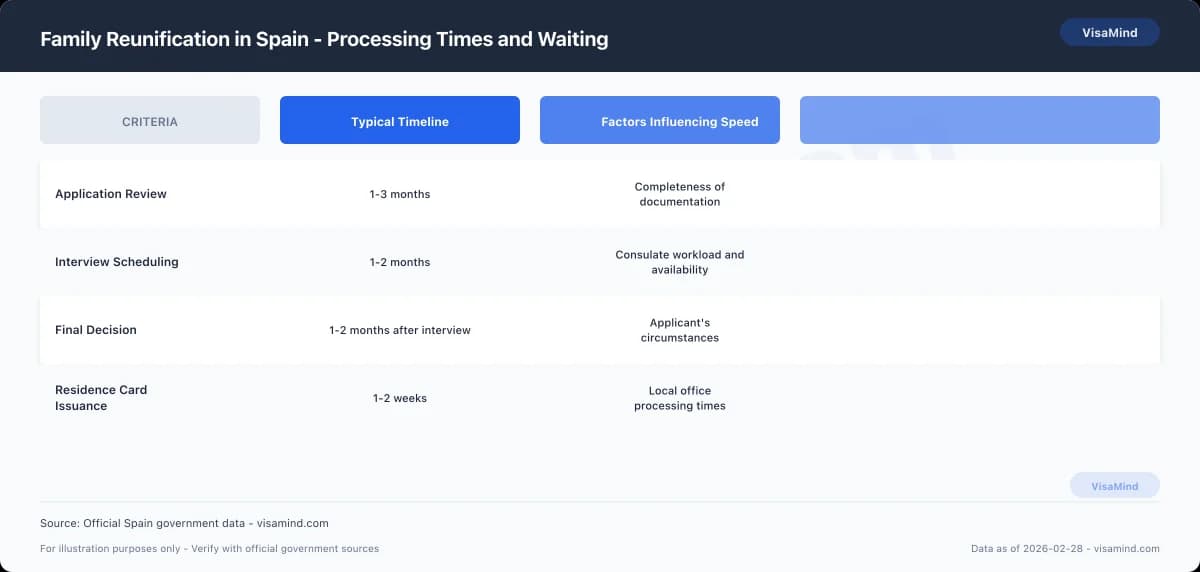
The processing times for family reunification applications in Spain can vary considerably, depending on several factors such as the applicant's nationality, the completeness of the application, and the current workload of the State Secretariat for Migration (SEM).
| Factor | Description |
|---|---|
| Standard Processing | Typically ranges from 6 to 12 months. Factors such as a fully completed application can help minimize delays. |
| Priority Categories | Certain applications may receive priority processing, such as those involving minor children or urgent family situations. |
| Application Completeness | Ensuring all required documents and evidence are submitted can significantly affect processing speed. |
| Current Workload | Processing times may vary depending on the volume of applications being handled by SEM at any given time. |
What Affects Processing Speed?
Several elements can influence how quickly your application is processed. These include:
- Completeness of Submission: Make sure your application is thorough and includes all necessary documentation. Refer to the Documents Checklist to ensure nothing is overlooked.
- Eligibility Category: Certain categories, such as applications involving minors or dependents with urgent needs, may be expedited.
- Verification Process: Applications that require additional verification or are missing key information can experience significant delays.
Tip: You can lodge an application online to track your status and receive updates more promptly.
How to Check Processing Times?
To stay informed about current processing times and any potential changes, regularly consult the Processing Times guide. This can help you manage expectations and plan accordingly.
Can You Expedite Your Application?
While the ability to expedite an application for family reunification is generally limited, certain circumstances may allow for faster processing:
- Emergency Situations: If you have a compelling reason, such as a medical emergency, SEM may consider expediting your application.
- Legal Assistance: Consulting with an immigration lawyer may provide additional options or insights into speeding up the process.
Important: Always verify the most current processing timelines and procedures on the official SEM website to ensure compliance with their requirements.
What Goes Wrong
#Several issues can arise during the process. It's crucial to be aware of these potential pitfalls to address them proactively and avoid delays or denials.
Insufficient Evidence
- Lack of Documentation: Failure to provide adequate evidence of your familial relationship can lead to delays or rejections. Ensure you gather and submit all necessary documents, such as birth certificates, marriage certificates, and proof of cohabitation.
- Incomplete Application: Missing information or incomplete sections in your application can result in setbacks. Carefully review all requirements and consult the How To Apply guide for detailed instructions.
Sham Marriage Concerns
- Authenticity Doubts: The State Secretariat for Migration (SEM) may scrutinize marriages suspected of being fraudulent. Be prepared to provide thorough evidence of the legitimacy of your relationship, such as shared financial responsibilities or joint travel history.
- Interview Challenges: If SEM requires an interview, be ready to demonstrate the authenticity of your relationship. Refer to the Interview Prep guide for tips on how to prepare.
Financial Shortfalls
- Income Requirements: You must meet specific financial thresholds to sponsor family members. If your income falls below these requirements, your application can be denied. Consult the Financial Requirements guide to ensure you meet the necessary criteria.
- Supporting Documents: Provide clear evidence of your financial stability, including payslips, tax returns, and bank statements, to substantiate your ability to support your family members.
Medical and Character Issues
- Health Concerns: Family members with certain medical conditions may face challenges. It's essential to provide comprehensive health records and, if necessary, a plan for medical care in Spain.
- Background Checks: Ensure all applicants have clean criminal records. Any character issues could lead to denials. Be prepared to submit police clearance certificates or similar documents from all countries where applicants have resided.
Important: Address potential issues proactively by thoroughly reviewing all requirements and guidelines. This preparation helps mitigate the risk of application delays or denials. Always verify details and updates on the official SEM website.
Rights While Waiting
#While your application for family reunification is being processed by the State Secretariat for Migration (SEM), it's essential to understand your rights and limitations during this period. Knowing what you can and cannot do will help you navigate this waiting time more effectively.
Work Rights
During the family reunification application process, your ability to work in Spain depends on your current visa status. If you are already in Spain on a visa that permits employment, such as a National Work Visa or an EU Blue Card, you can continue working. However, if you are on a tourist or non-working visa, you will not have the right to work until your family reunification application is approved.
Important: Ensure that your current visa status aligns with your employment situation to avoid legal complications.
Travel Restrictions
While your application is pending, travel outside of Spain may be restricted, especially if you are waiting for a decision on a visa extension or change of status. Leaving the country could potentially void your pending application, depending on your current visa conditions. It’s advisable to consult with the SEM or legal advisors before making travel plans.
Implied Status and Bridging Visas
Spain does not have a "bridging visa" system like some other countries. However, if your current residence permit expires while your application is being processed, you may still remain in Spain under an implied status. This status allows you to stay legally until a decision is made. It's crucial to keep a copy of your application receipt as proof of submission.
Tip: Keep your application receipt accessible at all times, especially when interacting with local authorities or during any travel within the Schengen Area.
Checking Application Status
You can track the status of your family reunification application online through the SEM’s official website. Regularly checking your application status helps you stay informed about any additional documents or information that may be required.
For further guidance on the application process and necessary documentation, refer to the How To Apply and Visa Refusal Reasons guides.
What Happens After Approval
#Upon approval of your family reunification application in Spain, there are several important post-approval steps and conditions to consider. Understanding these can help ensure compliance with Spanish immigration policies and facilitate a smoother transition for your family.
Conditional vs. Permanent Status
Initially, family reunification visas grant conditional residence status. This means that your family members are permitted to reside in Spain under specific conditions related to the primary visa holder's status. Typically, the duration of the residence permit aligns with that of the sponsor's residence permit. For example, if the sponsor holds a National Work Visa valid for two years, the family reunification permit will also be valid for two years.
Important: Family members must maintain their residence permits and renew them as required. Delays or failures in renewal can result in losing residency status.
Residence Requirements
To maintain their residency status, family members must fulfill certain residence requirements. This typically involves:
- Physically residing in Spain for more than six months per year.
- Registering with local authorities upon arrival.
- Ensuring that any changes in personal circumstances (such as address or employment status) are updated with the relevant local authorities.
Restrictions and Obligations
Family members on a reunification visa are subject to some restrictions:
- Work Authorization: Initially, family members may not have the immediate right to work. However, after one year, they may apply for a work permit, which allows them to take up employment under the EU Blue Card conditions.
- Educational Access: Children can access Spain's public education system, ensuring they continue their studies without interruption.
Transitioning to Permanent Status
After five years of continuous legal residence, family members may be eligible to apply for permanent residence. This longer-term status grants greater stability and fewer restrictions. To transition to permanent status, family members will typically need to demonstrate continuous residence, integration into Spanish society, and financial stability.
Tip: Familiarize yourself with the PR Pathway Guide to understand the steps and documentation required for transitioning to permanent residence.
Ensuring compliance with these requirements and understanding the conditions of your family's residence in Spain can significantly impact your ability to maintain and extend your residency status. For any uncertainties, consulting with the State Secretariat for Migration or seeking legal advice from an immigration specialist in Spain is advisable.
The Long-Term Outlook
#Successfully reuniting with your family in Spain can be the beginning of a longer journey toward obtaining permanent residency and potentially Spanish citizenship. Understanding the timeline and requirements for each stage can help you plan effectively.
Pathway to Permanent Residency
Once you are in Spain on a Family Reunification Visa, you can start working towards long-term residency. Here's a general timeline for this process:
- Initial Family Reunification Visa: Valid for one year and renewable.
- Renewal: After the first year, the visa can be renewed for two more years, provided you meet the necessary conditions.
- Long-Term Residency: After five years of continuous legal residence in Spain, you may apply for Long Term Residence, which grants more stability and rights.
Tip: Make sure to keep track of all your renewals and ensure you meet the residence requirements to avoid any gaps in your status.
Applying for Spanish Citizenship
After obtaining long-term residency, you may be eligible to apply for Spanish citizenship, provided you meet specific criteria:
- Residency Requirement: Typically, you need to have legally resided in Spain for ten years. However, this period may be reduced for certain individuals, such as refugees or nationals from specific countries.
- Language and Integration: Demonstrating basic knowledge of the Spanish language and integration into Spanish society is crucial.
For more detailed information on transitioning from residency to citizenship, refer to the PR Pathway Guide.
Key Considerations
- Continuous Residence: Ensure that you maintain continuous residence in Spain, as significant absences could affect your eligibility for long-term residency or citizenship.
- Documentation: Keep all necessary documents updated and organized, including proof of residence, employment, and any other relevant paperwork.
Important: Always verify the latest requirements and timelines on the official Spanish government websites, as immigration policies may change.
For more assistance with the family reunification process, consider visiting the How To Apply section for guidance on gathering your documents and preparing your application.
Family Immigration Stories
#Maria, a healthcare worker in Madrid, was eager to bring her elderly parents from Argentina to live with her in Spain. Concerned about their health and living alone, she decided to initiate the family reunification process through the State Secretariat for Migration (SEM). Maria carefully gathered the necessary documents, including proof of her stable income and suitable housing, to support her application. After submitting her application through SEM, she received confirmation and guidance on the next steps. Within four months, her application was approved, and her parents were granted the necessary visas to join her in Spain, allowing Maria to take care of them in person.
Scenario: Reuniting with a Spouse from Abroad
Javier, a software engineer living in Barcelona, married his college sweetheart, Ana, who lived in Mexico. Determined to start their life together in Spain, Javier applied for the Family Reunification Visa through SEM. He ensured all documentation, including their marriage certificate and his employment contract, was in order. After reviewing the Documents Checklist, he submitted everything online. The process took about five months, during which Javier regularly checked the status through the SEM portal. Eventually, Ana received her visa, allowing her to move to Spain and join Javier. Their reunion marked the beginning of a new chapter in their shared life in Barcelona.
Scenario: Bringing Children to Spain
Sofia, an architect based in Valencia, wanted her two children, who were living with their grandparents in Colombia, to join her in Spain. Aware of the requirements, Sofia meticulously prepared her application, including evidence of her long-term residency and stable financial situation, as outlined in the Financial Requirements. The process, managed by SEM, took approximately six months. Sofia's application was successful, and her children were soon able to join her, ensuring they could grow up together as a family in Spain.
FAQs
Can I switch from a student visa to Family Reunification in Spain?
What happens if my Family Reunification application in Spain is refused?
Are there any rights for family members while waiting for Family Reunification in Spain?
What is the process to apply for a Family Reunification Visa in Spain?
How can I prove my relationship for Family Reunification in Spain?
Can I combine a work permit with Family Reunification in Spain?
What are the common issues in Family Reunification applications in Spain?
Sources
Last reviewed: March 1, 2026
VisaMind provides informational guidance only and is not a government agency. This is not legal advice. Requirements can change and eligibility depends on your specific facts. If your case is complex or high-stakes, consult a licensed immigration attorney.
Next steps
Requirements vary by nationality, purpose, timeline, and case details. Use Find My Visa to get a personalized checklist for Spain with official sources and deadlines.
Find my visa