On this page
- Visa Options for Remote Workers
- Do You Qualify?
- Getting Your Digital Nomad Visa
- Tax Rules for Remote Workers
- How Long Can You Stay?
- What Remote Workers Get Wrong
- Cost of Living and Coworking
- Connectivity and Logistics
- Beyond the Nomad Visa
- Digital Nomad Experiences
- Visa options for this goal
- Guides for Thailand
- Other goals for Thailand
Visa Options for Remote Workers
#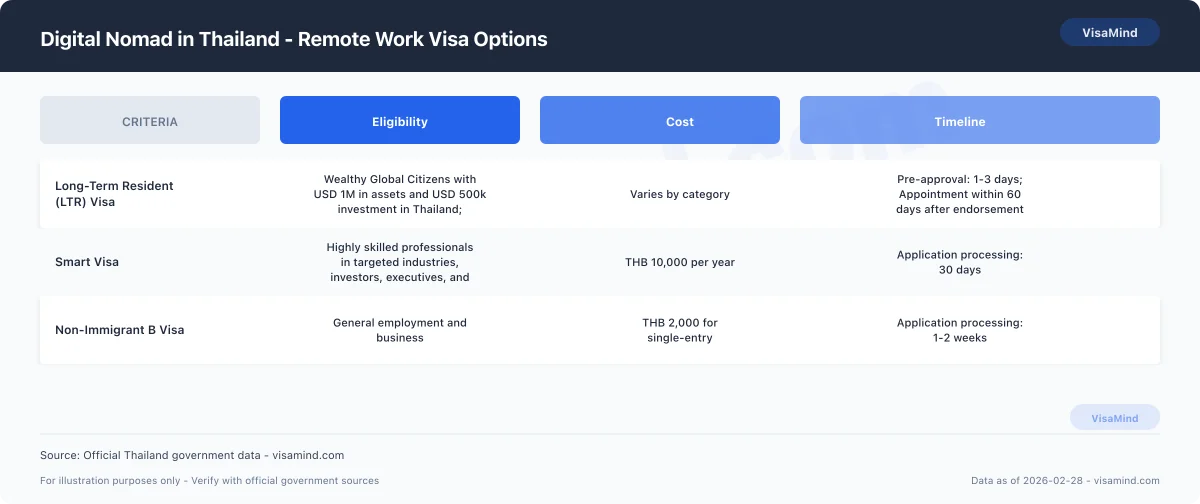
Thailand offers several visa options for remote workers and digital nomads, particularly through the Long-Term Resident (LTR) Visa program. This initiative is designed to attract high-potential individuals by providing both tax and non-tax benefits. Below is a comparison of the visa categories available to remote workers in Thailand:
| Visa Category | Eligibility | Cost | Timeline |
|---|---|---|---|
| Wealthy Global Citizen | Minimum USD 1 million in assets and USD 500,000 investment in Thailand | Varies | 1-3 working days for pre-approval |
| Wealthy Pensioner | Age 50+ with unearned income of at least USD 80,000 per year | Varies | 1-3 working days for pre-approval |
| Work-from-Thailand Professional | Annual income of USD 80,000; employed by a reputable overseas company | Varies | 1-3 working days for pre-approval |
| Highly Skilled Professional | Annual income of USD 80,000; employed in targeted industries | Varies | 1-3 working days for pre-approval |
| Dependents of LTR Visa Applicants | Spouse and children of any LTR visa holder or applicant | Varies | 1-3 working days for pre-approval |
Understanding the LTR Visa
The Long-Term Resident (LTR) Visa is a comprehensive option for digital nomads seeking to live and work in Thailand. It covers multiple categories, each with specific eligibility criteria.
- Wealthy Global Citizen: This category is ideal if you possess significant financial assets and are willing to invest in Thailand.
- Wealthy Pensioner: Suitable for individuals aged over 50 with a steady unearned income, making it an attractive option for retirees.
- Work-from-Thailand Professional: This is targeted at remote workers with a stable high income working for established companies abroad.
- Highly Skilled Professional: Designed for professionals in specialized fields that are aligned with Thailand's targeted industries.
Application Process
To apply for any category under the LTR Visa, you must first complete an online application for qualifications endorsement. This step determines your eligibility based on your income, assets, or employment status.
- Register and submit your application online with the required documents for qualifications endorsement.
- Submit additional documents if requested during the pre-approval process, which typically takes 1-3 working days.
- Schedule an appointment for visa issuance at a Royal Thai Embassy or One Stop Service Center after receiving your endorsement letter.
Important: Ensure all conditions and requirements are maintained throughout the visa period, including investment amounts, employment status, and health insurance coverage.
Other Visa Options
While the LTR Visa is a popular choice for digital nomads, Thailand offers other visas that might be suitable depending on your circumstances. The Smart Visa is another option designed for highly skilled professionals and tech entrepreneurs.
Tip: Consider consulting with a visa specialist or legal advisor to choose the best visa category for your needs.
For more detailed information on the application process and requirements, visit the Immigration Bureau of Thailand or explore our Digital Nomad Guide for insights tailored to remote workers.
Do You Qualify?
#To become a digital nomad in Thailand, you’ll need to meet specific criteria for the Long-Term Resident (LTR) Visa. This visa offers an attractive opportunity for remote workers looking to live and work in Thailand for an extended period. Let's delve into the qualifications required for various categories under the LTR Visa.
Eligibility Criteria
| Category | Income Requirement | Employment Requirement | Additional Requirements |
|---|---|---|---|
| Wealthy Global Citizen | Hold at least USD 1 million in assets | N/A | Invest at least USD 500,000 in Thailand |
| Wealthy Pensioner | Minimum unearned income of USD 80,000 per year | N/A | Must be aged 50 years or older |
| Work-from-Thailand Professional | Minimum income of USD 80,000 per year | Work for a well-established overseas company | Proof of remote employment and contract with the overseas employer |
| Highly Skilled Professional | Minimum income of USD 80,000 per year | Employed in targeted industries | Employment contract and evidence of expertise in the field |
| Spouse and Children | N/A | Dependents of LTR visa holders | Proof of relationship to LTR visa holder |
Health Insurance and Financial Proof
All applicants, regardless of category, must maintain:
- Health insurance covering at least USD 50,000 or equivalent financial security.
- Proof of income, investment, or assets specific to your visa category.
Important: It is crucial to maintain the required investment amounts, income levels, and health insurance coverage throughout the visa duration to avoid any compliance issues.
Application Process
- Online Registration: Begin by registering and submitting an application for qualifications endorsement on the Immigration Bureau of Thailand's website.
- Document Submission: Prepare and submit additional documents for pre-approval. This process typically takes 1-3 working days but may extend if further documentation is needed.
- Visa Issuance Appointment: Once pre-approved, schedule an appointment for visa issuance at the Royal Thai Embassies or the One Stop Service Center in Thailand.
Maintaining Eligibility
Throughout your stay in Thailand, you must continuously meet all conditions outlined in your visa category. This includes maintaining specified income levels, employment status, and insurance coverage.
For further details on navigating the specifics of remote work visas, you may refer to the Digital Nomad Guide for comprehensive tips and insights.
By understanding these requirements and ensuring all criteria are met, you can enjoy a seamless experience as a digital nomad in Thailand, benefiting from the rich culture and dynamic environment the country offers.
Getting Your Digital Nomad Visa
#To successfully apply for the Digital Nomad Visa in Thailand under the Long-Term Resident (LTR) Visa program, follow the outlined steps below. This visa is designed for individuals who wish to reside and work remotely in Thailand while enjoying specific benefits.
Step-by-Step Application Process
-
Eligibility Review and Document Preparation
Begin by determining your eligibility for one of the LTR Visa categories: Wealthy Global Citizen, Wealthy Pensioner, Work-from-Thailand Professional, or Highly Skilled Professional. Ensure you meet the income, asset, or employment criteria specific to your category. Gather required documents such as proof of income, investment, assets, and health insurance covering at least USD 50,000.
Important: Each visa type has unique requirements that must be maintained throughout your stay. Verify all conditions on the Thailand Immigration Bureau website.
-
Online Application for Qualifications Endorsement
Register and submit an online application for qualifications endorsement through the official portal. This initial step is crucial as it determines your eligibility to proceed further with the LTR Visa process. You'll need to upload your supporting documents during this stage.
Tip: Submitting your application online is recommended to receive immediate confirmation and to track your application status.
-
Pre-Approval Documentation Submission
After receiving a positive qualifications endorsement, submit any additional documents requested for the pre-approval phase. This step may take 1-3 working days, but the processing time might extend if further documentation is needed.
-
Schedule Your Visa Issuance Appointment
Upon pre-approval, arrange an appointment for visa issuance at a Royal Thai Embassy or the One Stop Service Center in Thailand. Ensure you maintain all eligibility conditions and have your pre-approval documents ready for verification.
Important: Missing the appointment deadline after receiving your qualifications endorsement can delay your visa issuance.
Key Considerations
-
Maintain Eligibility: Throughout your visa duration, you must maintain all conditions, such as financial thresholds and insurance coverage. Failure to do so could result in visa revocation.
-
Documentation Accuracy: Ensure that your documentation is complete and accurate. Missing or insufficient proof of income or assets can lead to application denial.
For more information, refer to related guides such as the Digital Nomad Guide for detailed advice on living and working in Thailand as a digital nomad. You might also explore other visa options like the Smart Visa if the LTR Visa does not fit your circumstances.
Tax Rules for Remote Workers
#Understanding the tax implications for digital nomads in Thailand is crucial for maintaining compliance and ensuring a smooth stay. Here's an overview of the tax residency rules, local income tax obligations, and double taxation treaties that may affect you.
Tax Residency Rules
To determine your tax residency status in Thailand, the primary consideration is the duration of your stay. You are considered a tax resident if you stay in Thailand for 180 days or more within a calendar year. As a tax resident, you are subject to Thai income tax on your worldwide income. Conversely, non-residents are only taxed on income sourced within Thailand.
Important: Even if you qualify as a non-resident, your Thai-sourced income is still taxable.
Local Income Tax Obligations
If you are deemed a tax resident in Thailand, you are required to pay personal income tax on your global income, including any earnings from remote work. The Thai income tax system is progressive, with rates ranging from 0% to 35% as of 2023. It is advisable to seek guidance from a tax professional to understand your specific tax obligations.
- Income tax rates: 0% to 35%
- Tax year: January 1 to December 31
- Filing deadline: March 31 of the following year
Double Taxation Treaties
Thailand has established double taxation agreements (DTAs) with numerous countries to prevent the same income from being taxed by both Thailand and your home country. These treaties often provide relief or exemptions for certain types of income, making it vital to check if your home country has a DTA with Thailand.
- Check existing DTAs: Verify if your home country has a treaty with Thailand.
- Benefits: Potential exemptions or reductions in tax rates on certain types of income.
- Action: Consult with a tax advisor to utilize benefits effectively.
Tips for Managing Tax Obligations
- Keep Detailed Records: Maintain clear and accurate records of your income, expenses, and days spent in Thailand.
- Consult a Tax Professional: Engage a tax expert familiar with Thai taxation and international tax laws to ensure compliance.
- Stay Informed: Regularly check for updates on tax regulations and treaties that might affect your situation.
For more information on living and working in Thailand as a digital nomad, consider exploring additional resources such as the How To Apply and Financial Requirements guides.
How Long Can You Stay?
#When applying for the Long-Term Resident (LTR) Visa in Thailand as a digital nomad, understanding the duration and renewal options is key. This visa is designed to make Thailand an attractive destination for remote workers by offering an extended stay with various benefits.
Visa Duration
The LTR Visa for digital nomads allows you to stay in Thailand for up to 10 years, which is split into an initial five-year term, followed by an optional renewal for another five years. This extended stay is particularly beneficial for those who wish to establish long-term residency in Thailand.
Renewal Process
Renewing your LTR Visa is possible after the initial five-year period. To renew, you must continue to meet all eligibility criteria, such as maintaining the required income, investment levels, and health insurance coverage. Renewal is contingent on:
- Continued employment or investment in Thailand as per your visa category.
- Maintaining health insurance with coverage of at least USD 50,000.
- Adhering to any other conditions specific to your visa category.
Important: Failure to meet renewal conditions could result in denial of the extension. Ensure you regularly verify all requirements on the Immigration Bureau's official site.
Maximum Total Stay
With the renewal option, the LTR Visa allows a maximum total stay of 10 years in Thailand. This makes it one of the longest residency options available compared to other visas like the Non Immigrant B or Smart Visa, which typically offer shorter durations.
Considerations and Tips
- Regular Check-Ins: It's essential to stay informed about any changes in visa conditions or requirements. Regularly consulting the Visa Extension Guide can help.
- Document Maintenance: Keep all necessary documents updated, including proof of income and health insurance, to avoid complications during renewal.
The LTR Visa is a compelling choice for digital nomads seeking a long-term base in Thailand, offering both the flexibility of extended stays and the stability of a well-defined legal framework.
What Remote Workers Get Wrong
#Remote work in Thailand is an exciting opportunity, but digital nomads often make critical mistakes that can disrupt their plans. Here are some common pitfalls:
Working for Local Clients
-
Misunderstanding Work Permissions: Many remote workers mistakenly believe they can take on local Thai clients without additional permits. The Long-Term Resident (LTR) Visa allows you to work for overseas companies. Engaging with local clients may require a Non Immigrant B Visa or a Smart Visa.
-
Legal Implications: Working for local clients without proper authorization can lead to fines, visa cancellations, and even deportation. Always verify your employment conditions with the Immigration Bureau of Thailand.
Tax Misunderstandings
-
Assuming No Tax Obligations: Remote workers often assume they are exempt from Thai taxes because they work for foreign companies. However, your tax obligations depend on your residency status. It's essential to consult with a tax professional familiar with Thai tax laws to avoid penalties.
-
Double Taxation Risks: Without proper planning, you might face double taxation both in Thailand and your home country. Consider treaties and possible credits that may apply, and seek advice from a tax expert.
Overstaying Your Visa
-
Misjudging Visa Duration: Some digital nomads overstay their visa, assuming extensions are easily granted. Overstaying can result in fines, detention, or a ban from re-entering Thailand. Ensure you understand the Visa Extension Guide and plan your stay accordingly.
-
Missing Appointment Deadlines: After receiving your qualifications endorsement, you must schedule your LTR visa issuance appointment promptly. Missing this step can jeopardize your visa application.
Insufficient Proof of Income
-
Inadequate Documentation: Providing insufficient proof of income can lead to application denial. The LTR Visa requires a minimum personal income of USD 80,000 per year for most categories. Ensure you have comprehensive documentation to support your claims.
-
Maintenance of Income Levels: It's not enough to just meet the income requirements at the time of application. You must maintain these income levels throughout your stay. Regularly verify your financial standing and prepare to demonstrate this if requested by officials.
Important: Always maintain up-to-date records of your income, investments, and insurance to ensure compliance with visa requirements. Regular checks can prevent complications during your stay.
Cost of Living and Coworking
#Thailand, long known for its vibrant culture and stunning landscapes, has become a popular destination for digital nomads. With the Long-Term Resident (LTR) Visa, digital nomads can enjoy the benefits of living and working in Thailand while exploring its diverse regions. Understanding the cost of living, coworking options, and where to set up base can be key to planning your stay.
What Is the Cost of Living in Thailand?
Thailand offers a relatively affordable cost of living compared to many Western countries, making it attractive for digital nomads. Your monthly budget will vary depending on your lifestyle and location, but here's a general breakdown:
- Accommodation: Ranges from USD 300 to USD 1,200 per month, depending on whether you choose a basic apartment or a luxury condo.
- Food: Eating out is affordable, with street food meals costing as little as USD 2, while dining in restaurants may range from USD 5 to USD 20 per meal.
- Transportation: Public transport is economical, with monthly passes typically costing around USD 30. Renting a scooter might be around USD 60 per month.
- Utilities and Internet: Monthly utilities are about USD 50, and high-speed internet costs approximately USD 20.
Tip: Living in less touristy areas can significantly reduce your expenses while offering a more authentic Thai experience.
Where Are the Popular Digital Nomad Hubs?
Several Thai cities have become digital nomad hotspots, each offering unique advantages:
- Bangkok: The bustling capital is a hub for professionals with numerous coworking spaces and networking opportunities. It's perfect for those who thrive in a dynamic urban environment.
- Chiang Mai: Known for its relaxed atmosphere and affordable living costs, Chiang Mai is a favorite among digital nomads seeking community and tranquility.
- Phuket: Offers a blend of beautiful beaches and modern amenities. It's ideal for those who want a balance between work and leisure.
- Koh Samui: A tropical paradise with growing infrastructure for remote workers, perfect for those who want island life.
What Are the Coworking Options?
Thailand boasts a variety of coworking spaces that cater to the needs of digital nomads. These spaces provide high-speed internet, meeting rooms, and vibrant communities. Some popular options include:
- WeWork (Bangkok): Offers a professional atmosphere with locations in prime business districts.
- Nimman Hill (Chiang Mai): Known for its creative environment and strong community support.
- Garage Society (Phuket): Provides modern facilities with great views, ideal for creativity and productivity.
The cost for a hot desk typically ranges from USD 50 to USD 150 per month, depending on the location and amenities.
For further details on visa options and the application process, explore the Long-Term Resident (LTR) Visa and Documents Checklist to ensure you have all necessary documentation ready. To understand the financial requirements needed for your stay, refer to the Financial Requirements guide.
Connectivity and Logistics
#Important: Ensure you have a reliable internet connection and local banking arrangements before moving to Thailand as a digital nomad.
Internet Connectivity
- Internet Speeds: Thailand offers high-speed internet in most urban areas. Speeds can exceed 100 Mbps in cities like Bangkok and Chiang Mai, making it suitable for remote work.
- Wi-Fi Availability: Access to public Wi-Fi is common in cafes, coworking spaces, and hotels, but for secure connections, consider using a personal hotspot.
- SIM Cards: Upon arrival, you can purchase a local SIM card from providers like AIS, TrueMove, or DTAC. These offer affordable data plans ranging from THB 300 to THB 1,000 per month, depending on data limits.
Banking and Financial Logistics
- Local Bank Accounts: Opening a bank account in Thailand requires a valid visa and proof of residence. Popular banks include Bangkok Bank, Kasikornbank, and Siam Commercial Bank. Keep in mind that having a local account can simplify transactions and reduce fees.
- Currency and Payments: The local currency is Thai Baht (THB). Digital nomads often use credit cards or mobile payment apps like PromptPay and TrueMoney for day-to-day expenses.
Day-to-Day Logistics
- Transportation: Thailand's public transport includes buses, BTS Skytrain, MRT Subway, and tuk-tuks. In cities, ride-hailing apps like Grab are widely used.
- Accommodation: Short-term rentals are available through platforms like Airbnb, while long-term leases can be arranged directly with landlords. Monthly costs vary significantly by location.
Tip: Consider staying in areas with a strong digital nomad community, like Chiang Mai, to benefit from networking opportunities and shared resources.
For more detailed information about visas and financial requirements, visit the Long-Term Resident (LTR) Visa page or our Financial Requirements guide.
Beyond the Nomad Visa
#Switching from a digital nomad visa in Thailand to a more permanent visa type is an important consideration for many remote workers. The Long-Term Resident (LTR) Visa, which the digital nomad visa is part of, offers an entry point for those looking to establish a longer-term presence in Thailand. However, transitioning to another visa type, such as a work visa or permanent residency, requires understanding specific requirements and processes.
Can You Transition to a Work Visa?
If you're looking to switch from a digital nomad visa to a work visa, such as the Non Immigrant B Visa, the process involves securing a job offer from a Thai employer. The employer must then assist you in obtaining a work permit. Key steps include:
- Obtain a valid job offer from a Thai company.
- Ensure your employer can sponsor your work permit application.
- Gather necessary documents, such as proof of employment and qualifications.
- Schedule an appointment with the Immigration Bureau for further processing.
Important: Your employment must align with the sectors allowed under Thai regulations for foreign workers.
Pathway to Permanent Residency
For those aiming for a more permanent status, applying for Permanent Residence in Thailand is possible after holding a non-immigrant visa for at least three consecutive years. Key criteria include:
- Holding a valid Non-Immigrant Visa.
- Demonstrating a clean criminal record.
- Providing evidence of financial stability and contributions to the Thai economy.
The application involves a formal interview and review process by Thai authorities.
Other Long-Term Options
Beyond work visas and permanent residency, other long-term options include the Thailand Elite Visa, which offers a renewable long-term stay for an upfront fee. Alternatively, the Smart Visa targets professionals in specific industries and offers benefits like work permit exemptions.
| Visa Type | Duration | Key Benefit |
|---|---|---|
| Non Immigrant B | 1 year | Employment in Thailand |
| Permanent Residence | Indefinite | Long-term stay without visa renewals |
| Thailand Elite | 5-20 years | Flexible long-term stay options |
| Smart Visa | 1-4 years | Work permit exemption for key sectors |
Tip: Consult with a legal expert or immigration consultant to navigate the complexities of switching visa types effectively.
Understanding the nuances of transitioning from a digital nomad visa to other visa types in Thailand can pave the way for a more stable and integrated life in the country. For detailed guidance, reviewing resources like the Visa Extension Guide can be beneficial.
Digital Nomad Experiences
#A software developer working remotely for a Silicon Valley tech company decided to relocate to Thailand and apply for the Long-Term Resident (LTR) Visa under the Work-from-Thailand Professionals category. To meet the eligibility criteria, he ensured his personal income averaged USD 80,000 annually. He also confirmed his employment with a well-established overseas company. The developer registered on the Immigration Bureau of Thailand's portal, submitting the required documents, including proof of income and insurance coverage. After receiving the qualifications endorsement, he promptly scheduled an appointment at the One Stop Service Center in Bangkok for visa issuance. Within two months, he secured his LTR Visa, allowing him to enjoy Thailand's vibrant digital nomad scene.
Scenario: Family Relocating with LTR Visa Holder
An engineer employed in one of Thailand's targeted industries successfully obtained an LTR Visa under the Highly Skilled Professionals category. To bring his family along, he needed to apply for dependent visas for his spouse and children. This involved demonstrating his income stability and maintaining health insurance coverage for each family member. After submitting the necessary documents through the Immigration Bureau's online system, the family was granted dependent visas. With their visas secured, they relocated to Thailand, enrolling the children in international schools and settling into their new community within three months.
Scenario: Retired Executive Seeking LTR Visa
A retired executive with significant assets sought to move to Thailand under the LTR Visa's Wealthy Pensioners category. At 55 years old, he met the age and income requirements, having an unearned income exceeding USD 80,000 annually. He began the application process by gathering financial statements and proof of health insurance. Submitting these through the official Immigration Bureau portal, he received his qualifications endorsement. After completing the pre-approval process, he made an appointment at the Royal Thai Embassy in his home country for visa issuance. Within four months, he was living comfortably in Thailand, enjoying the benefits of his LTR Visa.
FAQs
What is the processing time for a Digital Nomad Visa in Thailand?
What tax rules apply to digital nomads in Thailand?
Can my spouse work on a dependent visa in Thailand while I'm a digital nomad?
What are common mistakes digital nomads make when applying for a visa in Thailand?
What is the income requirement for the Digital Nomad Visa in Thailand?
Is it possible to combine the goals of working and retiring in Thailand with the Digital Nomad Visa?
Do I need health insurance to apply for a Digital Nomad Visa in Thailand?
Sources
Last reviewed: March 1, 2026
VisaMind provides informational guidance only and is not a government agency. This is not legal advice. Requirements can change and eligibility depends on your specific facts. If your case is complex or high-stakes, consult a licensed immigration attorney.
Next steps
Requirements vary by nationality, purpose, timeline, and case details. Use Find My Visa to get a personalized checklist for Thailand with official sources and deadlines.
Find my visa