Official sources referenced
Overview of Financial Requirements
#Demonstrating your financial capability is a critical step in the process. The Immigration Bureau of Thailand requires applicants to provide proof of sufficient funds to support themselves during their stay. This requirement applies to various visa types, including tourist, business, and long-term residence visas. Understanding the financial requirements is essential to ensure a successful application.
What Are the General Financial Requirements?
The financial requirements for Thailand visas are designed to ensure that you can cover your expenses during your stay without requiring support from the Thai government. Generally, you will need to provide bank statements, income proof, or other financial documents that reflect your financial stability. For example, applicants for the Non-Immigrant O-A (Retirement) Visa must show a monthly income of at least 65,000 THB or a deposit of 800,000 THB in a Thai bank account.
Tip: Ensure your financial documents are up-to-date and reflect the required amounts consistently over the specified period.
Why Are Financial Proofs Required?
The financial evidence serves to reassure Thai authorities that you can maintain yourself throughout your stay. This is particularly crucial for long-term visas like the Long-Term Residence Visa or when applying for a Retirement Visa. Without sufficient proof of funds, your application may face delays or rejection.
Important: Submitting incomplete or outdated financial documents can result in application denial. Prepare and verify all documents well ahead of your application date.
How to Prepare Your Financial Documents
When preparing your financial documents, ensure they are clear, legible, and officially certified if required. Most embassies and consulates require documents to be in English or Thai. It's advisable to gather your financial evidence early to allow time for any necessary translations or certifications. Additionally, applicants can review the Documents Checklist to ensure completeness.
Key Considerations for Different Visa Types
Different visa types may have varying financial thresholds. For instance, a Tourist Visa might require a lower financial threshold compared to a Non-Immigrant B Visa (Business/Work). Always check the specific financial requirements for your visa category by consulting the official guidelines.
By understanding and preparing your financial documents according to these guidelines, you can increase the likelihood of a successful visa application to Thailand. It's always best to cross-check the latest requirements on the official Immigration Bureau of Thailand website or with your local Thai embassy or consulate.
Proof of Funds by Visa Type
#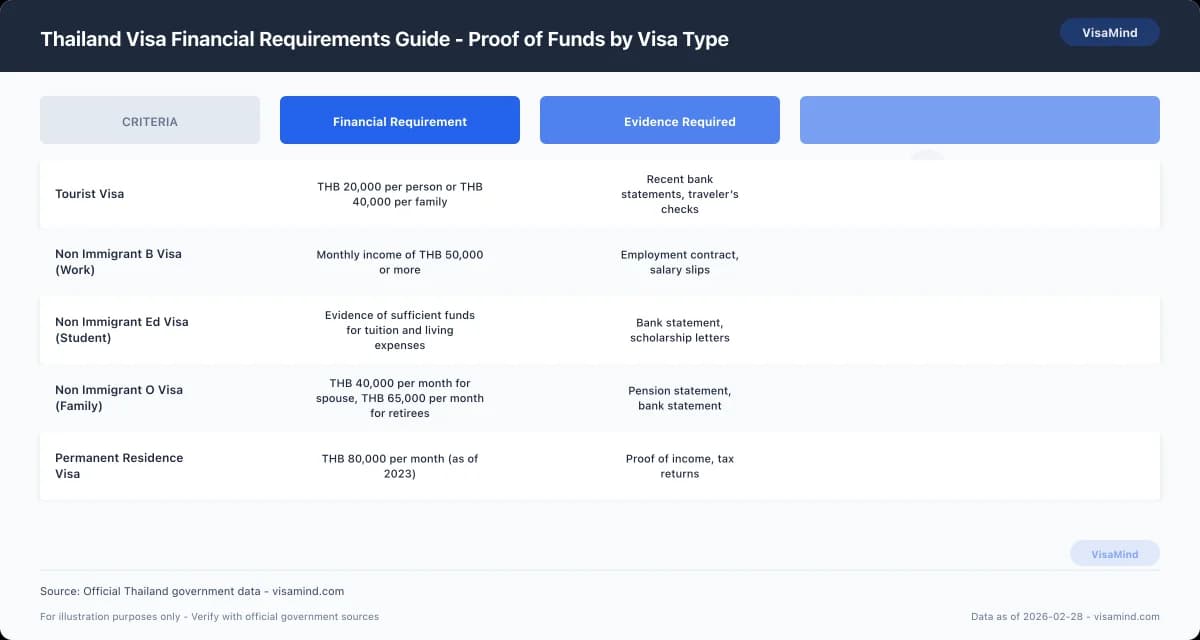
To successfully apply for a visa to Thailand, you must meet specific financial requirements, which vary depending on the type of visa you are seeking. Below is a comparison of the financial proof needed for different visa categories.
Financial Requirements by Visa Type
| Visa Type | Proof of Funds Required | Evidence Needed |
|---|---|---|
| Tourist Visa | 20,000 THB per person / 40,000 THB per family | Bank statement or proof of income |
| Non-Immigrant Visa B (Business/Work) | Minimum 400,000 THB in personal savings | Bank statement, company letter, employment contract |
| Non-Immigrant Visa ED (Education) | Financial support for tuition and living expenses | Bank statement, scholarship documentation |
| Non-Immigrant Visa O (Family) | 400,000 THB for spouse/child support | Bank statement, marriage/birth certificates |
| Permanent Residence | 3 million THB in assets | Bank statement, property ownership documents |
What Evidence is Required?
For each visa type, you must provide specific documentation as proof of financial stability. For example, if you are applying for a Tourist Visa, a recent bank statement showing at least 20,000 THB per person is essential. Similarly, those applying for a Non-Immigrant Visa B (Business/Work) will need to demonstrate a minimum of 400,000 THB in savings, supported by a bank statement and a company letter.
Important: Ensure all documents are up-to-date and accurately reflect your financial status. Incomplete or outdated documentation may lead to delays or denial of your application.
Additional Requirements for Long-Term Visas
For long-term visas like the Permanent Residence option, the financial requirements are more stringent. Applicants must show proof of at least 3 million THB in assets. This can include bank statements, property ownership documents, or other forms of financial holdings.
Tip: Consider consulting with a financial advisor or immigration expert if you need assistance preparing your financial documents for long-term or complex visa applications.
Common Pitfalls
A frequent issue faced by applicants is failing to provide all necessary supporting documents. For instance, when applying for a Non-Immigrant Visa ED (Education), remember to include both bank statements and any scholarship documentation that demonstrates your ability to cover tuition and living expenses in Thailand.
By understanding these specific financial requirements and preparing the necessary evidence, you can smoothly navigate the application process for your desired Thai visa. Always verify the latest requirements and guidelines on the official Immigration Bureau of Thailand website to ensure compliance.
Bank Statement Rules
#For those applying for a visa to Thailand, financial stability is an essential criterion assessed through bank statements. These statements serve as proof that you have adequate funds to support yourself during your stay in Thailand.
-
Duration of Statements: Typically, you need to provide bank statements covering the last 3 to 6 months. This period may vary depending on the type of visa you are applying for, such as a Non-Immigrant Visa O or Non-Immigrant Visa O-A (Retirement).
-
Minimum Balance vs. Average Balance: Ensure your account maintains a minimum balance that meets the visa requirements. In some cases, the average balance over the specified period is also considered. It is crucial to verify the exact amount needed on the official website, as this can differ based on visa type and personal circumstances.
Tip: Consistently maintaining a balance above the required minimum can strengthen your application by demonstrating financial reliability.
Eligible Accounts
When determining which accounts can be used as proof of funds, it is important to understand the types of accounts that are acceptable:
-
Personal Savings and Checking Accounts: These are the most common types of accounts used to demonstrate financial capacity. They should be in your name and show regular transactions.
-
Fixed Deposits: These can also be used if they are accessible and not locked until after your intended stay in Thailand.
-
Joint Accounts: These are acceptable if your name is clearly listed as one of the account holders. However, additional documentation may be required to confirm your access to the funds.
Using Joint Accounts
If you are relying on a joint account to meet the financial requirements, there are specific guidelines to consider:
-
Shared Access: You must provide proof that you have equal access to the funds. This might involve submitting an affidavit or a letter from the co-owner of the account.
-
Additional Documentation: Depending on the specific visa type, you may need supplementary documents to verify the relationship between account holders, especially if the other holder is not accompanying you to Thailand.
For more details on document preparation, visit our Documents Checklist guide.
Important: Ensure that all bank statements are recent, clearly printed, and bear the bank’s official stamp or signature to avoid delays in processing your application.
What Qualifies as Proof
#Demonstrating adequate financial resources is crucial. The Immigration Bureau of Thailand requires specific financial documents as proof of your ability to support yourself during your stay. Here’s what qualifies as proof and what doesn't.
Acceptable Proof of Financial Resources
-
Cash Savings:
- Bank statements showing a consistent balance over a required threshold.
- Passbooks from Thai banks or international banks with a Thai branch.
-
Investments:
- Statements of stock holdings, mutual funds, or bonds.
- Valid proof of ownership and valuation of these investments.
-
Property Ownership:
- Title deeds or proof of ownership of real estate.
- Recent property valuation reports.
-
Scholarships:
- Official scholarship award letters, detailing the amount and duration of funding.
- Proof of funds being disbursed directly to you or the institution.
-
Loans:
- Documentation of personal loans, particularly educational loans, with clear terms and repayment schedules.
- Evidence of loan disbursement into your account.
Tip: Ensure all documents are in English or Thai. If they are not, you must provide certified translations.
What Does Not Qualify as Proof
-
Informal Loans:
- Loans from family or friends without formal documentation or clear repayment terms are not accepted.
-
Undocumented Cash:
- Cash without a valid bank statement or verifiable trail.
-
Untraceable Income:
- Income from sources that cannot be substantiated with proper documentation, such as informal gigs or under-the-table jobs.
-
Temporary Advances:
- Funds temporarily deposited in your account just to meet visa requirements can raise red flags.
Specific Requirements Per Visa Type
Each visa type might have specific financial thresholds. For example, the Non-Immigrant O-A (Retirement) visa requires a certain amount in savings or monthly income. It's essential to check the specific financial requirements for your visa category on the Documents Checklist.
Important: Always verify the most current financial thresholds and requirements on the official Immigration Bureau of Thailand website, as these can change.
By understanding what qualifies as proof and what doesn't, you can better prepare your application and avoid common pitfalls. Whether you're applying for a Non-Immigrant ED (Education) visa or planning for Retirement in Thailand, having the right financial documentation is key to a successful application.
Money Mistakes That Sink Applications
#When preparing your financial documents for a Thailand visa application, it's crucial to avoid common money-related pitfalls that can lead to application denial. Below are some key financial mistakes to watch out for, ensuring that your application to the Immigration Bureau of Thailand is as seamless as possible.
Last-Minute Deposits
- Sudden Large Deposits: If you make large deposits into your bank account shortly before applying for a visa, it raises red flags. The Immigration Bureau expects a stable financial history.
- Unexplained Transactions: Ensure that any significant deposit is accompanied by documentation explaining its origin. This could include an inheritance letter, sale of property, or other legitimate sources.
Important: Last-minute account inflations may lead to suspicions of temporary fund transfers, which can jeopardize your visa application.
Insufficient Financial History
- Lack of Consistent Income: Your bank statements should reflect consistent income to demonstrate financial stability. This is particularly important for long-term visas such as the Non Immigrant O.
- Short Account History: Having a bank account that's newly opened or lacks transaction history might not satisfy the financial requirements. Aim for at least six months of account activity.
Wrong Currency
- Non-Thai Baht Accounts: If your financial evidence is in a currency other than Thai Baht, ensure that you provide clear conversion details. This includes the exchange rate used and the date of conversion.
- Fluctuating Exchange Rates: Due to currency fluctuations, the value of your funds can change. Monitor exchange rates and ensure that your funds meet the required amount in Thai Baht at the time of application.
Missing Explanations
- Lack of Supporting Documentation: If your financial situation is complex (e.g., multiple income streams), provide detailed explanations and evidence for each source.
- Omissions in Financial Justifications: Failing to justify the origin of your funds or any irregularities in your financial history can lead to application rejection. Prepare thorough documentation to support your claims.
For those applying for specific visa types like the Smart Visa or Marriage Visa, different financial thresholds and requirements may apply. Always verify the latest details on the official Immigration Bureau of Thailand website to ensure compliance with current regulations.
By avoiding these common financial missteps, you increase your chances of a successful visa application. Carefully review your financial documents and provide comprehensive explanations where needed.
Sponsor Financial Evidence
#Financial evidence from a sponsor can play a crucial role in demonstrating your ability to meet the financial requirements. Understanding what constitutes adequate financial evidence and how to present it can significantly affect the outcome of your application.
What Financial Proof Can a Sponsor Provide?
If someone is sponsoring your visa application, they must provide certain financial documents to prove their ability to support you during your stay in Thailand. These documents may include:
- Income Statements: These can be recent pay slips or a formal letter from the employer detailing the sponsor's salary and employment status.
- Bank Statements: Recent bank statements showing sufficient funds to cover your expenses while in Thailand.
- Tax Returns: Official tax documents from the sponsor's home country, demonstrating consistent income levels over the past years.
- Affidavit of Support: A legal declaration from the sponsor affirming their commitment to financially support you during your stay.
How to Present Sponsor Financial Evidence
Presenting financial evidence correctly is essential. Here is a step-by-step guide to ensure you meet the requirements:
-
Gather Necessary Documents: Assemble all required financial documents from your sponsor, ensuring they are complete and up-to-date.
-
Translate Documents: If the documents are not in English or Thai, have them translated by a certified translator.
-
Certify Copies: Ensure that all copies of documents are certified as true copies of the originals.
-
Submit with Application: Include these documents when you lodge your visa application with the Royal Thai Embassy or Consulate-General.
Important: Ensure that all documents provided are genuine and verifiable. Misrepresentation can lead to visa refusal or future entry bans.
Common Pitfalls and Tips
While presenting financial evidence, avoid these common mistakes:
- Incomplete Documentation: Failing to provide all necessary documents can delay the processing of your application.
- Outdated Financial Proof: Ensure that all financial statements are recent—typically within the last three months.
- Misrepresentation: All information must be accurate and truthful. Providing false details can have serious consequences.
Tip: It’s beneficial to use the Documents Checklist to ensure you have all necessary paperwork before submission.
If your application involves a sponsor's financial support, ensure that all documents clearly demonstrate their capacity to support you financially. This is particularly important for long-term visas like the Non Immigrant O or Retirement Visa. Thorough preparation and attention to detail in your financial documentation can make a significant difference in your visa application process.
Getting Your Finances Application-Ready
#Important: Begin preparing your financial documentation well in advance of applying for a Thailand visa. Consistent and clear financial records are crucial for a successful application.
Start Early and Keep Consistent Records
- Create a Financial Timeline: Start gathering your financial documents at least 3-6 months before you plan to apply. This will allow you to identify any potential issues and address them proactively.
- Monthly Statements: Ensure you have bank statements for the past 6 months. These should clearly show regular transactions, supporting your financial stability and ability to support yourself in Thailand.
- Income Consistency: Highlight regular income streams. If you’re applying for a Non-Immigrant Visa B (Business/Work) or Non-Immigrant Visa ED (Education), consistent income is particularly important.
Cover Letters for Unusual Patterns
- Explain Irregularities: If your financial records show irregularities, such as large deposits or withdrawals, include a cover letter explaining these transactions. This can prevent misunderstandings during the review process.
- Supporting Documents: Attach relevant supporting documents for any unusual financial activity. For instance, a sale of property or investment can be justified with a sale agreement or transaction receipt.
Preparing Your Application
- Organize Documents: Use a systematic approach to organize and present your financial documents. This will make it easier for the visa officers to assess your financial stability.
- Digital Copies: Prepare both digital and hard copies of all financial documents. This ensures you’re ready for both online submission and in-person appointments at a Royal Thai Embassy or Consulate-General.
- Review Guidelines: Before submission, review the specific financial requirements for your visa category on the Thai e-Visa website. This will help ensure you meet all criteria.
Tip: Consider consulting a professional familiar with Thailand's visa processes if you have complex financial circumstances. They can provide tailored advice and help strengthen your application.
FAQs
What financial evidence is required by the Thailand Visa Financial Requirements Guide for a sponsored visa application?
Can I switch from a Non-Immigrant Visa B for business to a Non-Immigrant Visa ED for education according to the Thailand Visa Financial Requirements Guide?
What does the Thailand Visa Financial Requirements Guide specify about combining goals for a Non-Immigrant Visa O and retirement?
How does the Thailand Visa Financial Requirements Guide address bank statement rules?
Does the Thailand Visa Financial Requirements Guide mention any pitfalls related to supporting documents?
How much is the visa fee for the Thailand e-Visa application according to the Thailand Visa Financial Requirements Guide?
What financial mistakes does the Thailand Visa Financial Requirements Guide highlight for visa applications?
Sources
Last reviewed: March 1, 2026
VisaMind provides informational guidance only and is not a government agency. This is not legal advice. Requirements can change and eligibility depends on your specific facts. If your case is complex or high-stakes, consult a licensed immigration attorney.
Next steps
Requirements vary by nationality, purpose, timeline, and case details. Use Find My Visa to get a personalized checklist for Thailand with official sources and deadlines.
Find my visa