On this page
- About This PR Program
- Eligibility Requirements
- How to Apply
- Fees and Processing Times
- Your Rights as a Permanent Resident
- Situations That Need Expert Guidance
- Residency Obligations
- From PR to Citizen
- Renewal and Card Replacement
- Why PR Applications Fail
- Required forms
- Related visa types
- Related guides
- Related goals
- Next steps
Official sources referenced
About This PR Program
#The Long-Term Resident (LTR) Visa in Thailand is part of a strategic initiative to attract high-potential individuals by offering a range of tax and non-tax benefits. This program is designed to enhance Thailand's appeal as a regional hub for living and doing business. The LTR Visa is available to four categories of individuals: Wealthy Global Citizens, Wealthy Pensioners, Work-from-Thailand Professionals, and Highly Skilled Professionals. Each category has specific eligibility criteria, such as assets, income level, or industry expertise, that applicants must meet to qualify.
What the LTR Visa Offers
The LTR Visa provides a pathway for qualified individuals to enjoy an extended stay in Thailand. It grants a range of benefits designed to facilitate both personal and professional life in the country. These benefits include the ability to apply for a work permit immediately after receiving the LTR Visa, which is particularly advantageous for those engaging in professional activities within Thailand. The program's design aims to simplify the process of living and working in Thailand while promoting investment and expertise in targeted industries.
Program Structure and Benefits
Applicants who qualify for the LTR Visa can expect a streamlined process involving a qualifications endorsement and a pre-approval process. Once pre-approved, applicants must make an appointment for the issuance of their LTR Visa at a Royal Thai Embassy or the One Stop Service Center. The visa is typically issued under the "e-Visa Standard," with processing times ranging from 3 to 5 days as of 2026. However, processing times may vary based on the specific category and location, so it's important to verify current timelines with the issuing authority.
Important: Failure to maintain required investment amounts or employment status during the visa period could result in the visa being revoked. Ensure that you meet all ongoing requirements to maintain your LTR Visa status.
Eligibility for Dependents
The LTR Visa program also extends eligibility to the spouse and children of the primary visa holder. This means that family members can apply for their own dependent visas, enabling them to accompany the primary applicant to Thailand. This aspect of the program underscores Thailand's commitment to creating a welcoming environment for expatriates and their families.
In summary, the LTR Visa offers a compelling opportunity for individuals seeking long-term residence in Thailand. Whether you are investing, retiring, working remotely, or bringing specialized skills to Thailand, this program provides a viable pathway to enjoy all that the country has to offer. For more information, you may refer to related visa options such as the Non Immigrant B or Permanent Residence.
Eligibility Requirements
#Thailand's Long-Term Resident (LTR) Visa program targets high-potential individuals seeking to live and work in Thailand with various benefits, including tax incentives. Understanding the eligibility requirements is crucial for a successful application.
Financial Requirements
- Wealthy Global Citizens: Must hold assets of at least USD 1 million and invest a minimum of USD 500,000 in Thailand.
- Wealthy Pensioners: Retirees aged 50 and above need a minimum unearned income of USD 80,000 per year.
- Work-from-Thailand Professionals: Remote workers should have a minimum average personal income of USD 80,000 per year.
- Highly Skilled Professionals: Those in targeted industries must meet the same income threshold of USD 80,000 per year.
Document Requirements
Applicants should prepare the following documents to demonstrate eligibility:
- Proof of personal income for the past two years.
- Evidence of investment or asset ownership (for Wealthy Global Citizens).
- Documentation of unearned income (for Wealthy Pensioners).
- Employment contracts (for Work-from-Thailand Professionals).
- Verification of expertise in targeted industries (for Highly Skilled Professionals).
- Health insurance coverage or proof of social security benefits.
Additional Eligibility Criteria
Dependents of an LTR visa holder or applicants can also apply under the program:
- Spouse and Children: Eligible for a dependents’ visa if they are related to an LTR visa holder or applicant.
Important: All conditions, such as investment amounts, employment status, and personal income, must be maintained throughout the visa's duration. Failure to do so could result in a visa revocation.
Application Process and Maintenance
After meeting the eligibility criteria, applicants should register and submit an online application for qualifications endorsement. Additional documents may be required during the pre-approval process, which typically takes 1-3 working days.
Tip: Ensure all documents are complete and correct to avoid delays. Missing the 60-day window for making an appointment for visa issuance after receiving the endorsement letter will require starting the process anew.
For further guidance on the application process and detailed document checklists, consult the Documents Checklist and Processing Times guides.
How to Apply
#To apply for a Long-Term Resident (LTR) Visa in Thailand, you need to follow a structured process that involves online applications, documentation submissions, and appointments. Here's a step-by-step guide to help you navigate the application process:
1. Register and Submit Online Application
Begin by registering and submitting your online application for qualifications endorsement via the official portal of the Immigration Bureau of Thailand. This step involves providing personal details, visa category, and other relevant information. It's crucial to ensure that all information is accurate to avoid delays.
2. Prepare and Submit Supporting Documents
After submitting your online application, gather and prepare the required supporting documents. Depending on your eligibility category, these documents may include:
- Wealthy Global Citizens: Proof of at least USD 1 million in assets and USD 500,000 investment in Thailand.
- Wealthy Pensioners: Evidence of unearned income of at least USD 80,000 per year.
- Work-from-Thailand and Highly Skilled Professionals: Employment contracts and proof of expertise in targeted industries.
Make sure to include personal income details for the past two years and proof of health insurance coverage or social security benefits. Refer to the Documents Checklist for a comprehensive list.
3. Submit Additional Documents for Pre-Approval
Once you have gathered your documents, submit them for pre-approval. This process typically takes 1-3 working days but may take longer if additional documents are requested. Keep an eye on your communication channels for any requests from the Immigration Bureau.
Important: Not providing additional documents when requested during the qualifications endorsement process could delay your application.
4. Schedule an Appointment for Visa Issuance
After receiving your qualifications endorsement, you must schedule an appointment for LTR Visa issuance. You can do this at the Royal Thai Embassies or the One Stop Service Center. Note that you have a 60-day window to make this appointment after receiving your endorsement letter.
Tip: Schedule your appointment early to secure a convenient date and time.
5. Undergo Medical and Police Checks
As part of the application process, you may be required to undergo medical and police checks. Ensure you have valid certificates ready to present during your appointment. It's advisable to start these checks early, as obtaining the results can take time.
6. Receive Your LTR Visa
Upon successful completion of the above steps, you will receive your LTR Visa. If you plan to work in Thailand, you can apply for a work permit immediately after receiving your visa.
For more detailed timelines and information, refer to the Processing Times and the Immigration Bureau's official resources.
Fees and Processing Times
#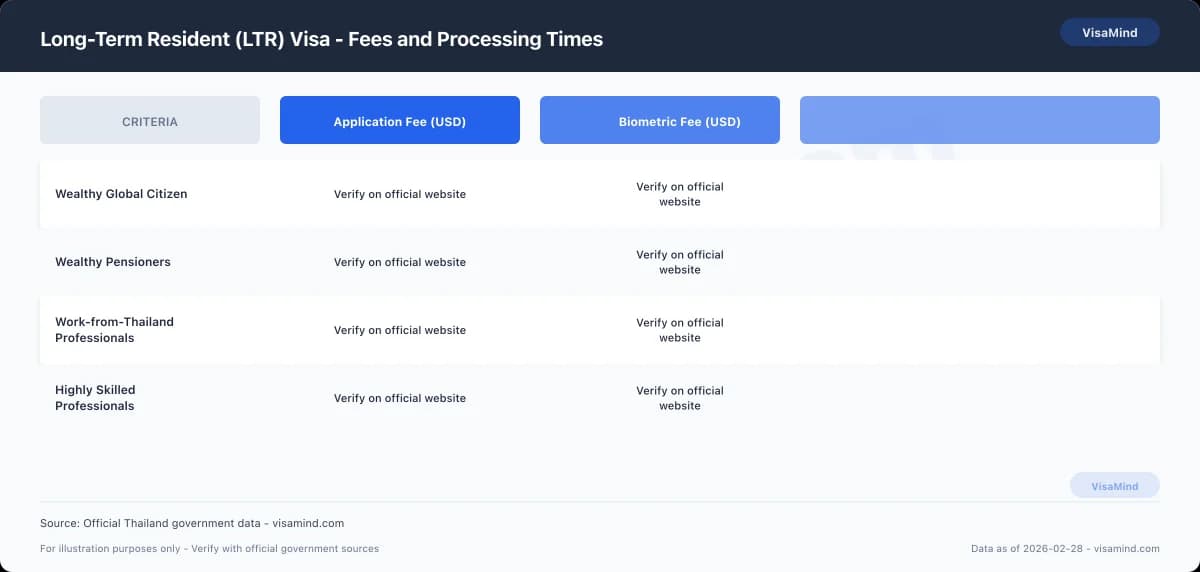
To successfully apply for the Long-Term Resident (LTR) Visa in Thailand, you need to be aware of the associated costs and processing times. The Immigration Bureau of Thailand (สำนักงานตรวจคนเข้าเมือง) oversees the application process and provides detailed guidance on the requirements.
Fees and Processing Times
The LTR Visa program offers various categories tailored to different applicant profiles, including Wealthy Global Citizens, Wealthy Pensioners, Work-from-Thailand Professionals, and Highly Skilled Professionals. Each category has specific financial requirements that must be met throughout the visa's duration.
| Visa Category | Application Fee (USD) | Processing Time (Days) |
|---|---|---|
| Wealthy Global Citizens | $1,000 | 3 to 5 working days |
| Wealthy Pensioners | $1,000 | 3 to 5 working days |
| Work-from-Thailand Professionals | $1,000 | 3 to 5 working days |
| Highly Skilled Professionals | $1,000 | 3 to 5 working days |
Important: The application fee is non-refundable and must be paid at the time of submission. Ensure that all required documents are complete to avoid delays.
Additional Costs
In addition to the application fee, applicants may encounter other costs related to their specific visa category. These could include fees for obtaining necessary documents, such as proof of investment for Wealthy Global Citizens or health insurance coverage for all applicants.
Processing Tips
- The processing time typically ranges from 3 to 5 working days, but it might take longer if additional documents are requested.
- After receiving the qualifications endorsement, you must make an appointment for visa issuance at a Royal Thai Embassy or the One Stop Service Center within 60 days.
Tip: To streamline your application, register and submit your online application for qualifications endorsement as early as possible. Visit the Thailand Investment and Expat Services Center for more detailed information on processing timelines.
For those considering other visa options, you may explore alternatives such as the Non-Immigrant Visa B for business or work purposes, or the Permanent Residence for a more permanent stay in Thailand.
Your Rights as a Permanent Resident
#As a holder of Thailand's Long-Term Resident (LTR) Visa, you benefit from a range of rights and responsibilities designed to facilitate your long-term stay in the country. While the primary purpose of the LTR Visa is to attract high-potential individuals and families, it also offers significant rights and benefits to visa holders.
What Are Your Rights?
-
Work and Business Opportunities: With the LTR Visa, you can apply for a work permit immediately upon receiving your visa if your intention is to work in Thailand. This opens up opportunities to engage in professional activities within the country, whether you are a Wealthy Global Citizen, Work-from-Thailand Professional, or Highly Skilled Professional.
-
Travel Benefits: The LTR Visa allows multiple entries into Thailand, providing you the flexibility to travel in and out of the country without the need for additional travel permits.
-
Access to Services: As an LTR Visa holder, you have access to a variety of public services in Thailand. This includes enrolling your children in local schools, accessing healthcare services, and opening a bank account. For more detailed information on financial requirements, you can refer to the Financial Requirements guide.
What Are Your Obligations?
To maintain your LTR Visa, certain obligations must be met throughout the duration of your stay:
- Residency Obligations: You are required to maintain your primary residence in Thailand. This means spending a significant portion of each year in the country.
- Financial and Employment Conditions: It's crucial to maintain the financial or employment conditions under which your visa was granted. For instance, if you were approved as a Wealthy Global Citizen, you must continue to meet the investment and asset requirements.
Important: Failure to meet these obligations, such as maintaining investment amounts or employment status, could jeopardize your visa status. Make sure to check with the Immigration Bureau of Thailand for detailed guidance.
Can Dependents Enjoy These Benefits?
Yes, the LTR Visa also extends certain rights to spouses and children. They can apply for a dependents’ visa, allowing them to reside in Thailand and potentially access similar benefits regarding education and healthcare.
For a broader understanding of other visa options in Thailand, you might find it useful to explore the Non-Immigrant Visa B or Permanent Residence pathways, depending on your specific needs and circumstances.
By understanding these rights and obligations, you can make the most of your time as a long-term resident in Thailand, ensuring a fulfilling and compliant residency experience.
Situations That Need Expert Guidance
#Permanent residence applications are high-stakes and often involve years of accumulated eligibility. Mistakes can mean starting over for Thailand immigration. Consider professional help if:
- You are applying from inside the country with a complicated status history
- Your points calculation is borderline or involves credential recognition
- You have a prior visa denial or refusal
- You have a prior overstay, unlawful presence, or removal order
- You have a criminal record, arrest history, or pending charges
- You have a prior misrepresentation or fraud finding
- You are in removal or deportation proceedings
Residency Obligations
#The Long-Term Resident (LTR) Visa in Thailand offers individuals the opportunity to live in the country with several benefits. However, obtaining and maintaining this visa comes with specific residency obligations. Understanding these requirements is crucial for ensuring your LTR Visa remains valid throughout your stay.
Physical Presence Requirements
To maintain your Long-Term Resident Visa status, you must adhere to the physical presence requirements set by the Immigration Bureau of Thailand. While specifics may vary, LTR Visa holders are generally expected to reside in Thailand for a significant portion of the year. It's essential to regularly check for updates on these requirements to ensure compliance.
Important: Regularly verify your physical presence status to avoid any compliance issues with the Immigration Bureau.
Renewal Process
The LTR Visa is typically issued for an extended period, but renewal is necessary to continue enjoying its benefits. The renewal process involves:
- Gathering Required Documents: Ensure all documentation, such as proof of income, investment, and health insurance, is current and accurate.
- Submitting Your Application: Lodge your renewal application with the Immigration Bureau well before your current visa expires.
- Attending an Appointment: Schedule and attend an appointment at a local immigration office or the One Stop Service Center for visa renewal procedures.
For more detailed guidance, refer to our Visa Extension Guide.
Losing Visa Status
Failure to meet the conditions of the LTR Visa can result in the loss of your residency status. Here are key causes for losing your LTR Visa:
- Non-compliance with Financial Requirements: You must maintain the required investment amounts or income levels. For more details, check our Financial Requirements.
- Inadequate Physical Presence: Not meeting the required physical presence in Thailand could jeopardize your visa status.
- Missing Deadlines: Failure to renew the visa before expiration or not booking an appointment within the 60-day window after endorsement can lead to status loss.
Tip: Keep track of all deadlines and requirements to ensure continuous compliance and avoid losing your status.
For further information on maintaining your visa, consider exploring Thailand's Permanent Residence options, which offer a more stable long-term solution.
From PR to Citizen
#For those holding a Long-Term Resident (LTR) Visa in Thailand, the journey from being a long-term resident to a citizen involves a series of steps and requirements that must be carefully navigated. While the LTR Visa provides numerous benefits, such as tax incentives and the opportunity to apply for a work permit, many individuals aspire to take the next step and apply for Thai citizenship. This process is overseen by the Immigration Bureau of Thailand and requires meeting specific criteria.
Eligibility for Naturalization
To become a Thai citizen, you must hold permanent residency status in Thailand for at least five consecutive years. This is an essential prerequisite, and it means that LTR Visa holders must first transition to permanent residency before considering citizenship. During this period, maintaining a stable and lawful residence in Thailand is crucial. If you are interested in learning more about how to achieve permanent residency, you can explore Permanent Residence for further details.
Requirements for Citizenship
Once you are eligible to apply for Thai citizenship, several requirements must be fulfilled. These typically include demonstrating proficiency in the Thai language, both spoken and written, and possessing good moral character. The process also involves a thorough background check and may require you to renounce your current citizenship, as Thailand generally does not allow dual citizenship. Additionally, financial stability and evidence of integration into Thai society, such as employment or family ties, can significantly strengthen your application.
Application Process
The application for citizenship involves submitting various documents, including your permanent residency certificate, proof of residence, and a comprehensive employment record if applicable. The process is detailed and requires careful preparation. It is advisable to consult the Documents Checklist to ensure you gather all necessary documentation before beginning the application procedure.
Important: Ensure that all application documents are complete and accurate, as discrepancies can lead to delays or rejection.
Timeline for Naturalization
The timeline for naturalization can vary, but generally, it takes several months to a year from the time of application submission to the final decision. It is crucial to maintain your residency status and meet all the criteria during this period. For more information on managing your status and other related processes, consider reading the Visa Extension Guide.
Transitioning from permanent residency to citizenship in Thailand is a significant step that requires careful planning and adherence to the process outlined by the Immigration Bureau. By understanding the requirements and preparing thoroughly, you can enhance your prospects of becoming a Thai citizen.
Renewal and Card Replacement
#Important: Maintain all conditions, such as investment amounts and employment status, during the length of the Long-Term Resident (LTR) Visa. Non-compliance may result in visa revocation.
Renewal Process
For those holding a Long-Term Resident (LTR) Visa in Thailand, renewal is vital to continue enjoying its benefits. The renewal involves confirming that all original conditions of the visa are maintained, such as investment levels, employment status, and financial thresholds. The Immigration Bureau of Thailand oversees this process, requiring you to lodge your renewal application through them. Be prepared to provide updated documentation, including proof of income, investment, and health insurance coverage.
Card Replacement
If your LTR Visa card is lost or damaged, you must seek a replacement promptly. Visit the Immigration Bureau of Thailand to report the issue and request a new card. You'll need to present identification and possibly a police report if the card was lost.
Meeting Residency Obligations
To ensure continued eligibility for the LTR Visa, you must comply with residency obligations. This includes maintaining the required financial and employment conditions throughout your stay. Those in different visa categories, like Wealthy Global Citizens or Highly Skilled Professionals, must ensure their investments or professional engagements remain valid.
Tip: Regularly review your status and documents to ensure compliance with residency obligations, as this will facilitate smooth renewals or replacements.
For more detailed guidance on maintaining your visa status or exploring other visa options like the Non-Immigrant O or Non-Immigrant Ed, you can refer to our Visa Extension Guide.
Why PR Applications Fail
#The Long-Term Resident (LTR) Visa program in Thailand offers significant benefits to eligible applicants, but the path to securing this visa isn't without its challenges. Understanding why Permanent Residence (PR) applications can fail is crucial for prospective applicants to avoid common pitfalls.
Points Miscalculation
One of the primary reasons for application denial involves errors in calculating eligibility points. For example, Wealthy Global Citizens must demonstrate at least USD 1 million in assets and invest at least USD 500,000 in Thailand. Miscalculating these figures or failing to provide accurate documentation can lead to application rejection.
Important: Carefully review your points calculation and ensure all supporting documents are accurate and up-to-date. Utilize resources like the Financial Requirements guide for clarity.
Incomplete Clearances
The LTR Visa application process requires several clearances and verifications. If these are incomplete, it can lead to delays or denials. Key documents required include:
- Personal income details for the past two years.
- Proof of investment or asset ownership.
- Health insurance coverage or social security benefits.
Ensuring that all clearances are completed in full is vital. Missing documents or failing to submit additional documents when requested can significantly delay the process.
Misrepresentation
Misrepresentation of information, whether intentional or accidental, is a serious issue that can lead to application denial. This includes discrepancies in personal income declarations for Work-from-Thailand Professionals or inaccuracies in detailing unearned income for Wealthy Pensioners.
Tip: Double-check all entries and declarations to avoid inadvertent misrepresentation. Honest and precise documentation is the key to success.
Additional Considerations
- Failure to Maintain Conditions: Once granted, maintaining the conditions of the LTR Visa is essential. This includes keeping up with investment amounts, employment status, and bank account balances.
- Timing Issues: Missing the 60-day window to secure your visa appointment after receiving the endorsement letter can result in losing your application status.
For more detailed guidance on maintaining these requirements and understanding potential pitfalls, refer to the Visa Refusal Reasons guide. If you're considering other visa options, exploring alternatives like the Smart Visa might also be beneficial. Always ensure that your application aligns with the current requirements and conditions set by the Immigration Bureau of Thailand.
Next steps
#Use Find My Visa to build a sequenced plan with official sources and deadlines.
VisaMind provides informational guidance only and is not a government agency. This is not legal advice. Requirements can change and eligibility depends on your specific facts. If your case is complex or high-stakes, consult a licensed immigration attorney.
Next steps
Requirements vary by nationality, purpose, timeline, and case details. Use Find My Visa to get a personalized checklist for Thailand with official sources and deadlines.
Find my visa