Official sources referenced
Who Should Read This
#Canada welcomes thousands of caregivers each year through specific pathways designed to facilitate their immigration either as permanent residents or for temporary work. If you are considering making the transition to Canada to work as a caregiver, understanding the available programs and requirements is crucial. This guide will help you navigate the process, whether you aim to apply for permanent residence or enter the workforce temporarily.
Who Benefits from This Guide?
This guide is tailored for caregivers aiming to establish either a permanent or temporary career in Canada. The programs discussed here are specifically designed for those who provide home care, including both child and elder care. If you're considering the Caregiver Visa pathway, you'll find valuable insights into how to apply through Immigration, Refugees and Citizenship Canada (IRCC).
For those who have been selected by Quebec as skilled workers, it is essential to apply to Quebec first before seeking permanent residence elsewhere in Canada. Understanding these pathways can help you decide which option aligns best with your goals.
Essential Steps to Get Started
Before initiating the application, it's imperative to create a Permanent Residence Portal account. This will be your hub for submitting your application and tracking its status. Remember, providing proof of your work experience as a caregiver is a critical requirement—failure to do so can jeopardize your application.
Tip: Always ensure your proof of work experience is comprehensive and up-to-date to avoid delays or rejections.
Related Pathways
If you are exploring other ways to enter Canada, consider options such as the Express Entry or the Quebec Skilled Worker programs, depending on your qualifications and regional preferences. For those interested in working temporarily, the Work Permit and Open Work Permit might also be viable alternatives.
Understanding the nuances of each program and preparing the necessary documentation can significantly enhance your chances of success. As you proceed, always verify the latest information on the official IRCC website to ensure compliance with current requirements and deadlines.
The Big Picture
#Navigating Canada's immigration system can seem daunting, but understanding the "Imp Guide (Canada)" is crucial for caregivers aiming to make Canada their new home. This resource offers pathways for home care workers to immigrate either as permanent residents or to work temporarily. The guide is structured around specific pilot programs managed by Immigration, Refugees and Citizenship Canada (IRCC), which facilitate the application processes for those in caregiver roles.
What Is the Purpose of the Imp Guide (Canada)?
The "Imp Guide (Canada)" is designed for caregivers, providing detailed pathways to apply for immigration through IRCC's specific pilot programs. These programs offer opportunities for caregivers to either gain permanent residency or work temporarily in Canada. The guide offers comprehensive instructions on how to apply, focusing on eligibility and required documentation.
How Does the Process Work?
The process starts with creating a Permanent Residence Portal account. This portal is the primary tool for managing your application with IRCC. It's essential to sign in to the portal to access the instructions relevant to your eligibility category. These steps ensure you have all the necessary information before you begin your application:
- Create or Sign In to the Portal: This allows you to manage your application online.
- Review Eligibility Instructions: Understanding the requirements for your specific category is critical.
- Prepare Required Documents: Gather all necessary documentation to support your application.
Tip: Always ensure you have proof of your work experience, as this is a common requirement and a frequent pitfall for applicants.
Key Considerations for Caregivers
For those applying as caregivers, there are specific considerations and pathways to be aware of:
- Permanent Residency: Caregivers can apply for permanent residency through dedicated pilot programs. This option is ideal for those looking to settle in Canada long-term.
- Temporary Work: Alternatively, caregivers can apply to work temporarily, which can also serve as a stepping stone toward permanent residency.
- Quebec-Specific Pathways: If you're a Quebec-selected skilled worker, you must apply through Quebec before seeking permanent residency with IRCC. Learn more about the Quebec Skilled Worker pathway for further details.
Important Reminders
- Documentation: Failure to provide proof of work experience is one of the most common pitfalls. Ensure you have detailed records and references.
- Pilot Programs: These are specifically for caregivers and are separate from other immigration categories like Express Entry or Work Permits.
By understanding the broad overview of the "Imp Guide (Canada)" and the specific pathways available, caregivers can better navigate the immigration process and increase their chances of success. Always verify current requirements and processes on the official IRCC website to ensure your application is complete and accurate.
Who Qualifies
#To qualify for the immigration pathways available to caregivers in Canada, there are specific requirements and prerequisites you must meet. These opportunities are designed to allow caregivers to apply for either permanent residence or temporary work permits under certain pilot programs managed by Immigration, Refugees and Citizenship Canada (IRCC).
Eligibility Criteria for Caregivers
-
Work Experience:
- You must have at least 24 months of full-time work experience in Canada as a caregiver. This experience should be within the past 36 months and must align with the National Occupational Classification (NOC) codes for in-home child care providers or in-home support workers.
- It's crucial to provide verifiable proof of your work experience to avoid application pitfalls.
-
Language Proficiency:
- Proficiency in English or French is required. You must achieve at least a Canadian Language Benchmark (CLB) level 5 in all four language skills: reading, writing, speaking, and listening.
-
Educational Requirements:
- A Canadian high school diploma or an equivalent foreign credential validated by an Educational Credential Assessment (ECA) is essential.
Requirements for Permanent Residence
-
Permanent Residence Portal:
- Creation of a Permanent Residence Portal account is necessary to manage and track your application process. This portal facilitates communication with IRCC and ensures that your documents are submitted digitally.
-
Quebec-specific Process:
- If you are a Quebec-selected skilled worker, you must first apply to the Quebec government before applying for permanent residence through IRCC. You can find more details in the Quebec Immigration Overview.
Important: Failing to provide complete and accurate documentation can result in delays or refusal of your application. Always review the instructions specific to your eligibility category before proceeding.
Prerequisites for Temporary Work Permits
-
Job Offer:
- A valid job offer from a Canadian employer is necessary. Your employer may need to obtain a Labour Market Impact Assessment (LMIA), unless exempted under specific conditions.
-
Work Permit Application:
- You must lodge an application for a Work Permit if you intend to work in Canada temporarily. This involves gathering necessary documents and understanding the terms of the work permit.
For caregivers considering these pathways, understanding and fulfilling these requirements are integral to a successful application. For more detailed steps and to explore related opportunities, you can visit the Caregiver Work page.
The Process from Start to Finish
#-
Determine Your Eligibility
Before you begin the application process, it is crucial to determine whether you are eligible to apply under the caregiver immigration pathways. These pathways allow caregivers to apply for either permanent residency or temporary work permits in Canada. Review the specific eligibility criteria for each pathway to ensure you meet all requirements. For instance, if you are a Quebec-selected skilled worker, you must apply to Quebec before applying for permanent residence through Quebec Skilled Worker.
-
Create a Permanent Residence Portal Account
The next step involves creating a Permanent Residence Portal account. This portal is essential for managing your application process with Immigration, Refugees and Citizenship Canada (IRCC). If you already have an account, you can simply sign in. This online platform will guide you through the necessary steps and help you track your application status.
-
Review Instructions and Gather Documents
Once you have access to the portal, download the relevant instructions and guidelines from the official IRCC website. Carefully review these instructions to understand the specific requirements for your eligibility category. Gather all required documents, such as proof of work experience, educational credentials, and identity documents. Missing or incomplete documentation can delay your application.
Important: Failure to provide proof of work experience can lead to application rejection. Ensure all documentation is accurate and complete.
-
Lodge Your Application
With all documents in hand, you can begin the application process. Complete all required sections within the portal and upload your documents. While doing this, make sure to fill out every part accurately and provide all necessary evidence. Once finished, submit your application through the portal.
-
Await IRCC Decision
After submission, your application will be processed by IRCC. The time it takes to process applications can vary, so it is important to be patient and check the portal regularly for updates. You can also refer to our Processing Times Explained guide for more information on what to expect.
-
Prepare for Arrival in Canada
If your application is approved, you will receive instructions on how to proceed, including any additional steps needed before arriving in Canada. This may involve medical exams or police certificates. Be sure to prepare for your move, understanding the obligations and opportunities of working as a caregiver in Canada. For more information on adapting to life and work in Canada, the Caregiver Work section might be useful.
Tip: Consider applying for a Bridging Open Work Permit if your current permit is about to expire, allowing you to continue working while your application is processed.
By following these steps, you can navigate the caregiver immigration process in Canada from start to finish. Always stay informed by checking the official IRCC website for the latest updates and requirements.
Costs and Timeline
#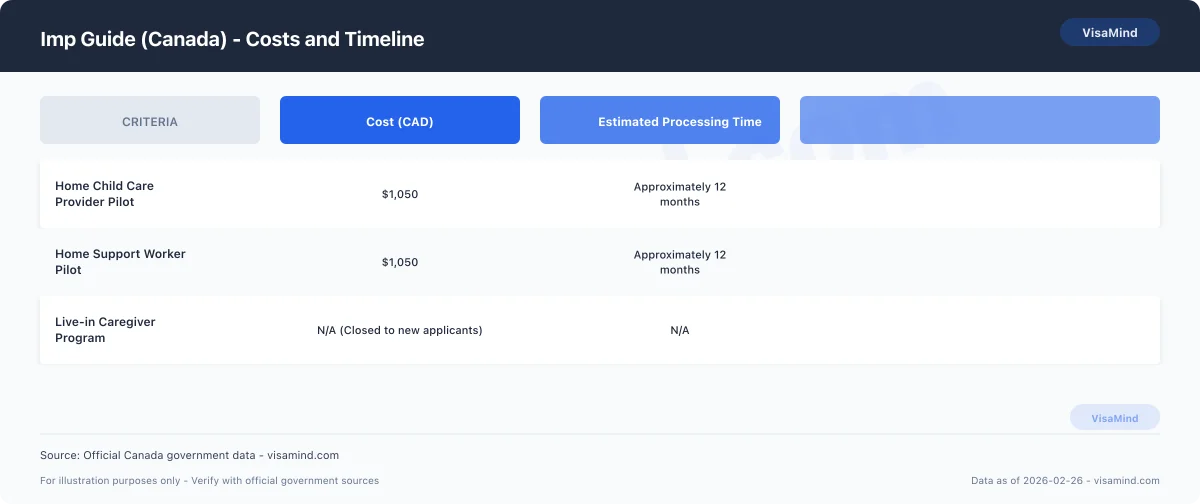
It's important to understand the associated costs and timelines. Here's a detailed comparison of these factors:
Costs and Timelines for Caregiver Immigration
| Pathway | Eligibility | Cost | Timeline |
|---|---|---|---|
| Permanent Residence | Meet criteria such as valid job offer and work experience | $1,325 CAD (as of 2023) | Approximately 12 months (verify on the official website) |
| Temporary Work Permit | Valid job offer and employer compliance | $155 CAD (as of 2023) | 3-6 months (verify on the official website) |
| Quebec-Selected Skilled Workers | Apply first to Quebec, then federally | Varies by Quebec process | 15-17 months (verify on the official website and Quebec timelines) |
Tip: To expedite your application, ensure all required documents are complete and accurate. Missing documents or errors can lead to delays.
What to Expect During Processing
The application process involves several stages. For permanent residence, this includes validating your work experience and submitting biometrics. For temporary work permits, if your employer needs a Labour Market Impact Assessment (LMIA), this could lengthen the timeline. To learn more about work permits, check the Work Permits Overview.
Additional Considerations
- Processing Time Variability: Timelines can fluctuate based on application volumes and completeness. Regularly check the Processing Times Explained guide for updates.
- Permanent Residence Portal Account: Applicants must create an account to manage their application online effectively.
Important: Ensure you have proof of work experience ready to submit. Failure to do so can significantly delay your application.
With careful preparation, you can navigate the process more smoothly. For more details on caregiver pathways, explore the Caregiver visa page.
Tips and Best Practices
#Tip: Beginning the application process well in advance of your intended move or work date can help avoid unnecessary stress and ensure all necessary documents are gathered on time.
Understanding Eligibility and Requirements
- Verify Eligibility: Before proceeding, confirm that you meet the eligibility criteria for the caregiver immigration pathways. This may include specific work experience or qualifications related to caregiving.
- Permanent Residence Portal: Make sure to create an account on the Permanent Residence Portal to manage your application online. This is a crucial step for tracking and updating your application status.
- Proof of Experience: Collect and organize evidence of your work experience. This is a common requirement and missing it can delay your application. Consider letters from previous employers or pay stubs as valid proof.
- Quebec-Specific Process: If you're a Quebec-selected skilled worker, remember that you need to apply first with the province of Quebec before proceeding with your permanent residence application through IRCC. For more details, refer to the Quebec Immigration Overview.
Application Process Insights
- Document Review: Carefully review all application instructions specific to your category before you begin. This will help you avoid common errors that occur when applicants overlook certain sections or requirements.
- Complete All Sections: Ensure every part of your application is filled out completely. Incomplete applications can lead to delays or rejections.
- Online vs. Paper: Whenever possible, submit your applications online through the IRCC portal. This method is often faster and allows for easier tracking of your submission.
Avoiding Common Pitfalls
- Detailed Documentation: Provide comprehensive documentation to back up your claims. This includes a detailed resume, reference letters, and any certifications relevant to caregiving.
- Beware of Deadlines: Keep track of any deadlines associated with your application. Missing these can result in your application being returned or rejected.
- Stay Informed: Keep yourself updated on any changes to immigration policies or processes by regularly checking the official IRCC website. Changes can occur that might affect your application process.
Additional Resources
- For more information on related visas and permits, you can explore resources like the Caregiver Visa or learn about transitioning from a Study Permit to permanent residency.
- For those looking to work in Canada, the Work Permits Overview offers a comprehensive look at various work permit options and requirements.
Important: Always check for the most recent updates and detailed requirements on the official IRCC website to ensure compliance with all current regulations.
Common Mistakes
#-
Proof of Work Experience: One of the most common mistakes is failing to provide adequate proof of work experience. Ensure you have detailed reference letters from previous employers, clearly outlining your duties and duration of employment. This documentation is crucial for caregiver applications.
-
Incorrect or Missing Forms: Applicants often submit incorrect forms or leave required sections incomplete. Carefully review the Visa Application Steps to ensure you are using the correct forms and completing all necessary sections.
Tip: Double-check all documents for accuracy and completeness before submission to avoid processing delays.
Misunderstanding Eligibility Criteria
-
Quebec-Selected Skilled Workers: If you are applying as a Quebec-selected skilled worker, remember you must first apply to Quebec before proceeding with your permanent residence application through IRCC. Understanding these distinct pathways is crucial to avoid unnecessary delays.
-
Eligibility for Permanent Residence vs. Temporary Work: Some caregivers may be eligible for both permanent residence and temporary work visas. Ensure you understand the differences and apply for the correct program. Review the Caregiver visa details to align your application with your eligibility.
Application Process Errors
-
Permanent Residence Portal Account: Failing to create or properly use a Permanent Residence Portal account can hinder your application process. This account is essential for managing your application and receiving updates.
-
Ignoring Specific Instructions: Applicants sometimes overlook specific instructions for their eligibility category. Always review the guidelines relevant to your situation before starting your application. This is particularly important for complex pathways like Express Entry.
Important: Missing essential instructions or deadlines can lead to your application being returned or refused. Always verify deadlines and requirements on the official IRCC website.
Inadequate Financial Proof
-
Proof of Funds: Ensure you meet the financial requirements for your chosen visa category. This often includes providing bank statements or financial affidavits. Check the Proof Of Funds guide for specific details on what is required for your application.
-
Misreporting Income or Assets: Accurately report all income and assets as discrepancies can lead to application refusals. Transparency is key in maintaining credibility with IRCC.
What Other Applicants Experienced
#Maria, a caregiver from the Philippines, had been working in Canada for two years under the Caregiver Program. Her goal was to transition from a temporary work permit to permanent residency. Aware that she needed to prove her work experience, Maria diligently gathered letters from her employers and pay stubs to confirm her employment history. She created an account on the Permanent Residence Portal to initiate her application. By carefully reviewing the eligibility criteria and submitting all necessary documentation, Maria successfully lodged her application with IRCC. After a processing period of about 12 months, she received confirmation of her permanent residency status, allowing her to continue her career in Canada with a sense of security.
Scenario: Temporary Work Permit Extension for a Caregiver
Jasmin, a caregiver from India, faced the expiration of her temporary work permit while she was still employed in a Canadian household. To avoid a lapse in her legal status, she decided to apply for a permit extension. She accessed the IRCC website and signed into her Permanent Residence Portal account to submit her extension request. Jasmin ensured she included proof of her ongoing employment and a letter from her employer supporting her continued stay. Within four weeks, Jasmin received her extension approval, allowing her to continue her work without interruption.
Scenario: Navigating the Quebec Selection Process
Marc, a skilled worker in the caregiving field, aimed to settle in Quebec. Knowing that the province has its own selection criteria, Marc first applied through the Quebec Skilled Worker program. After receiving his Quebec Selection Certificate, he proceeded to apply for permanent residence through IRCC. Marc was mindful to submit both his Quebec documentation and the federal requirements. The dual-step process took approximately 18 months, resulting in Marc being granted permanent residence, enabling him to live and work in Quebec with his family.
FAQs
What are common mistakes to avoid when using the Imp Guide (Canada)?
Does the Imp Guide (Canada) cover Quebec-selected skilled workers?
How can I download the Imp Guide (Canada) from the IRCC website?
What are the specific requirements for caregivers in the Imp Guide (Canada)?
Can I combine my goal of working temporarily and applying for permanent residence in Canada using the Imp Guide (Canada)?
What steps should Quebec-selected skilled workers take according to the Imp Guide (Canada)?
How does the Imp Guide (Canada) address the costs involved in the application process?
Sources
Last reviewed: March 1, 2026
VisaMind provides informational guidance only and is not a government agency. This is not legal advice. Requirements can change and eligibility depends on your specific facts. If your case is complex or high-stakes, consult a licensed immigration attorney.
Next steps
Requirements vary by nationality, purpose, timeline, and case details. Use Find My Visa to get a personalized checklist for Canada with official sources and deadlines.
Find my visa