On this page
Digital Nomad Visa Choices
#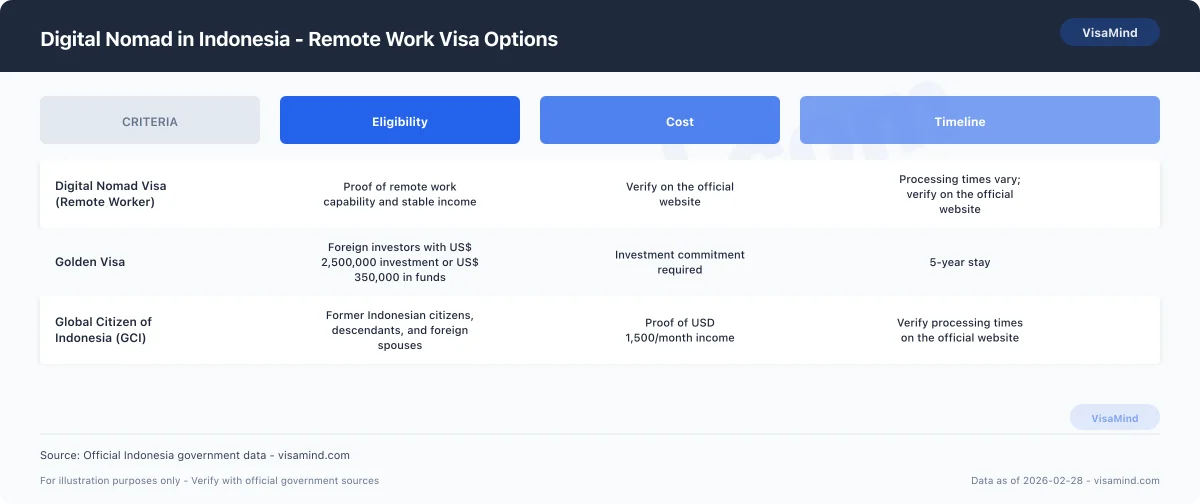
For remote workers and digital nomads seeking to reside in Indonesia, the Directorate General of Immigration offers several visa options that cater to varied eligibility and investment criteria. Understanding these options will help you decide which path aligns best with your circumstances.
Digital Nomad Visa Options
| Visa | Eligibility | Cost | Timeline |
|---|---|---|---|
| Digital Nomad Visa (Remote Worker) | Must demonstrate remote work capability and stable income source | Varies; check official site | Approximately 1 month |
| Second Home Visa | Requires proof of significant financial stability or investment | Minimum US$ 350,000 placement | Approximately 30-60 days |
| Kitas Investor | Individual investors with a company in Indonesia; minimum US$ 2,500,000 | Varies; check official site | Roughly 2-3 months |
| Golden Visa | Corporate directors or representatives, US$ 25,000,000 investment | Significantly higher; verify on the official website | Typically 3-6 months |
What Are the Eligibility Criteria?
The Digital Nomad Visa (Remote Worker) is designed for individuals who can work remotely with a stable income source from foreign employers. This option is ideal if you plan to live in Indonesia without establishing a local business. You must provide proof of your remote work capability, such as employment contracts or client agreements.
For those considering longer stays, the Second Home Visa requires proof of financial stability, typically through significant investment or fund placement. This visa is suitable for individuals who can demonstrate a substantial financial commitment.
Important: Ensure that you have all necessary proofs of income or investment when applying. Missing documentation can delay the process.
Investment-Based Visas
If you're an investor, consider the Kitas Investor visa, which necessitates setting up a company with a minimum investment of US$ 2,500,000. This visa allows for a more permanent stay and engagement in business activities within Indonesia.
Alternatively, the Golden Visa suits corporate directors or representatives who can invest US$ 25,000,000. It's a significant commitment but offers extensive benefits and a longer stay duration.
How to Apply?
Applications for these visas are primarily processed online through the eVisa system. Be prepared to submit necessary documents such as proof of remote work capability, financial stability, or investment details.
For detailed steps on applying, visit the How To Apply guide and review the Documents Checklist to ensure you have all required documentation.
Tip: Filing online not only speeds up the process but also provides an instant receipt number for tracking your application.
Choosing the right visa depends on your professional needs and financial situation. Make sure to verify all costs and timelines on the Directorate General of Immigration's website as they are subject to change.
Income and Eligibility Requirements
#Important: As of 2023, digital nomads must demonstrate their ability to work remotely and maintain a stable income source to qualify for staying in Indonesia. Verify current requirements on the official Directorate General of Immigration (Ditjen Imigrasi) website.
Eligibility Criteria for Digital Nomads
Digital nomads looking to reside in Indonesia while working remotely must meet specific eligibility criteria. These include demonstrating proof of remote work capability and financial stability. Here's a breakdown of the main eligibility categories:
| Eligibility | Description |
|---|---|
| Eks Warga Negara Indonesia (E32E) | Former Indonesian citizens are eligible. |
| Eks WNI dengan keahlian khusus (E32F) | Former Indonesian citizens with special skills. |
| Keturunan Eks WNI hingga derajat kedua (E32G) | Descendants of former Indonesian citizens up to the second degree. |
| Keturunan Eks WNI hingga derajat kedua dengan keahlian khusus (E32H) | Descendants of former Indonesian citizens with special skills up to the second degree. |
| Orang Asing yang menggabungkan diri dengan suami/istri WNI (E31A) | Foreign nationals joining their Indonesian spouse. |
| Orang Asing yang menggabungkan diri dengan suami/istri pemegang izin tinggal terbatas atau izin tinggal tetap (E31B) | Foreign nationals joining a spouse holding a limited or permanent stay permit. |
| Anak hasil perkawinan sah antara Orang Asing dengan WNI (E31C) | Children from a legal marriage between a foreign national and an Indonesian citizen. |
Financial Requirements
Digital nomads must provide verifiable proof of income or financial stability. The requirements are designed to ensure that applicants can support themselves without relying on Indonesian resources. Specific financial thresholds or documentation requirements may vary based on your specific eligibility category.
| Requirement | Description |
|---|---|
| Proof of Income | Necessary for former Indonesian citizens and their descendants. |
| Immigration Guarantee | Not required for family reunification applicants. |
| Proof of Investment or Funds Placement | Required for certain investment-based eligibility. |
Health Insurance and Other Considerations
While working remotely in Indonesia, digital nomads are also advised to have comprehensive health insurance coverage. This ensures access to quality healthcare services during their stay.
Tip: Consider the Documents Checklist to ensure you gather all necessary documents for your application.
For more details on the application process and specific document requirements, refer to the How To Apply page. Additionally, if you need more information on financial criteria, the Financial Requirements guide provides a comprehensive overview.
The Application Process
#Start Your Application Online
To begin the process of applying for a Digital Nomad Visa in Indonesia, you must first access the Directorate General of Immigration's electronic visa system at evisa.imigrasi.go.id. This online portal is where you will lodge your application and submit the necessary documents. Before starting, ensure you have a stable internet connection and all required documents ready.
Gather Required Documents
Prepare the following documents before submitting your application:
- Proof of remote work capability: Provide evidence that you can work remotely, such as a contract from your employer or documentation of your freelance work.
- Proof of income or financial stability: This could include bank statements, recent pay slips, or a letter from your employer verifying your salary.
- Proof of investment or funds placement: If applicable, include documentation of any investments or funds placed in Indonesia.
For detailed guidance on documents, refer to our Documents Checklist.
3.Ensure that all sections are correctly filled out. You will need to upload your supporting documents and provide biographical details. Double-check for any inaccuracies or incomplete fields, as these are common pitfalls that can delay processing.
Important: Incorrect or incomplete biographical details can lead to delays or rejection of your application. Ensure accuracy before submitting.
Review Eligibility and Instructions
Before finalizing your application, review the eligibility criteria specific to your situation. This includes categories like Eks Warga Negara Indonesia or family reunification options. Each category has unique requirements, so it is crucial to understand them fully. Detailed instructions for each category can be found on the Directorate General of Immigration's website.
Complete Additional Declarations
Before arriving in Indonesia, fill out the arrival declaration required for using the autogate facility and the All Indonesia declaration. These declarations are critical for a smooth entry process into the country.
Tip: Completing your declarations online before traveling can expedite your entry process through Indonesian immigration checkpoints.
Await Application Processing
After submission, your application will undergo review by the Directorate General of Immigration. Processing times can vary, so it is advisable to check Processing Times for current estimates. Be prepared to provide additional information if requested by immigration officials.
By following these steps, you can effectively navigate the application process for Indonesia's Digital Nomad Visa. For further guidance, explore the Digital Nomad Guide for comprehensive information on living and working remotely in Indonesia.
Your Tax Situation
#Understanding your tax situation is crucial. Indonesia’s tax residency rules, potential local income tax obligations, and double taxation treaties play a significant role in your planning.
Are You a Tax Resident in Indonesia?
In Indonesia, tax residency is determined by physical presence. An individual is considered a tax resident if they stay in Indonesia for more than 183 days within a 12-month period or if they reside in Indonesia with the intention to stay. Once you become a tax resident, you are subject to Indonesian tax laws, which include reporting your worldwide income.
Local Income Tax Obligations
If you are deemed a tax resident, you will need to pay Indonesian income tax on your global income. The income tax rates in Indonesia are progressive, ranging from 5% to 35% as of 2023. It is important to consult with a tax advisor or the Directorate General of Taxes to understand your specific tax obligations and how they might impact your income.
To avoid complications, make sure you:
- Determine your residency status early.
- Keep accurate records of your stay in Indonesia.
- Report your income as required by Indonesian law.
Important: Being unaware of your tax obligations can lead to penalties. Verify your residency status and tax requirements with a professional to avoid issues.
Double Taxation Treaties
Indonesia has double taxation agreements with several countries to prevent the same income from being taxed in both countries. These treaties can reduce or eliminate the overall tax burden for digital nomads. For example, if you are from a country that has a tax treaty with Indonesia, you may be able to claim tax credits or exemptions to avoid being taxed twice on the same income.
- Review the specific treaty between Indonesia and your home country.
- Consult with a tax professional to optimize your tax situation.
- Ensure that you maintain documentation to support your claims.
Resources and Next Steps
For more information on applying for the appropriate visas, you might find these guides useful: Digital Nomad Guide, How To Apply, and Financial Requirements. Understanding these processes can help you better prepare for your digital nomad journey in Indonesia.
Tip: Consider using online resources and professional advice to stay informed about any updates to tax laws or treaties that may affect you as a digital nomad in Indonesia.
Visa Length and Renewal Options
#The Indonesian Digital Nomad visa offers a unique opportunity for remote workers to live and work in the archipelago. Understanding the visa length and renewal opportunities is crucial for planning your stay.
How Long Can You Stay?
The initial duration of the Digital Nomad visa in Indonesia typically allows for a stay of up to 12 months. This provides digital nomads ample time to enjoy living in Indonesia while working remotely for foreign employers.
Can You Renew the Visa?
Yes, the Digital Nomad visa comes with the possibility of renewal. However, the renewal process requires meeting certain conditions and demonstrating continued compliance with the visa requirements. It's important to keep track of your visa expiry date and start the renewal process well in advance to avoid any disruptions in your stay.
Tip: Begin the renewal application at least 30 days before your current visa expires to ensure uninterrupted residency.
Maximum Total Stay
The total length of stay for digital nomads in Indonesia can extend beyond the initial 12-month period, depending on successful renewals and adherence to the immigration criteria set by the Directorate General of Immigration. While specific cumulative maximums are not rigidly defined, the possibility of extending your stay hinges on demonstrating ongoing eligibility and compliance with Indonesian immigration requirements.
For more detailed guidance on extending your stay, you can refer to the Visa Extension Guide and explore additional options like the Second Home Visa for longer-term residency solutions.
By understanding these key aspects of the Digital Nomad visa in Indonesia, you can better plan your stay and make the most of your experience in this vibrant country.
Common Mistakes
#Important: Overstaying your visa can result in fines, deportation, and future entry bans. Always keep track of your visa expiration date.
Working for Local Clients
- Legal Restrictions: Digital nomads in Indonesia must not provide services to local clients or businesses. This is crucial as the visa permits work only for companies or clients based outside Indonesia. Violating this rule can lead to legal issues.
- Clarify Work Arrangements: Clearly define your work scope and ensure your clients are aware of your legal limitations while residing in Indonesia.
Tax Misunderstandings
- Misconceptions About Tax Residency: Some digital nomads mistakenly believe they are not subject to Indonesian taxes. If you stay more than 183 days within a 12-month period, you may be considered a tax resident and liable to pay taxes in Indonesia.
- Consult a Tax Professional: Seek advice from a qualified tax consultant to understand your obligations and avoid penalties. For further insights, you might consider exploring the Digital Nomad Guide.
Overstaying
- Visa Expiration: Ensure your stay does not exceed the visa duration. Overstaying can result in daily fines and difficulties in obtaining future visas.
- Extension Options: If you plan to stay longer, explore options like the Visa Extension Guide to understand how to extend your stay legally.
Insufficient Proof of Income
- Documentation Requirements: Applicants must provide adequate proof of a stable income to qualify for the digital nomad visa. This includes bank statements or contracts showing consistent income.
- Maintain Accurate Records: Regularly update and maintain your financial records to avoid issues during the application process. For more details on financial requirements, consult the Financial Requirements resource.
Tip: Use the online application system to ensure all necessary documents are submitted and receive instant confirmation of your application status.
Living Costs for Nomads
#Indonesia offers a vibrant environment for digital nomads, with competitive living costs and a range of amenities catering to remote workers. As you plan your stay, understanding the cost of living and available resources in popular digital nomad cities can significantly enhance your experience.
Monthly Budget Expectations
Living as a digital nomad in Indonesia can be quite affordable depending on your lifestyle choices and city of residence. On average, monthly expenses can range from $700 to $1,400 USD as of 2023, but verify on the official website for the most current figures. Here's a breakdown of some typical costs:
- Accommodation: $300–$700 USD for a private apartment
- Food and Dining: $150–$300 USD for local dining options
- Transportation: $30–$60 USD for public transport and occasional ride-hailing
- Coworking Space Membership: $50–$150 USD
Tip: Opt for local markets and eateries to keep your food budget low while enjoying authentic Indonesian cuisine.
Popular Digital Nomad Cities and Hubs
Indonesia boasts several cities that are particularly attractive to digital nomads due to their amenities, communities, and lifestyle offerings.
-
Bali: Known for its vibrant culture and stunning landscapes, Bali is a top choice for digital nomads. Areas like Canggu and Ubud offer numerous coworking spaces and a strong expat community.
-
Jakarta: As the capital city, Jakarta provides a bustling urban environment with a wide range of coworking spaces and networking opportunities. It's ideal for those who thrive in a fast-paced setting.
-
Yogyakarta: A city rich in cultural heritage, Yogyakarta offers a more laid-back vibe, making it perfect for those seeking a blend of work and exploration.
Coworking Spaces in Indonesia
Coworking spaces are an integral part of the digital nomad lifestyle in Indonesia, providing not only a place to work but also opportunities to connect with like-minded individuals. Some popular coworking spaces include:
- Hubud in Bali: Offers a community-focused atmosphere with events and workshops.
- GoWork in Jakarta: Provides modern facilities and is conveniently located in the city center.
- Eduplex in Bandung: Known for its creative environment and flexible workspaces.
Final Thoughts
Living as a digital nomad in Indonesia offers the perfect blend of work and leisure. With affordable living costs, vibrant cities, and a welcoming community, Indonesia is an excellent choice for remote workers. For more detailed information on visas, consider exploring the Digital Nomad Guide and Visa On Arrival options to plan your stay effectively.
The Practical Setup
#Important: Before traveling to Indonesia as a digital nomad, ensure you have a stable remote job or source of income, as proof of financial stability is required.
Internet and Connectivity
- Internet Speeds: Indonesia offers a range of internet speeds, with urban areas like Jakarta and Bali providing faster and more reliable connections. Speeds can range from 10 to 100 Mbps. Consider using coworking spaces that offer high-speed internet.
- SIM Cards: Purchase a local SIM card for mobile internet access. Providers like Telkomsel, XL Axiata, and Indosat offer prepaid plans. SIM cards are available at airports and major retail outlets. Prices start as low as IDR 25,000 for basic data packages.
Banking and Financial Logistics
- Banking Options: International banks such as HSBC and Citibank operate in Indonesia, but opening an account might require a valid residency permit. Consider using online banking services like Wise or PayPal for international transactions.
- Currency Exchange: Money changers and ATMs are widely available in tourist areas. Ensure you have a backup plan for accessing funds, such as a credit card or an international bank account.
Day-to-Day Logistics
- Accommodation: Options range from short-term rentals to long-term leases. Platforms like Airbnb are widely used, but consider local options for better rates. For stays over 30 days, check if your accommodation complies with local regulations.
- Transportation: Ride-hailing services like Gojek and Grab are convenient for short distances. For longer stays, consider renting a motorbike or car. Ensure your international driving permit is valid in Indonesia.
Tip: Always carry a copy of your passport and visa, especially when traveling between islands or regions within Indonesia.
For more detailed steps on applying for a digital nomad visa, refer to the Digital Nomad Guide. Additionally, if you're considering longer-term options, explore the Second Home Visa for an extended stay.
Long-Term Options
#Switching from a Digital Nomad Visa in Indonesia to a long-term residence or work visa can be a strategic step if you plan to stay longer. The Directorate General of Immigration (Ditjen Imigrasi) provides various pathways for those looking to transition from a digital nomad lifestyle to more permanent residence.
Transitioning to a Work Visa
If you wish to switch to a work visa, you may consider applying for a Kitas Work. This requires a job offer from an Indonesian employer who can sponsor your application. Key steps include:
- Secure a job offer from a local company.
- Your employer must obtain a work permit (IMTA) and submit a RPTKA-APPLICATION.
- Apply for the Kitas Work visa through the Ditjen Imigrasi's electronic visa system.
Tip: Ensure your employer is compliant with all necessary regulations and provides the required sponsorship documentation to avoid delays.
Exploring Long-term Residence
For those aiming for long-term residence, the Kitap is a viable option. This permit allows for a more permanent stay and is often pursued by those with family ties or substantial investments in Indonesia. Eligibility criteria include:
- Marriage to an Indonesian citizen.
- Significant investment in the Indonesian economy, such as a US$ 350,000 placement for individual investors.
- Family reunification or descendants of former Indonesian citizens.
Permanent Residency Pathways
Transitioning to a permanent residency involves more stringent eligibility requirements. Consider the following:
- Marital Ties: If you're married to a WNI (Indonesian citizen), you can apply for a Kitas Spouse initially, eventually leading to a Kitap.
- Investment-Based Residency: Substantial investments can expedite your pathway to permanent residency. Individual investors establishing a company must invest at least US$ 2,500,000.
Financial and Documentation Requirements
Transitioning from a digital nomad to a long-term resident requires careful financial planning and documentation:
- Proof of stable income or investment.
- Legal marriage certificate for family-based applications.
- Immigration guarantee documents for former Indonesian citizens and their descendants.
Important: The transition process can be complex, requiring thorough preparation of documentation. Verify the latest requirements on the official Ditjen Imigrasi website.
For more detailed guidance on the application process and to compare different visa options, refer to our Visa Extension Guide and Kitas Work Vs Kitas Investor.
What Others Have Done
#A freelance graphic designer from Canada wanted to take advantage of Indonesia's welcoming policy for digital nomads by working remotely from Bali. Their primary concern was demonstrating sufficient proof of their remote work capability and stable income, as required by the Directorate General of Immigration (Ditjen Imigrasi). They gathered contracts from foreign clients, recent pay stubs, and a letter from a prominent client verifying their ongoing projects. Using the e-visa system, they submitted all necessary documents, ensuring each was translated into Indonesian as required. After a review period of approximately four weeks, they successfully secured their visa, allowing them to enjoy the vibrant culture of Bali while continuing their work.
Scenario: Tech Consultant Utilizing the Autogate Facility
A tech consultant from Australia was excited about the opportunity to work remotely from Indonesia as a digital nomad. They were particularly concerned about the arrival process and wanted to ensure a smooth entry into the country by using the autogate facility. Prior to their departure, they meticulously filled out the required arrival declaration online, which is crucial for using the autogate. Upon arriving in Indonesia, their preparation paid off as they experienced a seamless entry process, bypassing the longer queues at immigration. This efficiency allowed them to settle quickly and start their work without delay.
Scenario: Investor Balancing Requirements for Extended Stay
An entrepreneur from the United States was interested in staying in Indonesia for an extended period under the digital nomad visa, while also exploring investment opportunities. They were aware that securing a five-year stay required a significant investment. After deciding to establish a tech startup in Jakarta, they invested US$ 2,500,000 into the company, in line with Indonesia's regulations. They submitted their application through the e-visa portal, along with proof of investment. Their application was processed within six weeks, granting them the extended stay they sought, enabling them to work remotely and manage their business operations effectively.
FAQs
What are common mistakes to avoid when applying for a Digital Nomad visa in Indonesia?
What is the processing time for a Digital Nomad visa by DGIM?
Can my spouse work in Indonesia if I have a Digital Nomad visa?
What are the tax implications for Digital Nomads living in Indonesia?
How can I prove my remote work capability for a Digital Nomad visa in Indonesia?
Are there long-term visa options for Digital Nomads in Indonesia?
What specific documents are required for former Indonesian citizens applying for a Digital Nomad visa?
Sources
Last reviewed: March 1, 2026
VisaMind provides informational guidance only and is not a government agency. This is not legal advice. Requirements can change and eligibility depends on your specific facts. If your case is complex or high-stakes, consult a licensed immigration attorney.
Next steps
Requirements vary by nationality, purpose, timeline, and case details. Use Find My Visa to get a personalized checklist for Indonesia with official sources and deadlines.
Find my visa