On this page
Official sources referenced
What Permanent Residence Grants
#The Second Home Visa is a key component of Indonesia's Golden Visa program, designed to attract foreign talent and investment. Managed by the Directorate General of Immigration (Ditjen Imigrasi), this visa aims to provide foreign nationals with the opportunity to establish a second residence in Indonesia. The program caters to individuals who can demonstrate significant investment or economic contribution to the Indonesian economy.
How the Second Home Visa Works
The Second Home Visa is not just about residing in Indonesia; it offers pathways to more stable immigration status through eventual permanent residency. The process begins with submitting evidence that meets the economic contribution criteria set by the Golden Visa program. This could involve investments in local businesses or other economic activities beneficial to Indonesia.
Permanent Residence Pathways
While the Second Home Visa initially grants temporary residency, it can open avenues toward permanent residency in Indonesia. As part of the broader Golden Visa initiative, the program encourages long-term contributions to the country, potentially leading to a more permanent immigration status. This progression is subject to meeting specific criteria and contributing positively to Indonesia's economic landscape.
Tip: Engaging in activities that significantly benefit the local economy can enhance your chances of transitioning from a Second Home Visa to permanent residency.
Processing and Timeframes
As of February 2026, the processing time for applications lodged under the Second Home Visa is typically between 3 to 5 days through the e-Visa system. However, this timeframe can vary based on the processing location and current application volumes. It is advisable to confirm the current processing times with Ditjen Imigrasi to ensure you have the most accurate information.
Related Visas and Additional Information
For those considering other visa options, Indonesia offers a range of permits, such as the Golden Visa and Kitas Investor. These options are tailored to different needs, from investment to retirement, and may offer alternative pathways to long-term residency. For detailed guidance on immigration processes, visit How To Apply and Documents Checklist.
Understanding these pathways and fulfilling the necessary criteria can help you make the most of your opportunity to reside in Indonesia through the Second Home Visa.
Do You Meet the Requirements?
#To determine if you meet the requirements for a Second Home Visa in Indonesia, consider the following criteria. This visa, part of the broader Golden Visa program managed by the Directorate General of Immigration, is designed for foreign nationals seeking to establish a secondary residence in Indonesia. Below are the key requirements to keep in mind:
Investment and Economic Contribution
- Evidence of Investment: You must demonstrate an investment or contribution to the Indonesian economy. This could include financial investments or other economic benefits you bring to the country.
- Documentation: Submit proof of this economic contribution as part of your application. Failure to provide sufficient evidence may result in the rejection of your application.
Qualifying Period and Points System
- Qualifying Period: Be prepared to show how long you intend to stay in Indonesia. The Second Home Visa is particularly suitable for those planning an extended stay.
- Points System: While specific details about a points system are not provided, applicants should align their qualifications with the goals of the Golden Visa program—attracting investment and talent.
Language and Character Requirements
- Language Proficiency: While not explicitly stated, proficiency in Indonesian or English could be advantageous, especially if it facilitates your economic contributions.
- Character Requirements: You must meet character standards set by the Directorate General of Immigration. This generally includes a clean criminal record and compliance with Indonesian laws.
Important: Ensure you review the specific eligibility criteria and requirements for your category within the Golden Visa program. These details can vary significantly.
Related Visa Options
For those considering the Second Home Visa, you might also explore other visa types that align with your needs, such as the Kitas Investor or the Digital Nomad Visa. Each visa type has distinct requirements and benefits that may better suit your situation.
For further details on application procedures and document requirements, consult the Documents Checklist and the How To Apply guide. Remember, processing times can vary, so verify current timelines with the Directorate General of Immigration.
Tip: Consider applying online to expedite the process and receive a confirmation of your application submission immediately.
Application Process
#Important: Verify current processing times and requirements on the official Directorate General of Immigration website to ensure you have the most accurate information.
How to Apply for a Second Home Visa
-
Assess Eligibility and Gather Documents
Before beginning the application process, determine your eligibility under the Golden Visa program's Second Home category. This visa is designed for those seeking to establish a secondary residence in Indonesia and requires evidence of investment or economic contribution. Gather all necessary documentation, including proof of your investment or contribution to the Indonesian economy, as this is a crucial requirement for your application. -
Submit Your Application
Once you've gathered your documents, you need to lodge your application with the Directorate General of Immigration (Ditjen Imigrasi). Be sure to complete all required sections of the application to avoid delays. The application is managed electronically, allowing you to submit your details and documentation online. For more guidance on the application process, consult the How To Apply guide available on their website. -
Undergo Medical and Police Checks
As part of the application process, you may be required to undergo medical and police checks. These checks are standard for ensuring the health and security of those entering Indonesia. If needed, you will receive instructions on how to complete these checks, which may include visiting approved medical facilities and obtaining a police clearance certificate from your country of residence.
Processing Times and Considerations
The processing time for a Second Home Visa through the e-Visa system typically ranges from 3 to 5 days as of February 2026. However, processing times can vary depending on the category and location of processing. It is advisable to verify the current processing times directly with Ditjen Imigrasi to ensure your application is on track. For more information on processing durations, refer to the Processing Times guide.
Tip: Consider applying online to expedite the process and receive a tracking number for your application. This can help you monitor the status and make any necessary adjustments promptly.
Related Visa Options
If the Second Home Visa does not meet your specific needs, consider exploring other visa options like the Kitas Investor or the Digital Nomad Visa, which might better align with your circumstances and goals for residing or working in Indonesia. Each visa category comes with its own set of requirements and benefits, so reviewing them thoroughly can help you make an informed decision.
PR Fees and Timeline
#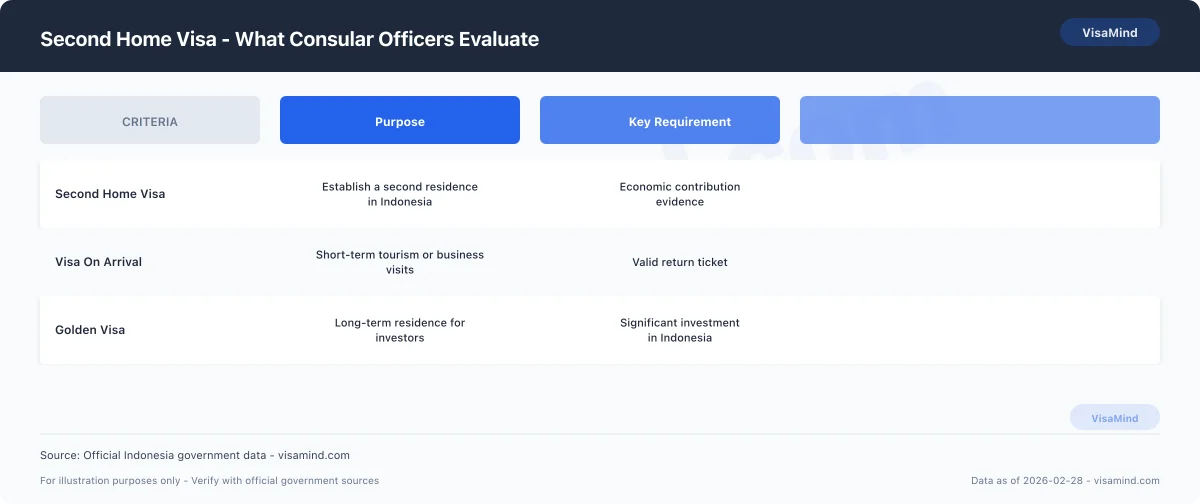
The Second Home Visa is part of Indonesia's Golden Visa program, designed to attract foreign nationals seeking to establish a second residence in the country. Managed by the Directorate General of Immigration (Ditjen Imigrasi), this visa category aims to boost investment and talent inflow.
Application Fees and Processing Timeline
To better understand the costs and timeframes associated with the Second Home Visa, see the table below:
| Visa Category | Application Fee (IDR) | Right of Landing Fee (IDR) | Processing Time |
|---|---|---|---|
| Second Home Visa | 3,000,000 | 1,500,000 | 3 to 5 days (as of 2026) |
Important: Processing times can vary based on the specific category and the location of processing. It's advisable to verify current processing times with Ditjen Imigrasi.
Required Documentation
Applicants for the Second Home Visa must provide evidence of their investment or economic contribution as stipulated by the Golden Visa program. This could include:
- Proof of investment in Indonesia
- Economic contribution documentation
For a full list of documents, refer to the Documents Checklist.
Additional Considerations
While the Second Home Visa offers a streamlined process, it's crucial to note that filing does not guarantee approval. The application must meet all the requirements set forth by Ditjen Imigrasi, and applicants should ensure they submit comprehensive documentation to support their investment claims.
For more information on related visa options, consider exploring the Golden Visa and Kitas Retirement.
Tip: Consider lodging your application online through the e-Visa Tourist system to expedite processing and receive immediate confirmation.
What PR Gives You
#The Second Home Visa in Indonesia offers several benefits for those seeking to establish a long-term presence in the country. This visa, managed by the Directorate General of Immigration (Ditjen Imigrasi) as part of the Golden Visa program, allows you to enjoy work, travel, and access to services with specific residency obligations.
Work and Travel Opportunities
With a Second Home Visa, you are permitted to engage in various work activities in Indonesia. This can be particularly advantageous if you are looking to invest or contribute economically to the country. The ability to travel freely within Indonesia also comes with this visa, allowing you to explore the rich cultural and natural diversity of the archipelago.
Tip: Consider applying for a Digital Nomad visa if your work involves remote activities and you intend to stay in Indonesia temporarily.
Access to Services
Holding a Second Home Visa grants you access to a range of services that are typically available to Indonesian residents. This includes opening bank accounts, obtaining local health insurance, and enrolling in educational institutions. These services facilitate a smoother integration into Indonesian society and enhance your overall living experience in the country.
Residency Obligations
As a visa holder, you must meet certain residency obligations to maintain your status. These obligations often include a minimum stay requirement in Indonesia each year, which can vary based on your specific situation. Compliance with these obligations ensures the continuation of your visa privileges and the possibility of transitioning to more permanent residency options, such as a KITAP.
Important Considerations
While the Second Home Visa provides numerous benefits, it is essential to understand that it does not automatically grant permanent residency in Indonesia. Approval depends on meeting the visa criteria, including demonstrating your investment or economic contribution to the country. Be sure to consult the Visa Refusal Reasons guide to avoid common pitfalls during the application process.
Important: Keep track of your residency obligations and ensure all documentation is up-to-date to avoid jeopardizing your visa status.
Situations That Need Expert Guidance
#Permanent residence applications are high-stakes and often involve years of accumulated eligibility. Mistakes can mean starting over for Indonesia immigration. Consider professional help if:
- You are applying from inside the country with a complicated status history
- Your points calculation is borderline or involves credential recognition
- You have a prior visa denial or refusal
- You have a prior overstay, unlawful presence, or removal order
- You have a criminal record, arrest history, or pending charges
- You have a prior misrepresentation or fraud finding
- You are in removal or deportation proceedings
Keeping Your PR
#Important: To maintain your Second Home Visa status, you must meet specific physical presence requirements and renewal conditions set by the Directorate General of Immigration.
Physical Presence Requirements
To retain your Second Home Visa status in Indonesia, you must spend a certain amount of time in the country each year. The Directorate General of Immigration mandates that visa holders reside in Indonesia for at least 183 days per year. This ensures that your connection to Indonesia is maintained and allows you to actively contribute to the local economy, aligning with the Golden Visa program's objectives.
Renewal Procedures
Renewing your Second Home Visa is essential to continue residing in Indonesia. The renewal process involves:
-
Gathering Necessary Documents:
- Proof of continued investment or economic contribution.
- Evidence of maintaining a residence in Indonesia.
-
Lodging Your Application:
- Submit your renewal request to the Directorate General of Immigration well before your current visa expires, ideally 30 days in advance.
-
Awaiting Decision:
- Processing times can vary, so verify the current timelines with the Processing Times.
Consequences of Losing Status
Failing to meet the physical presence or renewal requirements can result in losing your Second Home Visa status. If you fall short of the 183-day residency requirement, your visa may be revoked. Additionally, not providing sufficient evidence of investment or economic contribution can jeopardize your status.
Tip: Regularly review your residency days and investment documentation to ensure compliance with immigration requirements.
For more information on related visas, you might want to explore the Limited Stay Permit - Retirement (KITAS) or the Kitas Spouse as alternative options for long-term residency in Indonesia.
Path to Citizenship
#The Second Home Visa in Indonesia, a component of the prestigious Golden Visa program, offers a promising pathway for foreign nationals to establish a more permanent connection with the country. This visa category is specifically designed to attract investment and talent, making it an appealing choice for those who wish to immerse themselves in the vibrant Indonesian culture while contributing economically. However, to progress from the Second Home Visa to Indonesian citizenship, applicants must navigate a clearly defined path, which includes fulfilling specific requirements and adhering to a detailed timeline.
Timeline for Naturalization
Once you have secured a Second Home Visa, the journey towards Indonesian citizenship involves a series of steps that require careful planning and adherence to timelines. Typically, foreign nationals may apply for naturalization after maintaining lawful residency in Indonesia for a continuous period of five years. This residency period is crucial as it demonstrates your commitment to integrating into Indonesian society. During this time, it is advisable to maintain compliance with all visa-related regulations and contribute positively to the Indonesian economy, as these factors are considered during the naturalization process.
Requirements for Citizenship
Applicants aspiring for Indonesian citizenship must meet several key requirements to be eligible for naturalization. These include:
- Demonstrating proficiency in the Indonesian language, which is essential for integration into the local community.
- Showing evidence of financial stability and the ability to support oneself and any dependents.
- Having a good moral character, with no criminal record throughout the residency period in Indonesia.
- Renouncing any previous citizenship, as Indonesia does not recognize dual nationality.
Important: Ensure you gather all necessary documentation, including proof of your economic contributions and language proficiency, to support your application for citizenship.
Related Visa Options
While the Second Home Visa is a gateway to potential citizenship, other visa options may also align with your long-term goals in Indonesia. For individuals interested in investment opportunities, the Limited Stay Permit - Investor (KITAS) might be worth exploring. Similarly, those nearing retirement age could consider the Limited Stay Permit - Retirement (KITAS) as a viable alternative, each offering unique benefits and pathways. Understanding these options can help tailor your immigration strategy to fit your personal and professional aspirations in Indonesia.
For a more comprehensive understanding of the Second Home Visa and related processes, consider reviewing the Visa Extension Guide and Processing Times, which offer valuable insights into managing your stay and ensuring compliance with Indonesian immigration regulations.
Maintaining PR Status
#To maintain your Permanent Residence (PR) status in Indonesia under the Second Home Visa, you'll need to meet specific requirements related to residency obligations and document renewals. The Directorate General of Immigration (Ditjen Imigrasi) oversees these processes.
PR Card Renewal
Renewing your PR card is an essential step to uphold your residency status. You must ensure your PR card remains valid by submitting the necessary documentation and evidence of your continued eligibility under the Golden Visa program.
- Required Documents:
- Valid passport
- Current PR card
- Evidence of ongoing investment or economic contribution to Indonesia
Important: Keep track of your PR card's expiration date. Late renewals may result in penalties or loss of status.
Re-entry Permits
If you plan to travel outside Indonesia, maintaining your re-entry permit is crucial. This permit ensures your ability to return without jeopardizing your PR status.
- Steps for Re-entry Permit:
- Gather your travel itinerary and documentation.
- Apply for the re-entry permit through Ditjen Imigrasi before leaving Indonesia.
Residency Obligation Compliance
To maintain your PR status, you must comply with Indonesia's residency obligations. This includes spending a certain amount of time within the country to demonstrate commitment to your second home.
- Residency Requirement:
- Stay in Indonesia for a minimum period as stipulated by your visa category. Verify the current requirement with Ditjen Imigrasi.
Tip: Regularly consult the Visa Extension Guide and Visa Refusal Reasons to stay informed on maintaining compliance and avoiding common pitfalls.
For more detailed information on maintaining your PR status, you can explore related visa types like Kitas Spouse and Kitap.
Application Weaknesses
#When applying for Indonesia's Second Home Visa, which is part of the Golden Visa program, it's crucial to be aware of potential weaknesses in the application process that could lead to delays or rejections. Understanding these pitfalls can help ensure a smoother experience.
Common Application Weaknesses
Several common issues can arise during the application for a Second Home Visa, leading to unnecessary complications:
-
Points Miscalculation: The Golden Visa program, which includes the Second Home Visa, often requires applicants to accumulate a certain number of points based on their investment and contribution to the Indonesian economy. Miscalculating these points can jeopardize your application.
-
Incomplete Clearances: Failing to provide comprehensive documentation, including evidence of your investment or economic contribution, is a frequent oversight. Ensure that all required documents are included and meet the standards set by the Directorate General of Immigration.
-
Misrepresentation: Any inaccuracies or misrepresentations in your application can result in severe penalties, including denial of the visa. It is essential to provide truthful and accurate information throughout the application process.
Document Requirements
Proper documentation is fundamental for a successful application. Be prepared to submit:
- Evidence of investment or economic contribution
- Personal identification documents
- Any other documents specified by the Directorate General of Immigration
Refer to the Documents Checklist for a comprehensive list of required materials.
Important: Misrepresentation or incomplete documentation can lead to application denial or delays.
Processing Times and Tips
The processing time for the Second Home Visa typically ranges from 3 to 5 days under the "e-Visa / e-VOA" system, although this can vary based on the applicant category and location. Verify current processing times with the Directorate General of Immigration to ensure timely planning.
Tip: Consider lodging your application online through the E Visa Business portal to expedite the process and receive immediate confirmation of your application submission.
Next steps
#Use Find My Visa to build a sequenced plan with official sources and deadlines.
VisaMind provides informational guidance only and is not a government agency. This is not legal advice. Requirements can change and eligibility depends on your specific facts. If your case is complex or high-stakes, consult a licensed immigration attorney.
Next steps
Requirements vary by nationality, purpose, timeline, and case details. Use Find My Visa to get a personalized checklist for Indonesia with official sources and deadlines.
Find my visa