Official sources referenced
Current Processing Times
#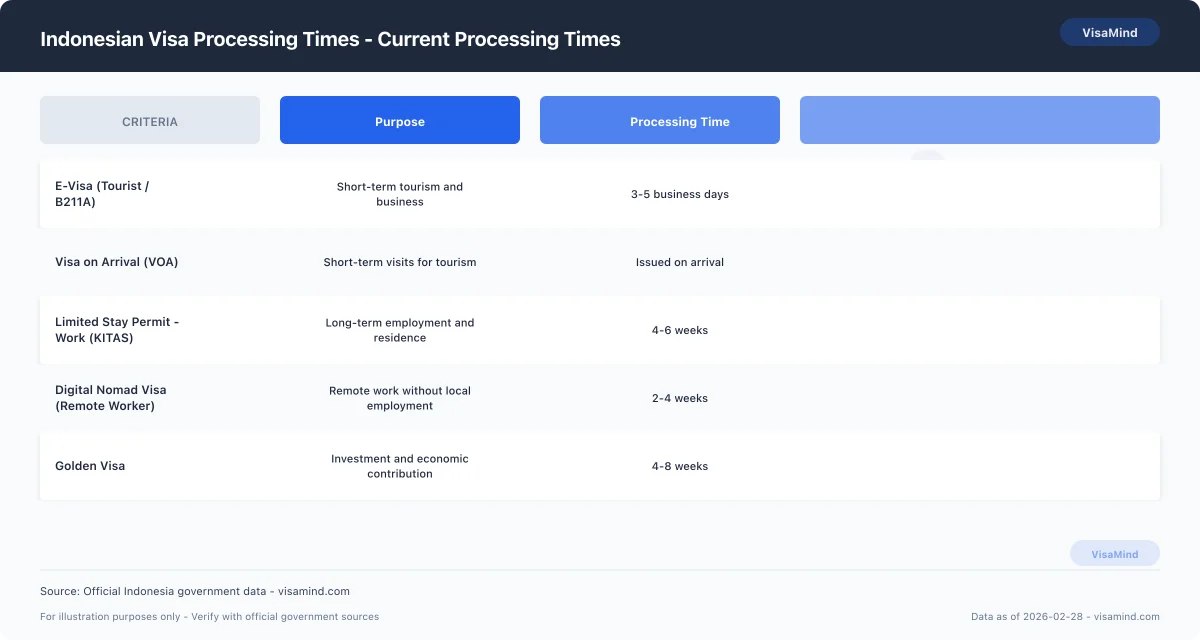
| Visa Type | Eligibility | Timeline | Notes |
|---|---|---|---|
| e-Visa (Tourist / B211A) | General tourists | 2-5 business days | Efficient for short-term visits. |
| Visa on Arrival (VOA) | 60+ countries | Immediate | Available at select entry points. |
| Limited Stay Permit - Work (KITAS) | Foreign workers | 4-6 weeks | Requires employer sponsorship. |
| Digital Nomad Visa (Remote Worker) | Remote workers | 7-14 business days | Includes proof of remote income. |
| Golden Visa | Investors/talents | 1-2 months | Requires investment commitment. |
| Global Citizen of Indonesia (GCI) | Ex-WNI, descendants, WNI spouses | 1-3 months | Proof of income required. |
How Long Does Each Indonesian Visa Take?
The processing times for Indonesian visas vary significantly based on the type of visa you apply for. The e-Visa (Tourist / B211A), for instance, is typically processed within 2-5 business days, making it a popular choice for short-term travelers. The Visa on Arrival (VOA) is even faster, as it can be obtained immediately upon entering Indonesia, provided you are from one of the eligible 60+ countries.
If you plan to work in Indonesia, the Limited Stay Permit - Work (KITAS) takes approximately 4-6 weeks to process. This visa requires sponsorship from your employer in Indonesia, so planning ahead is crucial.
What About Longer-Term or Specialized Visas?
For those seeking to stay longer or have more specialized needs, other options are available. The Digital Nomad Visa is designed for remote workers and typically takes 7-14 business days to process. Proof of remote income is a critical requirement for this visa.
The Golden Visa is aimed at foreign investors and talents who can contribute to the Indonesian economy. The processing time for this visa can range from 1 to 2 months, largely due to the need for a detailed review of the investment commitment.
Special Considerations for Global Citizens of Indonesia
The Global Citizen of Indonesia (GCI) visa is available for former Indonesian citizens, their descendants, and spouses of Indonesian citizens. This visa can take between 1 to 3 months to process, as applicants must provide proof of income and other documentation.
Important: Always verify the most current processing times directly on the Directorate General of Immigration (Ditjen Imigrasi) website, as these can change based on policy updates or application volumes.
For more detailed steps on how to apply for these visas, check out our How To Apply guide or refer to our Documents Checklist to ensure you have all necessary paperwork ready.
Why Processing Times Vary
#Visa processing times in Indonesia can vary significantly due to several factors tied to the country's unique systems and requirements. Understanding these variables can help you better anticipate the timeline for your application with the Directorate General of Immigration (Ditjen Imigrasi).
Type of Visa
- Golden Visa: Processing times may be longer due to the need for verifying investment commitments. Detailed scrutiny ensures that applicants genuinely contribute to the Indonesian economy.
- Global Citizen of Indonesia (GCI): Applications for ex-WNI or their descendants require additional steps, such as proving lineage and income, which can extend processing times.
- Visa On Arrival: Typically processed more quickly as they are intended for short-term stays and require less documentation.
Application Complexity
- Biometric Data Submission: Some visas, such as the Kitas Work or Golden Visa, require biometric data submission at designated immigration offices. Delays in completing this step can affect the overall timeline.
- Electronic Systems: While the electronic visa system speeds up some processes, technical issues or incomplete online submissions can cause delays. For example, the e-Visa Tourist relies heavily on this system.
Seasonal and Regional Factors
- Peak Travel Seasons: During high tourist seasons, such as the summer months or major Indonesian holidays, application volumes increase. This can lead to longer processing times for tourist-related visas.
- Regional Variations: The efficiency of processing can vary by region. Major hubs like Jakarta may experience quicker processing due to more resources, whereas regional offices might face longer delays.
Important: Verify specific processing timelines on the official Directorate General of Immigration website, as they can change based on current policies and external factors.
Documentation and Compliance
- Document Requirements: Delays often occur when applicants fail to provide essential documents. Common oversights include missing proof of income for GCI applications or incorrect investment documentation for the Golden Visa.
- Compliance with Instructions: Carefully reviewing instructions for eligibility categories before application can prevent unnecessary delays. For instance, failing to submit all required evidence can result in your application being returned or extended processing times.
You can find more detailed steps and requirements for each visa type by exploring guides such as the How To Apply and Documents Checklist.
Checking Your Application Status
#To keep track of your Indonesian visa application, the Directorate General of Immigration (Ditjen Imigrasi) offers a variety of tools and portals for checking your application status. Here’s how you can monitor the progress of your visa application:
1. Use the Online Visa Application Portal
The primary method to check your visa application status is through the electronic visa (e-Visa) system. Once you have lodged your application, you should receive a confirmation email with a unique reference number. This number is crucial for tracking purposes.
- Visit the Ditjen Imigrasi's official website and navigate to the e-Visa section.
- Log in using your credentials or as a guest, if applicable.
- Enter your reference number in the designated field to view your application's current status.
Tip: Always save your reference number and confirmation email to facilitate easy access when checking your application status.
2. Contact the Local Immigration Office
If you experience difficulties with the online portal or require further clarification about your application status, visiting or contacting your local immigration office can be beneficial.
- Find the nearest immigration office using the directory on the Ditjen Imigrasi website.
- Prepare your reference number and identification documents for faster assistance.
- You may need to schedule an appointment, depending on the office's policy.
3. Monitor Email Updates
Throughout the processing period, you may receive updates directly from Ditjen Imigrasi via email. These updates can include requests for additional information or confirmation of the next steps.
- Regularly check your email inbox, including the spam folder, for any communications.
- Follow any instructions provided promptly to prevent delays.
Important: Ensure that the email address used in your application is correct and regularly monitored to avoid missing important updates.
For more detailed information on other visa types and their specific processes, consider reviewing the E Visa Tourist Vs Visa On Arrival or Kitas Work Vs Kitas Investor guides. Always verify the latest information on the official Ditjen Imigrasi website to ensure you have the most current details.
Staying Legal During Processing
#While waiting for your Indonesian visa to be processed by the Directorate General of Immigration (Ditjen Imigrasi), it's important to ensure you remain in compliance with local immigration laws. Here's how you can stay legal during this period.
Temporary Stay Permits
If you're already in Indonesia and your visa is pending, you might be eligible for a temporary stay permit known as a Kartu Izin Tinggal Terbatas (KITAS). This permit allows you to reside legally in Indonesia while your visa application is being processed. Depending on your situation, you may apply for different types of KITAS, such as the KITAS Work if you have employment lined up, or the KITAS Investor if you're investing in the Indonesian market.
Implied Status and Work Rights
While your visa application is pending, you might be under an implied status, which means you're legally allowed to stay in the country. However, this does not automatically grant you work rights. If you wish to work, you must have the appropriate work authorization. For those applying for a Golden Visa, which is designed for investors and talents, ensure that you meet the investment commitments specified.
Bridging Options
In some cases, you may need a bridging visa to transition between statuses while awaiting your visa decision. This can be crucial if your current visa is nearing expiration. The Visa On Arrival can be a temporary solution, allowing a stay of up to 30 days, extendable for another 30 days. Remember, these visas do not permit employment, so consider your options carefully if you plan to work.
Important: Always verify the latest requirements and options on the official Directorate General of Immigration website, as policies can change.
Key Considerations
- Legal Stay: Ensure you have a valid stay permit if your visa processing extends beyond your current visa's validity.
- Work Authorization: Do not assume work rights unless explicitly granted.
- Bridging Visas: Explore temporary visas if your situation changes while waiting.
Understanding these aspects helps maintain your legal status in Indonesia during the visa processing period. Always consult the Visa Extension Guide for detailed information on extending your stay legally.
Escalating a Delayed Application
#When applying for a visa through the Directorate General of Immigration (Ditjen Imigrasi) in Indonesia, you might encounter delays beyond the typical processing times. If you find yourself in this situation, there are several steps you can take to escalate your application.
What to Do if Your Application is Delayed
If your visa application is delayed beyond the expected processing times, the first step is to contact the Directorate General of Immigration directly. You can do this by visiting their official website or contacting the local immigration office where you submitted your biometric data.
Tip: Ensure you have your application reference number and any relevant documentation at hand when making inquiries.
Escalation Options
If contacting the Directorate General of Immigration does not resolve the issue, consider the following escalation options:
-
Member of Parliament (MP) Letters: Writing to an Indonesian MP can sometimes expedite the processing of delayed visa applications. Provide them with all necessary details, including your application number and any correspondence with immigration authorities.
-
Ombudsman: The Indonesian Ombudsman can investigate complaints related to public administration, including visa processing delays. Submitting a complaint may help you get a resolution.
-
Congressional Inquiry: Although less common, reaching out to your home country's embassy in Indonesia might lead to a congressional inquiry. This can apply pressure on the Ditjen Imigrasi to expedite your application.
Additional Resources
For further guidance, you might find these links useful:
- Learn more about visa types such as the Golden Visa and Kitas Work.
- Review the Documents Checklist to ensure you've submitted all necessary documentation.
- For digital nomads or remote workers, the Digital Nomad Guide offers specific insights.
Delays can be frustrating, but following these steps can help you navigate the system more effectively. Always verify the latest procedures and contact details on the official Directorate General of Immigration website.
FAQs
What requirements must be met for the Global Citizen of Indonesia Visa regarding proof of income?
How do I check the status of my Indonesian Visa application?
Are there any specific biometric requirements for the e-Visa application process in Indonesia?
What should I do if my Indonesian Visa application is delayed?
Can I convert a Visa on Arrival (VOA) to a Limited Stay Permit (KITAS) in Indonesia?
How can I ensure I stay legal while my Indonesian Visa application is processing?
Is it necessary to download processing times from the Directorate General of Immigration's website?
VisaMind provides informational guidance only and is not a government agency. This is not legal advice. Requirements can change and eligibility depends on your specific facts. If your case is complex or high-stakes, consult a licensed immigration attorney.
Next steps
Requirements vary by nationality, purpose, timeline, and case details. Use Find My Visa to get a personalized checklist for Indonesia with official sources and deadlines.
Find my visa