Official sources referenced
Before You Start
#Before applying for a UK visa, it's essential to confirm whether you actually need one. Irish citizens do not require a visa to enter the UK. However, for most other nationalities, determining the correct visa type and ensuring eligibility are critical first steps.
Determine Your Visa Type
- Standard Visitor Visa: Needed for tourism, business meetings, or short courses of study up to 6 months. If you plan to get married in the UK, you must apply for a Marriage Visitor Visa.
- Student Visa: If you are pursuing a degree, ensure you have a confirmed place at a licensed college or university. For shorter English language courses lasting between 6 and 11 months, consider a Short-term Study Visa.
- Work Visas: There are various options like the Skilled Worker Visa if you have a job offer from a UK employer, or the UK Ancestry Visa if you have a British grandparent.
- Family Visas: If you are joining family members in the UK, ensure you can demonstrate financial support from your family.
Check Your Eligibility
- Visa Requirement: Confirm whether you need a visa based on your nationality and intended activities in the UK.
- Purpose of Visit: Align your visa type with your visit's purpose, such as tourism, work, study, or family reunification.
- Personal Circumstances and Skills: Some visas, like the Global Talent Visa, require specific skills or achievements.
Important: Your visa application must be approved before you travel to the UK. Failing to apply for the correct visa type could lead to a refusal.
Gather Necessary Information
- Personal Information: This includes your passport details, travel history, and any personal identification numbers like the National Insurance number if applicable.
- Financial Information: Be prepared to demonstrate you have enough funds to support yourself during your stay. This may include bank statements or proof of sponsorship.
- Supporting Documents: Depending on your visa type, gather documents such as a CAS Statement for a Student visa or a COS Document for a Skilled Worker visa.
Tip: Check the Documents Checklist to ensure you have all required documents before proceeding with your application.
By carefully selecting the correct visa and ensuring you meet all eligibility criteria, you will set a strong foundation for your UK visa application process.
Step-by-Step Walkthrough
#-
Determine Your Visa Type
Begin by identifying the specific type of visa you need based on your situation. Whether you're visiting, studying, working, or joining family, each purpose has a corresponding visa category. For instance, if you wish to visit for tourism or family reasons, the Standard Visitor Visa is appropriate. For employment, consider the Skilled Worker Visa. Ensure you thoroughly understand the requirements and eligibility for your chosen visa type to avoid applying for the wrong one.
Important: Failure to select the correct visa type can lead to application refusal. Always double-check your eligibility and the specific visa category applicable to your circumstances.
-
Prepare Your Documentation
Gather all necessary documents relevant to your visa application. This typically includes your passport, financial statements, sponsorship letters, and any additional paperwork specific to your visa category. For example, if you're applying for a Student Visa, you'll need a Confirmation of Acceptance for Studies (CAS) from a licensed UK education provider. Refer to the Documents Checklist for a comprehensive list of required documents.
-
Complete the Online Application
Access the online application portal through the UK Visas and Immigration (UKVI) website. Carefully fill in all required sections, ensuring accuracy and completeness. Double-check your personal details and contact information. Incomplete or incorrect applications can lead to delays or rejection.
-
Pay the Application Fee
Pay the visa application fee using a valid payment method. The fee varies depending on the type of visa and the duration of stay. Ensure you have sufficient funds to cover this cost. Keep a copy of the payment confirmation for your records.
-
Book an Appointment for Biometrics
After submitting your application, schedule an appointment to provide your biometrics (fingerprints and a photograph) at a Visa Application Centre. This step is mandatory for most applicants and forms part of the application process.
-
Submit Supporting Documents
Submit your supporting documents either online or in person, depending on the instructions you receive from UKVI. Ensure all documents are originals or certified copies, as required. Organize them in the order specified by the UKVI guidelines to streamline the verification process.
Tip: Submitting documents online may expedite the process, as it allows for quicker verification by the authorities.
-
Track Your Application
Use the tracking facility provided by UKVI to monitor the progress of your application. This will keep you informed of any updates or requests for additional information. Respond promptly to any such requests to avoid delays.
-
Receive a Decision
Once UKVI has processed your application, you will receive a decision. If approved, you will be issued a visa vignette in your passport or a digital visa confirmation. If refused, review the reasons provided and consider your options, such as reapplying or appealing the decision.
By meticulously following these steps and ensuring all requirements are met, you can navigate the UK visa application process with confidence. Always refer to the official UKVI website for the most current information and updates regarding your specific visa category.
What It Costs
#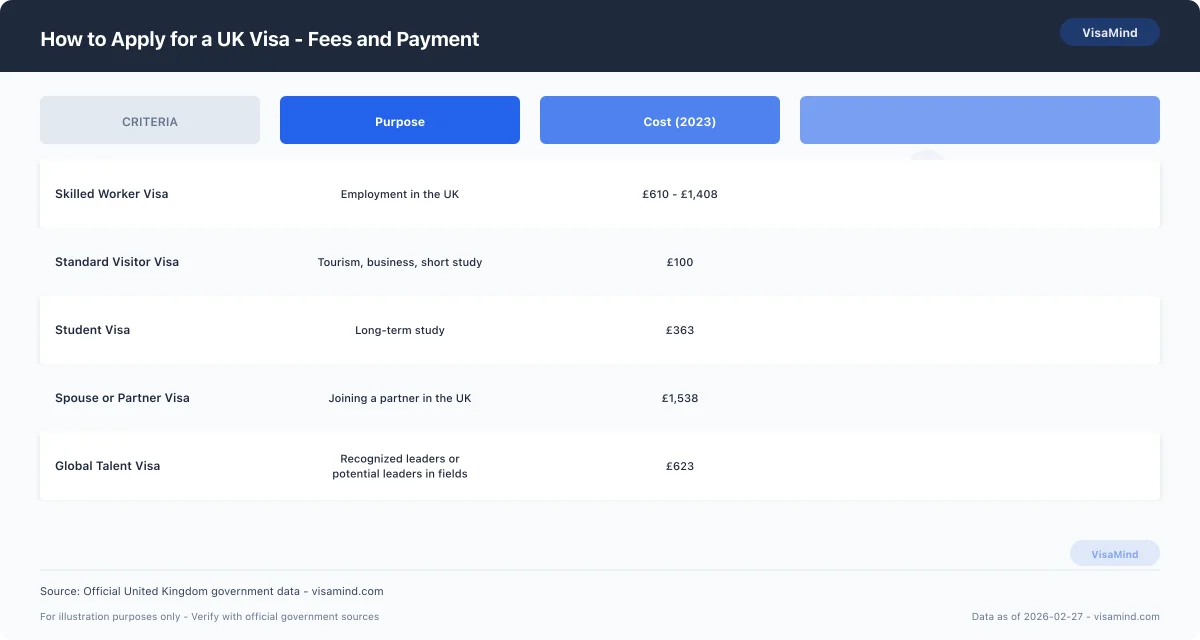
When applying for a UK visa through UK Visas and Immigration (UKVI), you need to be aware of the various costs involved. These include application fees, potential surcharges, and other related expenses. Below is a comparison table highlighting the typical fees for different visa types:
| Visa Type | Purpose | Application Fee (as of 2023) | Additional Costs |
|---|---|---|---|
| Standard Visitor Visa | Visiting family, tourism, business trips | £100 | Healthcare surcharge may apply for longer stays |
| Student Visa | Studying at a licensed UK institution | £363 | Healthcare surcharge: approx. £470 per year |
| Skilled Worker Visa | Employment in a skilled role | From £625 | Healthcare surcharge: £624 per year |
| Spouse or Partner Visa | Joining a partner who is a UK resident | £1,538 | Healthcare surcharge: £1,872 for 2.5 years |
| Global Talent Visa | For leaders in academia, research, arts | £623 | Healthcare surcharge: varies depending on stay length |
Tip: Always check the UKVI official website for the most up-to-date application fees, as these can change.
Are There Any Surcharges?
In addition to the standard application fees, you may need to pay the Immigration Health Surcharge (IHS). This allows you to access the UK’s National Health Service (NHS) during your stay. The surcharge is typically £624 per year for most visa types, but it's advisable to verify the exact amount applicable to your visa category.
Payment Methods
You can pay the application fees and surcharges using various methods. Payments are typically made online through the UKVI application portal, and you can use valid credit or debit cards. Some applicants may also have the option to pay via bank transfer, depending on their location.
What If You Need a Refund?
Refunds are generally not provided if your visa application is denied or if you withdraw it after processing has begun. However, if you made an error in your application or paid more than required, you might be eligible for a partial refund. Check the specific refund policy on the UKVI website for more information.
Important: Ensure you have sufficient funds and confirm all payment details during the application process to avoid delays or complications.
For more detailed information on visa types and their specific requirements, you can explore options like the Skilled Worker Visa or the Global Talent Visa.
After You Submit
#Once you've lodged your application with UK Visas and Immigration (UKVI), it's important to know what to expect and how to manage the waiting period.
Tracking Your Application
- Online Tracking: After you apply, you can track your application status online through the UKVI portal. You will need your application reference number, which is provided upon submission.
- Email Updates: Ensure you provide a valid email address in your application, as UKVI often sends updates on your application status via email.
Tip: Keep your application reference number handy for any inquiries or if you need to track your application's progress.
Expected Timeline
- Processing Times: The time it takes for your visa application to be processed can vary depending on the type of visa. For example, Standard Visitor Visas usually take around 3 weeks, while other visas like the Skilled Worker Visa may take longer.
- Priority Services: If you need your visa sooner, you may be able to use a priority service for an additional fee. This can significantly reduce the waiting time, but it's important to check availability and eligibility on the UKVI website.
Important: Processing times can change, so it's advisable to verify the current timelines on the UKVI processing times guide.
What to Do While Waiting
- Prepare for Arrival: Use this time to prepare for your arrival in the UK. This might include arranging accommodation, understanding public transportation, or familiarizing yourself with the local culture.
- Gather Additional Documents: If your visa type requires further documentation upon arrival, such as a Student Visa, ensure you have everything ready, including any necessary financial or academic records.
- Stay Informed: Keep an eye on any communications from UKVI, as they may request additional information or documents to process your application.
Staying proactive and informed during the waiting period can help ensure a smoother transition once your visa is approved.
Dealing with Delays or Refusals
#It's possible to encounter delays or even a refusal. Understanding your options in these situations can help you navigate the process more effectively.
What to Do If Your Visa Is Delayed
If your visa application is delayed, patience and regular communication are key. UK Visas and Immigration (UKVI) typically provides estimated processing times for different visa types, so it's important to verify these timelines on the Processing Times page.
- Contact UKVI: If your application exceeds the typical processing time, you can contact UKVI to inquire about the status. Be prepared to provide your application reference number.
- Check Your Email and Spam Folder: UKVI might request additional information or documents, so ensure you're checking all communication channels regularly.
Tip: Consider applying well in advance of your planned travel date to accommodate any potential delays.
Responding to a Visa Refusal
In the event your visa application is refused, UKVI will provide a refusal notice detailing the reasons for the decision. Understanding these reasons is crucial to determine your next steps.
- Appeal Rights: Depending on the type of visa, you may have the right to appeal the decision. Not all visa categories offer appeal rights, so check the specific guidelines for your visa type. For instance, decisions on a Standard Visitor Visa often do not allow for appeals.
- Administrative Review: If you believe there was an error in the application process, you can request an administrative review. This option is generally available for specific visa categories like the Student Visa. The review will assess whether the original decision was correct based on the available evidence.
Reapplying for a Visa
If appealing or requesting a review is not an option, or if these are unsuccessful, you may consider reapplying for the visa.
- Address the Reasons for Refusal: Carefully review the refusal notice and ensure you address all the reasons stated. This might involve providing additional documents or clarifying information.
- Consider Professional Advice: Engaging an immigration advisor may be beneficial to strengthen your application. They can provide insights into common Visa Refusal Reasons and how to avoid them.
Important: Reapplying without addressing the reasons for your initial refusal is likely to result in another rejection.
Understanding your options and taking informed actions can significantly improve your chances of a successful application, whether it's addressing delays or overcoming a refusal.
How Long the Process Takes
#The processing time for your UK visa application depends on the type of visa you are applying for and your specific circumstances. Generally, you should receive a decision within 3 weeks when applying from outside the UK. However, some visas may take longer.
Typical Processing Times
- Visitor Visas (e.g., Standard Visitor Visa): Usually processed within 3 weeks.
- Work Visas (e.g., Skilled Worker Visa): Generally processed within 8 weeks.
- Family Visas (e.g., Spouse or Partner Visa): Processing can take up to 12 weeks.
- Student Visas (e.g., Student Visa): Typically processed within 3 weeks.
Factors Influencing Processing Time
Several factors can impact processing times:
- Application Completeness: Ensure all required documents are submitted.
- Visa Type and Volume: High demand periods can lead to longer wait times.
- Additional Checks: Some applications may require additional documentation or interviews.
Tip: For the most up-to-date processing times, refer to the Processing Times Guide on the official UKVI website.
Expedited Processing Options
If you need your visa decision sooner, there are priority services available for an additional fee:
- Priority Service: Receive a decision within 5 working days.
- Super Priority Service: Get a decision by the end of the next working day.
These services are not available for all visa types, so check your eligibility before opting for expedited processing.
Important: Ensure that your application is complete and accurate before submitting, as errors can cause significant delays.
Navigating the Application Portal
#Navigating the application portal for a UK visa involves using the official online system provided by UK Visas and Immigration (UKVI). This system is designed to streamline your application process and allows you to track your progress.
How to Access the UKVI Application Portal
To begin your visa application, you must use the official UK Visas and Immigration (UKVI) website. This portal is where you can lodge your application for various visa categories, such as the Skilled Worker Visa or Spouse or Partner Visa.
- Visit the UKVI website: Navigate to the official UKVI page dedicated to visa applications.
- Select your visa type: Choose the appropriate visa category based on your purpose of visit, such as the Short Term Study or UK Ancestry.
- Create an account: If you haven't already, you'll need to register for an account to access the application form and save your progress.
Tip: Ensure your internet connection is stable when accessing the portal to avoid interruptions during your application process.
Required Information for the Application Portal
When navigating the application portal, you'll need to provide specific information to complete your application. Here's a list of common requirements:
- Personal information: Full name, date of birth, and nationality.
- Passport details: Passport number, issue date, and expiry date.
- Financial information: Proof of funds or sponsorship, if applicable.
- Purpose of visit: Detailed explanation of why you wish to enter the UK.
Important: Double-check your information for accuracy, as errors can lead to delays or refusals.
Key Features of the UKVI Application Portal
The UKVI application portal offers several features to assist you throughout the application process:
- Progress tracking: Monitor the status of your application in real-time.
- Document uploads: Submit necessary documents directly through the portal.
- Payment processing: Pay any required fees securely online.
By using the UKVI application portal, you can efficiently manage your visa application, ensuring you meet all necessary requirements and deadlines. For more details on document preparation, visit the Documents Checklist guide.
Fingerprints and Photos
#You will likely need to provide your fingerprints and a photograph as part of the biometric data collection process. This step is crucial for identity verification and security.
Where to Provide Biometrics
Biometric collection for UK visas is generally conducted at Visa Application Centres (VACs) operated by third-party services such as VFS Global or TLScontact. Depending on your location, you may also attend a UK embassy or consulate for this purpose.
- VFS Global: Primarily handles applications in Asia, Africa, and Europe.
- TLScontact: Manages applications in certain European and Middle Eastern countries.
- UK Embassies/Consulates: Available in countries where VACs may not be present.
Preparing for Your Appointment
Before attending your appointment, ensure you have all required documents and have scheduled a slot at your nearest VAC or embassy. Here are key points to remember:
- Bring Identification: A valid passport is necessary.
- Appointment Confirmation: Have a copy of your appointment letter.
- Visa Application Payment: Proof of payment may be required, depending on your location.
Tip: Arrive at least 15 minutes early for your biometric appointment to allow time for any security checks.
What Happens During the Appointment?
During your biometric appointment, you will provide fingerprints and have your photograph taken. This process is typically straightforward and should take no longer than 30 minutes.
- Identity Verification: Present your passport and appointment confirmation.
- Fingerprinting: An electronic scanner will capture your fingerprints.
- Photograph: A digital photo will be taken; ensure you adhere to any specific guidelines (e.g., no glasses).
After the Biometric Appointment
Once you have completed the biometric process, your application can proceed to the next stage. Keep track of your visa application status through the online portal or contact the relevant VAC for updates.
Important: Ensure your biometric information is accurate to avoid delays in processing. If there are discrepancies, contact UK Visas and Immigration (UKVI) immediately.
For more information on specific visa types, such as the Spouse or Partner Visa or UK Ancestry Visa, consult the respective visa guidance pages.
Calculating Your Score
#Understanding the points-based assessment system is essential to maximize your score. Your score can significantly impact your eligibility for certain visa categories, such as the Skilled Worker Visa or the Global Talent Visa. Here’s how you can calculate and optimize your score.
Understanding the Points-Based System
The UK's points-based system evaluates applicants across various criteria, including skills, qualifications, and job offers. Each visa category has specific requirements, and your score determines your eligibility.
| Visa Type | Key Points Criteria | Minimum Points Required |
|---|---|---|
| Skilled Worker | Job offer from approved employer, salary threshold, English ability | 70 points |
| Global Talent | Endorsement in a field such as science or arts | No specific points, but endorsement needed |
| Student | Confirmation of Acceptance for Studies (CAS), English proficiency | 40 points |
Maximizing Your Score
To enhance your score, focus on meeting and exceeding the essential criteria for your chosen visa category. Here's how:
-
Job Offer and Sponsorship: Secure a job offer from an approved UK employer. For the Skilled Worker Visa, ensure your employer is a licensed sponsor.
-
Salary Threshold: Verify that your salary meets the threshold for your role and visa type. The minimum salary requirement can vary, so check the latest figures on the official UKVI website.
-
English Language Proficiency: Prove your ability in English through a recognized test. This is crucial for many visas, including the Student Visa.
Tip: Even if your current score meets the threshold, aim for higher points where possible to strengthen your application and improve your chances of success.
Common Pitfalls
Avoid these common mistakes to ensure a smooth application process:
- Incorrect Visa Type: Ensure you apply for the correct visa based on your purpose of visit and personal circumstances.
- Financial Requirements: Meet all financial requirements, especially for family-related visas.
- Expired Documents: Verify that all documents, such as your Biometric Residence Permit (BRP), are valid and up-to-date to avoid issues with your application.
By paying close attention to the points-based criteria and addressing the common pitfalls, you can effectively navigate the UK visa application process and enhance your chances of obtaining approval.
FAQs
Can I switch from a Standard Visitor Visa to a Student Visa in the UK?
How can I apply for a UK Spouse Visa and what are the financial requirements?
What steps are involved in applying for a Global Talent Visa in the UK?
How long does UKVI take to process a Student Visa application?
Can I apply for a Marriage Visitor Visa if I plan to get married in the UK?
What is the process for applying for a Short-term Study Visa in the UK?
How can I combine visiting family and a business trip in the UK?
Sources
Last reviewed: March 2, 2026
VisaMind provides informational guidance only and is not a government agency. This is not legal advice. Requirements can change and eligibility depends on your specific facts. If your case is complex or high-stakes, consult a licensed immigration attorney.
Next steps
Requirements vary by nationality, purpose, timeline, and case details. Use Find My Visa to get a personalized checklist for United Kingdom with official sources and deadlines.
Find my visa