On this page
- What This Student Visa Covers
- Student Visa Requirements
- Student Visa Document Checklist
- Application Process
- Fees and Wait Times
- When to Consult an Immigration Professional
- Part-Time Work Rules
- After Graduation
- Staying Longer
- Why Student Visas Get Denied
- Required forms
- Related visa types
- Related guides
- Related goals
- Next steps
Official sources referenced
What This Student Visa Covers
#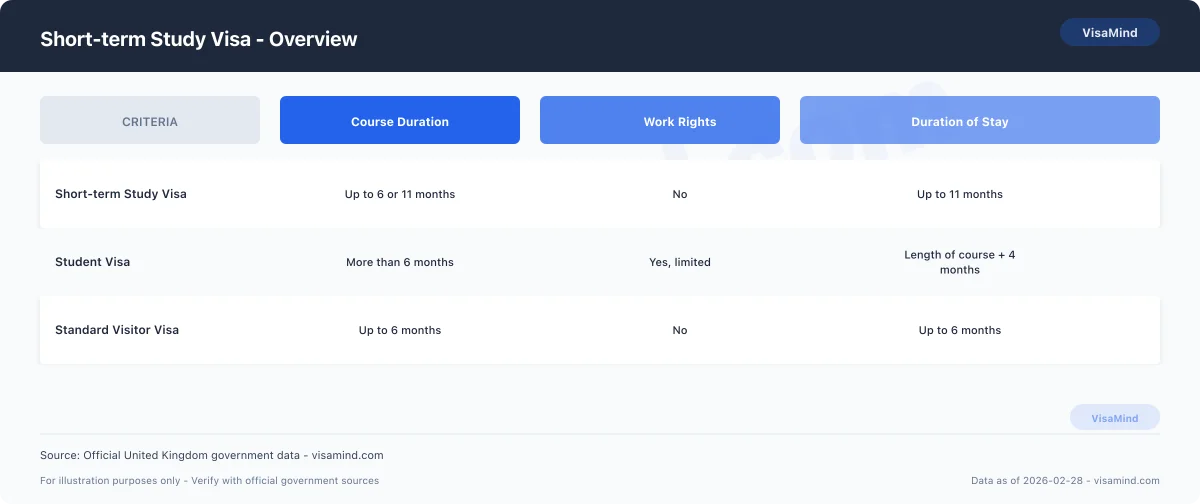
The Short-term Study Visa offered by UK Visas and Immigration is specifically designed for individuals seeking to engage in educational activities in the United Kingdom for a duration of up to six months. This visa is ideal for students wishing to undertake short courses, such as short-term English language training or professional development courses. It also covers students participating in exchange programs or those looking to conduct research as part of a degree program overseas.
Types of Courses
Under this visa, you can enroll in a variety of courses. These include language courses, where you can improve your English proficiency, and professional training courses that can enhance your skills and career prospects. The visa also supports academic exchanges, allowing you to gain valuable international experience by studying or engaging in research in the UK as part of your current degree program abroad.
Duration and Restrictions
The Short-term Study Visa allows you to stay in the UK for a maximum of six months. If you are taking an English language course, the visa can be extended to cover up to 11 months. However, it's crucial to note that this visa does not allow for work opportunities during your stay, and you must leave the UK upon completion of your course. If you're considering longer-term studies or wish to work during your studies, you might explore the Student Visa as a more suitable alternative.
Participating Institutions
Only courses provided by accredited institutions are eligible under this visa category. It's important to verify that your chosen institution is recognized by UKVI to ensure that your visa application aligns with official guidelines. You can find more on this by reviewing the Documents Checklist to understand the specific requirements.
Tip: Always confirm the accreditation status of your educational provider before applying to ensure your course qualifies under the Short-term Study Visa.
For anyone planning to undertake short-term studies in the UK, this visa provides a straightforward pathway, facilitating academic pursuits without the long-term commitments associated with other visa types. For more information on how this visa compares to other study options, consider visiting the Student Vs Short Term Study guide.
Student Visa Requirements
#To apply for a Short-term Study Visa in the United Kingdom, applicants must meet specific requirements related to their course, finances, language skills, and health coverage. Below are the primary criteria set by UK Visas and Immigration (UKVI).
Acceptance Letter from an Educational Institution
- Offer Confirmation: You must have an official acceptance letter from a recognized educational institution in the UK. This letter should specify the course details, duration, and any fees required.
- Eligible Courses: The course must be short-term, typically lasting no more than six months, or up to 11 months if it's an English language course.
Financial Proof Requirements
- Sufficient Funds: You need to demonstrate that you have adequate financial resources to support yourself during your stay in the UK. This includes covering living expenses and any course fees.
- Bank Statements: Provide recent bank statements showing your financial standing. Generally, it's advisable to show several months of financial history.
- Sponsorship: If you're sponsored, submit a letter from your financial sponsor, confirming their support and detailing the amount they will provide.
Language Requirements
- English Proficiency: Depending on the course, you may need to prove your English proficiency, especially if enrolling in an English language course. This can be done through recognized tests like IELTS or TOEFL.
- Exemptions: You may be exempt if your education was conducted in English or if you're from a majority English-speaking country.
Health Insurance
- Comprehensive Health Insurance: You must have valid health insurance for the duration of your stay in the UK. It should cover medical expenses, including emergency medical treatment.
Important: Ensure your health insurance policy is valid in the UK and meets all necessary coverage requirements.
Additional Considerations
For further guidance, you may find it beneficial to compare this visa type with alternatives like the Student Visa or Child Student Visa. For a broader understanding of your eligibility and documentation requirements, refer to the Documents Checklist.
Tip: It's advisable to lodge your application well in advance of your intended travel dates to accommodate processing times and avoid any delays.
Student Visa Document Checklist
#When applying for a Short-term Study Visa in the United Kingdom, it’s crucial to gather the necessary documents to support your application. Below is a checklist to help you prepare the required documentation for your student visa application.
Personal Identification and Travel
- Valid Passport: Ensure your passport has at least one blank page and is valid for the duration of your stay in the UK.
- Passport-sized Photograph: A recent photograph that meets the UKVI guidelines.
Educational and Course Details
- Course Acceptance Letter: A letter from your UK educational institution confirming your acceptance and details of the course, including start and end dates.
- Previous Educational Certificates: Copies of your academic qualifications, if applicable.
Financial Evidence
- Bank Statements: Recent statements showing you have sufficient funds to cover tuition fees and living expenses during your stay in the UK.
- Sponsor Letter: If applicable, a letter from your financial sponsor detailing their commitment to support you financially. Make sure this includes their financial statements or evidence of funds.
Important: UKVI requires that funds must have been in the account for at least 28 consecutive days before your application date.
Additional Supporting Documents
- English Language Proficiency: Evidence of your ability to speak, read, write, and understand English, such as test scores from IELTS or equivalent, if required by your course.
- Medical Documents: A Tuberculosis (TB) test certificate, if applicable, based on your country of residence.
Application Specifics
- Application Confirmation: Printout or digital copy of your confirmation email for the visa application submission.
- Visa Fee Payment Receipt: Proof of payment for the visa application fee.
Tip: Double-check all documents for accuracy and completeness before submitting your application to avoid unnecessary delays.
For more detailed guidance on the differences between the Student Visa and the Short-term Study Visa, or to explore other visas like the Graduate Visa, visit our comprehensive Documents Checklist.
Application Process
#To apply for a Short-term Study Visa in the United Kingdom, follow these steps carefully, ensuring that each stage is completed to meet the requirements set by UK Visas and Immigration (UKVI).
1. Receive Course Acceptance
Before you begin your application, you must secure acceptance into a course of study at an accredited UK institution. This acceptance letter or confirmation should outline the course details, duration, and any associated costs.
2. Gather Required Documents
Prepare the necessary documentation to support your application. Key documents include:
- A valid passport or travel document
- Proof of acceptance onto the course
- Evidence of financial means to cover your stay, such as bank statements
- Details of your travel plans, including accommodation
Tip: Organize your documents in the order prescribed by UKVI to streamline the application process.
3. Complete the Application
You must apply for the visa online through the UKVI website. Provide all required personal, travel, and financial information. Carefully review your application for accuracy before submission.
4. Pay the Visa Fee
As part of the application process, you must pay the visa fee. This fee varies, so verify the current cost on the official UKVI website. Payment is typically made online as part of the application submission.
5. Book a Biometrics Appointment
After submitting your application, schedule a biometrics appointment at a local visa application center. During this appointment, you will provide your fingerprints and a photograph, which are essential for your visa processing.
6. Submit Your Application
After completing the biometrics appointment, your application is formally submitted for processing. The typical processing time can vary, so check the latest Processing Times guide for current estimates.
Important: Ensure all information provided is truthful and complete. Inaccurate or misleading details may result in application refusal.
7. Await Visa Decision
Once your application is processed, you will receive a decision. If approved, your visa will be issued, allowing you to travel to the UK for your studies.
For further exploration of study-related visas, you might consider the Student Visa or Child Student Visa if applicable to your circumstances.
Fees and Wait Times
#Important: Applying for a Short-term Study Visa to the UK involves specific fees and processing times. Ensure you have the correct information before proceeding with your application.
Tuition Requirements
To qualify for a Short-term Study Visa, you must be accepted into a short-term course in the UK. This visa is ideal for those engaging in English language courses or other short-duration programs. Make sure to confirm your acceptance to a recognized institution in the UK, as this will be part of the documentation required by UK Visas and Immigration (UKVI) during your application.
Fees and Costs
The fee for a Short-term Study Visa as of 2023 is £200. This fee is payable at the time of your application and is non-refundable, even if the visa is not granted. Additional costs may include healthcare surcharge and potential costs for biometric information, depending on your country of residence.
| Visa Type | Eligibility Requirement | Cost |
|---|---|---|
| Short-term Study Visa | Enrolled in a short course in the UK | £200 |
Processing Timeline
Processing times for a Short-term Study Visa can vary. Typically, you can expect a decision within 3 weeks from the date of your biometric appointment. However, processing times can be longer during peak periods. Always verify the latest processing times on the UKVI website.
| Visa Type | Cost | Processing Time |
|---|---|---|
| Short-term Study Visa | £200 | 3 weeks |
Tip: Apply well in advance of your intended start date to accommodate any unforeseen delays in processing.
For those considering further study beyond short-term courses, exploring options like the Student Visa or Graduate Visa may be beneficial. These visas offer longer durations and different benefits, which might align better with your educational goals. Always check the Student Vs Short Term Study guide for a detailed comparison.
When to Consult an Immigration Professional
#If your student visa application is straightforward -- accepted at a recognized school, clear funding, no immigration history issues -- you can likely prepare it yourself for United Kingdom immigration. But reach out to an immigration professional if:
- You have significant gaps in your education or employment history
- You want to work or change programs mid-visa
- You have a prior visa denial or refusal
- You have a prior overstay, unlawful presence, or removal order
- You have a criminal record, arrest history, or pending charges
- You have a prior misrepresentation or fraud finding
- You are in removal or deportation proceedings
Part-Time Work Rules
#For those studying in the UK on a Short-term Study Visa, understanding the rules regarding part-time work is important. This visa primarily focuses on short courses, and as such, it imposes strict limitations on employment.
Can You Work Part-Time?
Unfortunately, individuals on a Short-term Study Visa are not permitted to engage in paid or unpaid work while in the UK. This restriction includes part-time jobs, internships, or co-op placements. The visa is solely intended for studying short courses, and any violation of this rule could impact your immigration status.
Internships and Work Placements
As a visa holder, you are not allowed to take up any internship or work placement, even if it's part of your study course. This is a notable difference from other visas, such as the Student Visa, which allows for certain work placements as part of the curriculum. If gaining practical experience is essential for your course, a different visa type may be more appropriate.
Summer Work and Other Opportunities
Likewise, the Short-term Study Visa does not permit holders to engage in summer work or any other work opportunities during their stay. If you wish to work during the summer, consider applying for a Youth Mobility Visa or another visa that explicitly allows employment.
Important: Engaging in any form of work, including volunteering, could result in visa violations. Always ensure your activities comply with your visa conditions.
Alternatives for Work Eligibility
If part-time work or internships are crucial during your study period, you might want to look into other visas that provide more flexibility. The Graduate Visa or Skilled Worker Visa might be suitable alternatives if you meet their respective criteria.
By understanding and adhering to these rules, you can ensure your stay in the UK remains compliant with immigration laws, allowing you to focus on your studies without any legal complications.
After Graduation
#Upon completing your studies on a Short-term Study Visa in the United Kingdom, it's important to understand what options are available for extending your stay or transitioning to work or residency. This visa is primarily for short courses and does not directly offer pathways to work or permanent residency. However, there are alternative visas and routes you can consider.
Transitioning to a Work Visa
If you are interested in staying in the UK for employment after your studies, you may need to switch to a different visa category. The Skilled Worker Visa is a popular option for those who have secured a job offer from a UK employer that is licensed to sponsor foreign workers. This visa allows you to live and work in the UK for up to five years, making it a viable pathway for individuals looking to build a career in the UK. Alternatively, if you possess significant achievements in your field, the Global Talent Visa might be suitable, allowing you to work in the UK without a job offer.
Exploring Graduate Visas
For those who have completed a degree in the UK, the Graduate Visa offers a post-study work option. Although not directly applicable to Short-term Study Visa holders, if you decide to pursue further studies and obtain a degree, this visa could be an option. It permits graduates to remain in the UK for two years (three years for doctoral graduates) to work or seek employment.
Pathways to Permanent Residency
If your long-term goal is to settle in the UK, gaining Indefinite Leave to Remain (ILR) is a critical step. While the Short-term Study Visa does not contribute time towards ILR, you can pursue other visas that do. For example, time spent on a Skilled Worker Visa or through the UK Ancestry Visa can count towards the residency requirement for ILR. Once eligible, you can apply for British citizenship, further solidifying your status in the UK.
Tip: Always stay informed about the latest immigration policies and consider consulting with an immigration advisor to explore the best options tailored to your circumstances.
Navigating the visa landscape can be complex, but understanding your options post-study is crucial for making informed decisions about your future in the UK.
Staying Longer
#If you're in the United Kingdom on a Short-term Study Visa and find that your circumstances have changed, such as needing to extend your study period or switch programs, it's important to understand your options regarding staying longer.
Extending Your Stay
The Short-term Study Visa is designed for short courses, typically up to six months. Unfortunately, this visa cannot be extended beyond its original duration. If you wish to continue your studies in the UK, you will need to apply for a different type of visa, such as the Student Visa, which allows for longer periods of study.
Important: If you need to stay beyond your visa's expiry, you must apply for a new visa before your current one expires to avoid overstaying, which can affect future visa applications.
Switching to a Different Visa
If your study plans change and you need a visa that accommodates a longer study period, you should consider applying for a Student Visa or another appropriate visa category. Here’s a quick comparison:
| Visa Type | Duration | Eligibility Requirements |
|---|---|---|
| Short-term Study Visa | Up to 6 months | Enrolled in a short course; proof of funds; return travel plans |
| Student Visa | Course duration + 4 months | Confirmation of Acceptance for Studies (CAS); English proficiency |
Maintaining Student Status
While on a Short-term Study Visa, maintaining your student status involves attending classes regularly and adhering to the conditions of your visa. Failure to comply with these conditions can result in visa revocation.
Tip: Regular attendance and progress in your course can support future visa applications, demonstrating your commitment to your studies.
For those considering further studies or work opportunities post-study, exploring other visa options, such as the Graduate Visa or Skilled Worker Visa, may be beneficial. Always verify the most current requirements and processes on the UKVI website.
Why Student Visas Get Denied
#Visa applications, including the Short-term Study Visa, can be denied for several reasons. Understanding these reasons can help you address potential issues before applying.
Common Reasons for Visa Denial
-
Funding Gaps: One primary reason for a visa denial is insufficient proof of financial stability. UK Visas and Immigration (UKVI) requires applicants to demonstrate that they have enough funds to cover tuition fees and living expenses for the duration of their stay. This includes providing bank statements or financial sponsorship letters.
-
Program-Background Mismatch: UKVI assesses whether your chosen course aligns with your previous educational background and career plans. A mismatch between your academic history and the short-term course you intend to pursue may raise concerns about your genuine interest in studying.
-
Immigration Intent Signals: Your application might be denied if there are indications that you intend to remain in the UK beyond the visa's validity. Strong ties to your home country, such as employment, family, or property, can help demonstrate your intention to return home after your studies.
Tips to Strengthen Your Application
-
Provide Comprehensive Financial Evidence: Ensure that your financial documents clearly show that you can support yourself without working during your stay. Consider using the resources available in the Financial Requirements guide to better understand the expectations.
-
Showcase Your Academic Purpose: Clearly articulate how the chosen course fits into your academic and professional goals. A well-written personal statement can help convey your intentions and demonstrate your commitment.
-
Highlight Ties to Your Home Country: Include evidence that you have compelling reasons to return home, such as a job offer or family commitments. This can alleviate concerns about your intent to overstay.
Important: Even with a well-prepared application, approval is not guaranteed. For related visa options, consider exploring the Standard Visitor Visa if your study involves short courses or unpaid research activities. Always verify the latest guidelines on the official UKVI website.
By carefully preparing your application and addressing these common issues, you can improve your chances of obtaining a Short-term Study Visa.
Required forms
#Next steps
#Use Find My Visa to build a sequenced plan with official sources and deadlines.
VisaMind provides informational guidance only and is not a government agency. This is not legal advice. Requirements can change and eligibility depends on your specific facts. If your case is complex or high-stakes, consult a licensed immigration attorney.
Next steps
Requirements vary by nationality, purpose, timeline, and case details. Use Find My Visa to get a personalized checklist for United Kingdom with official sources and deadlines.
Find my visa