Official sources referenced
Is This Guide for You?
#If you're planning to settle in the UK permanently, navigating the UK Visas and Immigration (UKVI) system is your crucial first step. This guide is tailored for those aiming to obtain permanent residence, known as Indefinite Leave to Remain (ILR), a pathway that provides security and stability in the UK. Whether you’re pursuing a Skilled Worker Visa or seeking to join a family member with British citizenship, understanding your specific visa category is essential.
Who Needs This Guide?
This guide is for individuals exploring the route to permanent residency in the UK through various visa pathways. If you are a spouse, partner, or family member of someone with British citizenship or settled status, a professional looking to work in the UK on a Skilled Worker Visa, or a student transitioning from a Student Visa to a more permanent status, this guide will help clarify your options. Additionally, it is invaluable for those applying under the EU Settlement Scheme or those with UK ancestry.
When Should You Use This Guide?
Begin consulting this guide as soon as you start considering a long-term stay in the UK. It provides insights into the requirements and processes for different visa categories based on your circumstances. Before planning your application, verify whether you need a visa and identify the appropriate type for your situation. Remember, your application must be approved before travel.
Important: Failure to choose the correct visa type or to apply in a timely manner can delay or jeopardize your application. Always check your eligibility thoroughly before proceeding.
Key Considerations
- Your nationality might determine your visa necessity and type.
- Specific visas cater to different purposes, such as the Graduate Visa for recent students or the Family Visa for joining relatives.
- Applications must meet the criteria set by UKVI, and processing times can vary, impacting your plans.
By understanding the available pathways and requirements, you can effectively prepare for your journey towards permanent residency in the UK.
Overview
#Navigating the process of obtaining permanent residence in the United Kingdom involves understanding the various visa pathways available to individuals based on their specific circumstances. The UK Visas and Immigration (UKVI) department is responsible for managing these applications, offering a range of visa types depending on your purpose of visit, length of stay, and personal background.
What is the UK Permanent Residence Pathway?
The UK Permanent Residence Pathway is a structured approach for individuals seeking to live permanently in the UK. This pathway includes several visa categories tailored to different needs and situations. Whether you intend to work, study, or join family in the UK, it is crucial to identify the appropriate visa category before beginning your application process.
Visa Types and Categories
The visa categories under the UK Permanent Residence Pathway are diverse, catering to various intentions for entering the UK. Here are some of the main visa types:
-
Work Visas: These include the Skilled Worker Visa, the Health Care Worker Visa, and the Innovator Founder Visa. These visas are designed for those who have a job offer from a UK employer or possess skills that are in demand.
-
Study Visas: The Student Visa and Short Term Study Visa provide pathways for individuals looking to pursue educational opportunities in the UK.
-
Family Visas: You can apply for a Family Visa if you are the spouse, partner, or family member of someone with British citizenship or settled status in the UK.
-
Settlement and Long-Term Visas: For those aiming for long-term residency, options include the Indefinite Leave to Remain (ILR) and the EU Settlement Scheme.
Key Steps in the Application Process
-
Determine Eligibility: Before applying, you must confirm if you need a visa and which type is applicable to your situation. Your nationality, purpose of visit, and length of stay are crucial factors in this determination.
-
Gather Required Documents: This typically includes personal identification, financial information, and any specific documents related to your visa category, such as a Certificate of Sponsorship for work visas.
-
Apply: Lodge your application with UKVI, ensuring that you have addressed all eligibility criteria and have provided the necessary documentation.
Important: Ensure your visa application is approved before you travel to the UK, as arriving without the proper visa can lead to entry refusal.
Common Pitfalls and Considerations
A frequent issue applicants face is failing to verify if they need a visa or selecting the incorrect visa type based on their circumstances. It is essential to thoroughly review the eligibility criteria and requirements for your chosen visa type to avoid complications.
For those seeking a pathway to permanent residence, understanding the nuances of different visa types and the application process is critical. Engaging with the UK Visas and Immigration (UKVI) resources can provide further guidance and ensure that your journey towards permanent residency in the UK is well-informed and efficient.
Eligibility and Requirements
#Understanding the eligibility and requirements for UK permanent residence is crucial for a successful application. Different pathways exist depending on your circumstances, and it's important to choose the right one. Below is a detailed outline of key eligibility criteria and requirements for those considering the UK Permanent Residence Pathway.
General Eligibility Criteria
-
Nationality Considerations:
- You may need a visa to enter the UK based on your nationality.
- Important: Irish citizens do not need to apply for a visa to reside in the UK.
-
Purpose of Stay:
- Determine the purpose of your visit, such as work, study, or joining family, as this impacts the type of visa you need.
- Review options like the Skilled Worker Visa or Student Visa based on your intentions.
Specific Visa Pathways
-
Family Connections:
- If you're a spouse, partner, or family member of a UK citizen or someone with settlement, you might be eligible to apply for a Family Visa.
-
Professional and Talent-Based Visas:
- If you possess exceptional skills or have a job offer in the UK, consider pathways like the Global Talent Visa.
Key Requirements
-
Documentation:
- Prepare personal and financial documents, such as your National Insurance number and proof of financial stability.
-
Application Approval:
- Ensure your application is approved before you travel to the UK.
-
Visa Type Check:
- Confirm the type of visa needed for your stay. Applying for the wrong visa is a common mistake that can delay your application.
Additional Considerations
-
Financial Thresholds:
- Some visas may require proof of sufficient funds to support yourself during your stay in the UK. Verify specific requirements on the UKVI website.
-
Understanding Long-Term Options:
- For those considering a long-term stay, explore options like Indefinite Leave to Remain or British Citizenship.
Tip: Carefully review the Documents Checklist to ensure you gather all necessary documents before starting your application.
Selecting the right pathway and gathering the required documents are essential steps in your journey to permanent residence in the UK. Always consult the official UKVI website for the most current information and requirements.
Step-by-Step Process
#-
Determine If You Need a Visa
Before beginning the UK Permanent Residence process, the first step is to determine if you actually need a visa. This depends on several factors such as your nationality, the purpose of your visit, and your intended length of stay. For example, Irish citizens do not need a visa to enter the UK. Use the UKVI's online tool to check your specific circumstances.
-
Identify the Correct Visa Type
Once you confirm that you need a visa, identify the most appropriate type based on your situation. Common visa categories include Skilled Worker Visa for employment, Student Visa for academic studies, and Family Visa for joining family members in the UK. Each visa type has its own set of requirements and conditions, so ensure you understand these before proceeding.
-
Review Eligibility Requirements
After selecting the visa type, review the specific eligibility criteria associated with it. This may include demonstrating a certain level of English proficiency, financial stability, or having a confirmed job offer from a UK employer. For detailed information, refer to the Documents Checklist to ensure you meet all requirements.
-
Prepare Your Application
Gather all necessary documents to support your application. This typically includes identification, proof of financial means, and any relevant sponsorship or employment offers. Be meticulous in preparing your paperwork as missing or incorrect documents can lead to application delays or refusals.
Tip: Organize your documents in the order listed in the Documents Checklist to streamline the application process.
-
Submit Your Application to UKVI
Lodge your application through the official UKVI platform. Ensure all sections are completed and that you provide accurate information. Remember to pay the required application fee and biometric information fee, if applicable. Once submitted, you will receive a confirmation and a unique reference number.
-
Attend a Biometric Appointment
If required, attend a biometric appointment at a designated UK Visa and Citizenship Application Services (UKVCAS) service point. During this appointment, your fingerprints and photograph will be taken. Ensure you attend on the scheduled date, as rescheduling could delay your application.
-
Await a Decision
After submitting your application and completing any necessary appointments, UKVI will process your application. Processing times can vary depending on the visa type and workload. Check the Processing Times guide for current estimates.
-
Receive Your Decision
Once UKVI has processed your application, you will receive a decision. If approved, you will receive a vignette in your passport if you are outside the UK, or a Biometric Residence Permit (BRP) if you are within the UK. If your application is refused, you may have the option to appeal or reapply, depending on the circumstances.
Important: Keep your BRP or vignette safe, as you will need it for travel and to confirm your immigration status in the UK.
By following these steps, you'll navigate the UK Permanent Residence Pathway with greater ease. Always verify specific details on the official UKVI website to ensure accuracy and compliance.
Fees, Timeline, and What to Expect
#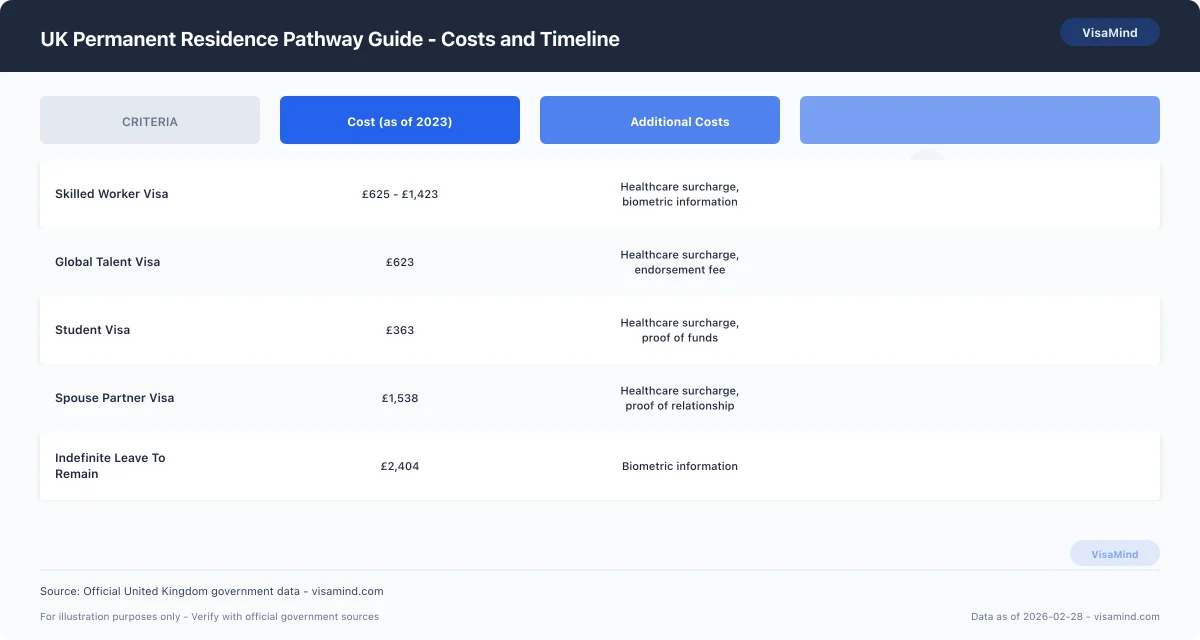
When preparing to apply for permanent residence in the UK, understanding the associated fees, processing times, and expectations is vital. Below is an overview of the key aspects you should be aware of.
Fees for UK Permanent Residence Applications
Different pathways to permanent residence come with varying fees. Here's a comparison of some common visa categories:
| Visa Type | Application Fee (as of 2023) | Biometric Fee | Additional Costs |
|---|---|---|---|
| Indefinite Leave to Remain (ILR) | £2,404 | £19.20 | Health surcharge if applicable |
| EU Settlement Scheme | Free | £19.20 | None |
| UK Ancestry Visa | £531 | £19.20 | Health surcharge |
| Spouse Partner Visa | £1,538 | £19.20 | Health surcharge |
Important: Fees are subject to change. Always verify the latest fees on the official UKVI website.
Processing Timelines
The time it takes for your application to be processed can vary significantly depending on the type of application and individual circumstances. Here's what you might expect:
| Visa Type | Standard Processing Time |
|---|---|
| Indefinite Leave to Remain (ILR) | Up to 6 months |
| EU Settlement Scheme | 5 working days to 1 month |
| UK Ancestry Visa | Up to 3 weeks |
| Spouse Partner Visa | Around 12 weeks |
Tip: Consider using the priority or super-priority service for faster processing if available, especially for urgent applications.
What to Expect Post-Application
Once you've lodged your application with UK Visas and Immigration (UKVI), here’s what usually happens:
-
Acknowledgment: You'll receive confirmation that your application has been received. This typically includes a reference number.
-
Biometric Appointment: You may be required to provide biometric information at a UK Visa and Citizenship Application Services (UKVCAS) centre.
-
Decision Notification: After the processing period, UKVI will notify you of their decision. If successful, you'll receive a Biometric Residence Permit (BRP).
-
Follow-Up: If additional information or documentation is needed, UKVI will contact you. Respond promptly to avoid delays.
For more detailed insights, refer to the Processing Times Guide or the How to Apply Guide.
Understanding these elements will help you prepare adequately for your journey towards permanent residence in the UK.
What Experienced Applicants Recommend
#Tip: Before starting your application, ensure you have checked if you need a visa and which type is appropriate for your circumstances. This will help avoid unnecessary complications later.
Choosing the Right Visa
- Assess Your Purpose: Understand why you're coming to the UK. Whether it's for work, study, or family, the Indefinite Leave to Remain (ILR) or British Citizenship paths may intersect with your long-term goals.
- Nationality Considerations: Your nationality can influence your visa requirements. For instance, Irish citizens do not need a visa to enter the UK.
- Duration of Stay: Determine how long you plan to stay. Different visas cater to different lengths of stay and purposes, such as the Global Talent Visa for exceptional talents or the Standard Visitor Visa for short visits.
Gathering the Necessary Documentation
- Proof of Identity: Ensure your passport is valid and up to date. You may also need additional ID documents depending on your visa type.
- Financial Evidence: Be prepared to provide documentation proving you can support yourself financially during your stay. This could include bank statements or proof of income.
- Personal Circumstances: Depending on your situation, you might need to present evidence such as marriage certificates or employment contracts. For example, those applying for a Spouse Partner Visa should gather marriage or civil partnership documents.
Common Pitfalls and How to Avoid Them
- Incorrect Visa Application: Applying for the wrong visa type is a common mistake. Always double-check that the visa matches your circumstances and intentions. For instance, if seeking permanent residence, explore options like the ILR Long Residence.
- Incomplete Documentation: Missing or incorrect documents can delay your application or result in refusal. Use a Documents Checklist to ensure you have everything needed.
- Misunderstanding Requirements: Thoroughly review the eligibility criteria for your chosen visa. Misunderstanding requirements can lead to an unsuccessful application.
Important: Your application must be approved before traveling to the UK. Failing to secure approval beforehand could result in denial of entry at the border.
Final Recommendations from Experienced Applicants
- Start Early: Begin gathering documents and preparing your application well in advance of your planned travel date. This allows ample time to address any unexpected issues.
- Stay Informed: Keep up-to-date with any changes in UK immigration rules and processes. The How to Apply Guide is a valuable resource for current information.
- Seek Professional Advice: If you’re unsure about any aspect of the process, consider consulting an immigration advisor familiar with UKVI procedures. They can provide tailored advice based on your specific situation.
What Goes Wrong Most Often
#Applying for permanent residence in the UK can be a complex process, and numerous pitfalls can derail your application. Understanding the most common errors can help you avoid them and improve your chances of success.
Common Mistakes in Visa Type Selection
-
Not Checking Visa Requirements Thoroughly: A prevalent issue is not verifying if you need a visa or determining the correct type based on your situation. For example, while Irish citizens do not require a visa, others might need a Standard Visitor Visa for short visits or a Spouse Partner Visa for joining family.
-
Choosing an Incorrect Visa Category: Selecting the wrong visa type, such as applying for a Student Visa when you need a Work Visa, can lead to refusal. Always align your choice with your intended activities in the UK.
Documentation Errors
-
Incomplete or Incorrect Information: Providing inaccurate or incomplete personal and financial information, such as missing your National Insurance number, is a common reason for delays or rejections.
-
Lack of Required Evidence: Not submitting all necessary documents, such as financial proof or family relationship evidence, can result in application refusal. Reviewing the Documents Checklist can help ensure completeness.
Tip: Carefully review all instructions for your visa category to avoid missing crucial details. The How To Apply guide can provide valuable insights into the application process.
Timing and Deadline Issues
-
Submitting Applications Too Late: Ensure your visa application is approved before you travel. Missing deadlines means you might not have the necessary approval by your intended travel date.
-
Failing to Track Processing Times: Be aware of the processing times for your visa category. Use the Processing Times guide to plan effectively and avoid unnecessary stress.
Misunderstanding Eligibility Criteria
- Assuming Eligibility Based on Incorrect Information: Misunderstanding the requirements, such as those for the EU Settlement Scheme, can lead to application errors. Ensure your circumstances align with the criteria for the specific visa type you are pursuing.
By paying attention to these common pitfalls, you can navigate the UK permanent residence pathway more smoothly and improve the likelihood of a successful application.
Real-World Examples
#A software engineer from India was offered a job in the UK by a leading tech firm. Concerned about the process, he explored the Skilled Worker Visa pathway, which is managed by UK Visas and Immigration (UKVI). The tech firm provided him with a Certificate of Sponsorship (COS), a crucial document needed for his application. He then submitted his online application, ensuring all details matched those on his COS. The application was straightforward, as the firm was a licensed sponsor. Within three weeks, he received his visa approval and was able to move to the UK to begin his new role.
Scenario: Transitioning from Student to Graduate Work
A Chinese national completed her Master’s degree at a UK university and wanted to stay in the UK to gain work experience. She was well-informed about the Graduate Visa, which allows international students to remain in the UK for up to two years post-graduation. She applied through the UKVI portal, providing proof of her degree. The application was processed within eight weeks, allowing her to start working with a marketing firm in London. This pathway offered her the opportunity to gain valuable work experience and consider future opportunities to apply for a Skilled Worker Visa.
Scenario: Joining Family in the UK
A Brazilian citizen married to a British national was eager to join her spouse in the UK. She explored the Spouse Partner Visa option, which required her to demonstrate the genuine nature of her relationship and her spouse’s ability to financially support her. Assisting her application, she provided extensive documentation, including marriage certificates and joint financial statements. After submitting her application through the UKVI portal and attending a biometrics appointment, her visa was approved within 12 weeks. This enabled her to join her spouse in the UK, where she could eventually consider applying for Indefinite Leave to Remain in the future.
FAQs
What is a common pitfall mentioned in the UK Permanent Residence Pathway Guide when applying for UK visas?
Does the UK Permanent Residence Pathway Guide provide guidance on the EU Settlement Scheme?
What fee does the UK Permanent Residence Pathway Guide specify for the ILR application?
How long does UKVI take to process an ILR (Long Residence) application according to the UK Permanent Residence Pathway Guide?
Can I switch from a UK Ancestry Visa to British Citizenship using the UK Permanent Residence Pathway Guide?
What does the UK Permanent Residence Pathway Guide say about applying for a family visa if your partner is a British citizen?
How does the UK Permanent Residence Pathway Guide suggest preparing for the visa application process?
Sources
Last reviewed: March 2, 2026
VisaMind provides informational guidance only and is not a government agency. This is not legal advice. Requirements can change and eligibility depends on your specific facts. If your case is complex or high-stakes, consult a licensed immigration attorney.
Next steps
Requirements vary by nationality, purpose, timeline, and case details. Use Find My Visa to get a personalized checklist for United Kingdom with official sources and deadlines.
Find my visa