Official sources referenced
Is This Guide for You?
#The German Permanent Residence Pathway Guide is a crucial resource for those interested in obtaining long-term residency in Germany. If you have been living in Germany for an uninterrupted 180-day period and are considering transitioning from a temporary status to a more permanent one, this guide will be particularly relevant to you. The pathway to securing a permanent residence permit, also known as a Settlement Permit (Niederlassungserlaubnis), involves specific eligibility criteria and procedural steps that vary based on individual circumstances, such as your current visa type and duration of stay.
Who Can Benefit From This Guide?
This guide is ideal for individuals who are currently residing in Germany under various permits and are planning to apply for permanent residency. This includes holders of the EU Blue Card, Skilled Worker Visa, or those considering transitioning from a temporary visa to a Settlement Permit. If you are working, studying, or living in Germany under a different permit, understanding the pathway to permanent residency can help you plan your future in Germany effectively.
Exploring Your Pathways
Germany offers multiple pathways to permanent residency, each with its specific requirements. For example, the EU Long-term Residence Permit provides an option for non-EU nationals who have lived in Germany and contributed economically for a number of years. Meanwhile, the Settlement Permit offers a route for skilled workers, researchers, and graduates of German universities. Understanding which pathway aligns with your situation is key to a successful application.
Tip: Familiarize yourself with the requirements of the Settlement Permit early on to ensure you meet all criteria by the time you decide to apply.
Preparing for the Application Process
As you consider applying for permanent residency, it is important to gather all necessary documents and evidence to support your application. This includes proof of financial stability, health insurance, and integration into German society, such as language proficiency and cultural understanding. You can find a Documents Checklist to help you prepare. Being well-prepared can significantly enhance your chances of a successful application.
By understanding who this guide is designed for and the pathways available, you can better navigate the journey towards permanent residency in Germany.
Overview
#Germany offers a structured pathway to permanent residence, which can be an appealing option for many who wish to make this vibrant country their long-term home. The Federal Office for Migration and Refugees (BAMF) plays a central role in this process, managing applications and providing guidelines to help individuals transition from temporary status to permanent residency.
Understanding Permanent Residence in Germany
Permanent residence in Germany is typically achieved through the Settlement Permit (Niederlassungserlaubnis) or the EU Long-term Residence Permit. These permits allow non-EU nationals to reside in Germany indefinitely, granting them the ability to work and enjoy similar rights to German citizens. The requirements and processes for these permits are overseen by BAMF and local foreigners' authorities (Ausländerbehörde).
Tip: Consider applying for a Settlement Permit if you have already been living in Germany for several years and meet the necessary criteria, as this is a popular pathway to permanent residency.
Key Pathways to Permanent Residence
While there are several pathways to permanent residence in Germany, the most common include:
-
Settlement Permit: Ideal for those who have held a residence permit for some time and can demonstrate financial stability, language proficiency, and integration into German society.
-
EU Long-term Residence Permit: Suitable for those who have lived within the EU for an extended period and meet specific economic and social contribution criteria.
-
EU Blue Card: This is a temporary residence permit that can lead to permanent residency after a certain period. It is designed for highly skilled workers and offers a fast track to permanent residence.
These options accommodate various applicant profiles, from skilled workers and researchers to family members of German residents. Each pathway has distinct eligibility criteria, so it's important to assess which option aligns with your circumstances.
How the Process Works
The journey to permanent residence in Germany involves several steps, which typically include:
-
Eligibility Assessment: Determine your eligibility based on your current visa status, duration of stay, financial situation, and language skills.
-
Document Preparation: Gather necessary documents, such as proof of income, language certification, and integration courses. You might find the Documents Checklist useful during this stage.
-
Application Submission: Lodge your application with the local foreigners' authority. This process will involve submitting your documents and possibly attending an interview.
-
Decision and Residence Permit Issuance: Upon approval, you receive a permanent residence permit, granting you indefinite stay in Germany.
Important: Ensure that you are familiar with the specific requirements for your chosen pathway, as missing documents or incorrect applications can delay the process.
Related Considerations
Obtaining permanent residence is a significant milestone, but it is not the final step in your integration journey. Many residents eventually pursue German Citizenship (Naturalization), which offers full rights, including the ability to vote and hold a German passport. You may explore more about the differences and benefits of these statuses through the Settlement Permit Vs Citizenship guide.
For those on the Skilled Worker Visa or holding a Blue Card EU, transitioning to a permanent residence can be a natural progression, provided all conditions are met. Each pathway requires careful planning and adherence to BAMF guidelines to ensure a successful application.
Eligibility and Requirements
#To apply for permanent residence in Germany, it is crucial to understand the eligibility criteria and requirements set forth by the Federal Office for Migration and Refugees (BAMF). Here’s a structured overview of who qualifies and the key prerequisites needed to apply for a permanent residence permit, also known as a Settlement Permit (Niederlassungserlaubnis).
Basic Eligibility Criteria
-
Residence Duration:
- Generally, you must have legally resided in Germany for at least five years.
- Holders of an EU Blue Card may qualify after 33 months, or 21 months with sufficient German language proficiency.
-
Right to Work:
- You need a work permit or a permit that allows you to work in Germany, such as the Skilled Worker Visa.
-
Financial Stability:
- Proof of sufficient income to support yourself and any family members without relying on public funds.
Key Requirements
-
Language Proficiency:
- A German language certificate at B1 level is typically necessary, unless you hold an EU Blue Card with the 21-month qualification pathway.
-
Integration Course:
- Completion of an integration course may be required unless exempted by specific circumstances.
-
Health Insurance:
- Must have statutory or private health insurance coverage in Germany.
-
Pension Contributions:
- Demonstrate that you have paid into the German pension system for a minimum of 60 months.
Additional Considerations
-
Criminal Record:
- A clean criminal record is essential for eligibility.
-
Accommodation:
- Secure and adequate living space for yourself and any accompanying family members.
-
Special Pathways:
- Those with a Researcher Visa or Self Employed Visa might have alternative pathways with specific conditions.
Important: Fulfilling the above criteria does not guarantee approval. Each application is evaluated on a case-by-case basis by the local foreigners' authority (Ausländerbehörde).
Special Pathways and Exemptions
-
EU Long-term Residence Permit:
- Similar to the Settlement Permit, but offers additional mobility within the EU. Check specific requirements here.
-
German Citizenship (Naturalization):
- If you're considering citizenship, you may explore the pathway to German Citizenship, which has distinct requirements and benefits over permanent residence.
-
Exemptions:
- Certain highly skilled professionals or those with strong ties to Germany may qualify under different rules. Always verify with BAMF or your local Ausländerbehörde.
Understanding these requirements and preparing the necessary documentation in advance can streamline your application process. For a comprehensive list of documents, see the Documents Checklist.
Step-by-Step Process
#- Determine Your Eligibility
Before starting the application process for permanent residence in Germany, it's crucial to ascertain your eligibility. Typically, you must have resided in Germany for a continuous period of at least five years. This requirement is often linked to holding a relevant residence permit, such as the EU Blue Card or Skilled Worker Visa. Certain permits, like the Settlement Permit, may have additional criteria, such as language proficiency and financial stability.
- Gather Required Documents
To support your application, you will need to collect various documents. These commonly include your passport, proof of residence, income statements or employment contracts, and German language certificates. A comprehensive list tailored to your specific situation can be found in the Documents Checklist. It's essential to have all documents translated into German if they are in another language and certified if necessary.
- Lodge Your Application
Once you have determined your eligibility and gathered all required documents, you can lodge your application with the local foreigners' authority (Ausländerbehörde) in your area. It's advisable to reach out to them to schedule an appointment, as walk-ins may not be accommodated. During your appointment, submit all documents and ensure that any applicable fees are paid. The authority will review your application and may request additional information or documents if needed.
- Attend an Interview
In some cases, the Ausländerbehörde may request an interview. This is an opportunity for them to verify details of your application and assess your integration into German society. Prepare by reviewing common interview questions and practicing your German language skills. You can find tips and advice on interview preparation in the Interview Prep guide.
- Await the Decision
After submitting your application and completing any required interviews, you will need to wait for a decision. Processing times can vary depending on the complexity of your case and the workload of the local authority. Check the Processing Times guide for up-to-date estimates. If your application is successful, you will receive a notification to collect your permanent residence permit.
Tip: Keep track of all correspondence with the Ausländerbehörde and maintain copies of your application and supporting documents. This will be helpful if any questions arise during the processing of your application.
- Receive Your Permanent Residence Permit
Once approved, you'll receive your permanent residence permit, which allows you to live and work in Germany indefinitely. This permit provides more freedom in choosing employment and is a step towards German Citizenship if desired. Ensure you understand the rights and responsibilities that come with permanent residency.
Important: Any changes in your personal situation, like employment status or address, should be promptly reported to the Ausländerbehörde to maintain the validity of your permit.
Fees, Timeline, and What to Expect
#
And what to expect can help you prepare effectively. The process involves several steps and requires close attention to detail.
Fees and Costs
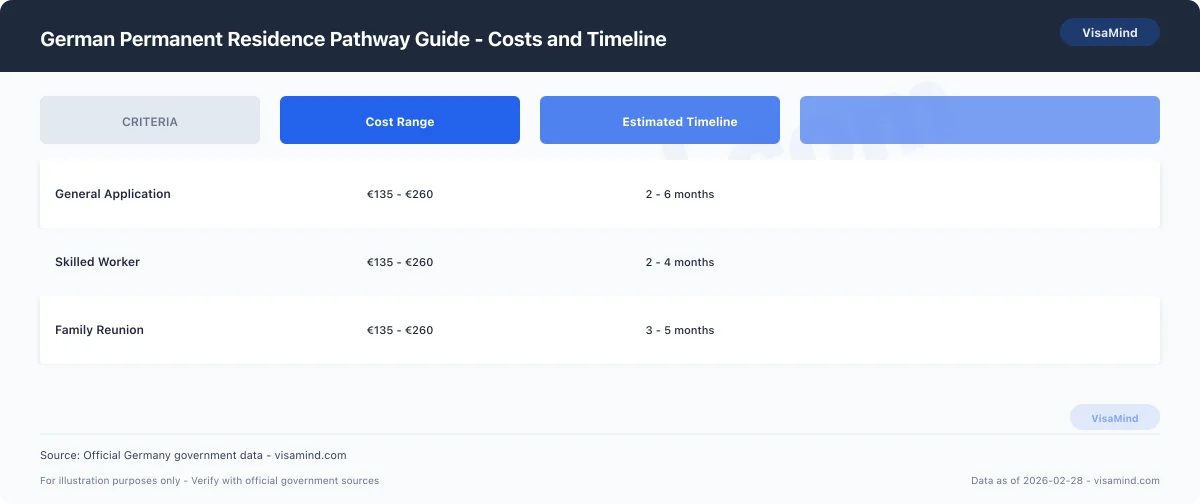
The costs associated with applying for permanent residence vary based on the type of permit you are applying for. Here is a comparison of some common permits:
| Permit Type | Fee (EUR, as of 2023) |
|---|---|
| Settlement Permit | 113 |
| EU Long-term Residence Permit | 109 |
| German Citizenship (Naturalization) | 255 |
Tip: Fees can change, so it's best to verify the current fees on the official BAMF website before beginning your application.
Processing Timeline
The timeline for processing a permanent residence application can vary significantly based on factors such as your eligibility category and the specific local foreigners' authority (Ausländerbehörde) involved. Below is a general idea of what you might expect:
| Permit Type | Estimated Timeline |
|---|---|
| Settlement Permit | 2 to 6 months |
| EU Long-term Residence Permit | 3 to 6 months |
| German Citizenship (Naturalization) | 6 to 12 months |
Important: Processing times can be longer during peak periods or if additional documentation is required. Check the Processing Times Guide for more details.
What to Expect During the Process
-
Document Preparation: Gather all necessary documents as specified by the BAMF and your local Ausländerbehörde. A detailed Documents Checklist can be helpful.
-
Application Submission: Lodge your application at the appropriate local authority. They will review your documents and may request additional information or an interview.
-
Decision Notification: Once a decision is made, you will be notified by mail. If approved, you will receive your residence permit, which you should keep in a safe place.
-
Appeal Process: If your application is denied, you generally have the right to appeal. Consult the Visa Refusal Reasons Guide for potential next steps.
By understanding these fees, timelines, and expectations, you can better navigate the path to obtaining permanent residence in Germany.
What Experienced Applicants Recommend
#Experienced applicants often emphasize the importance of preparation and understanding the local processes. Here are some practical tips based on common experiences and pitfalls.
Document Preparation
- Organize Your Documents Early: Ensure you have all necessary documents well in advance. This includes proof of financial stability, health insurance, and housing. It's advisable to keep both digital and physical copies.
- Check Expiry Dates: Make sure your passport and other identification documents are valid for the duration of your application process. An expired document can delay your application significantly.
- Language Requirements: Many applicants overlook the importance of language proficiency. You may need to prove German language skills, typically at a B1 level. Consider taking a certified language test if necessary.
Application Tips
- Understand Your Eligibility: Different pathways to permanent residence have different requirements. Whether you're applying through a Skilled Worker Visa or an EU Blue Card, ensure you meet the specific criteria for your chosen route.
- Review Application Details: Double-check all details on your application. Small errors can lead to delays or rejections. It might be helpful to have someone else review your application before submission.
- Be Prepared for an Interview: Depending on your application type, you may be required to attend an interview. Familiarize yourself with interview preparation tips to help you feel more confident.
Navigating Bureaucracy
- Contact Local Authorities: Reach out to your local Ausländerbehörde (foreigners' office) for specific guidance related to your situation. They can provide insights specific to your area and application type.
- Maintain a Good Status: Ensure you comply with all visa conditions currently in place, such as employment or study requirements. Any breach can negatively impact your application.
Tip: Engage with local expat communities or forums. They can provide firsthand insights and support from others who have navigated the process.
Common Pitfalls
- Ignoring Deadlines: Keep track of all deadlines, including those related to document submission and appointments. Missing a deadline could mean starting the process over.
- Overlooking Financial Proofs: Financial stability is a crucial part of your application. Ensure you have up-to-date bank statements or a steady income to support your application.
Important: Keep an eye on changes in immigration law or requirements, as these can affect your application. Always verify the latest information on the official BAMF website.
By following these recommendations and staying organized, you can navigate the pathway to German permanent residence more smoothly. Remember, preparation and attention to detail are key to a successful application.
What Goes Wrong Most Often
#- Miscalculating the 180-day Period: Many applicants misinterpret the requirement to have lived in Germany for a continuous 180 days before applying for permanent residence. Ensure you have precise documentation, such as rental agreements or employment contracts, to prove your stay.
- Incorrect Visa Type: Applying for permanent residence often requires holding a specific visa type, such as the EU Blue Card or a Skilled Worker Visa. Verify that your current visa is eligible for transition to permanent residency.
Document Submission Errors
- Incomplete Documentation: One of the most common issues is failing to submit all required documents. Use a Documents Checklist to ensure you gather everything needed, including proof of language proficiency and financial stability.
- Expired Documents: Make sure all your documents are current and valid. This includes your passport, proof of health insurance, and potentially your employment contract. Expired documents can delay processing or result in a rejection.
Tip: Regularly check the Processing Times to plan your application timeline effectively and avoid unnecessary stress.
Language and Integration Challenges
- Language Proficiency Requirements: Applicants often underestimate the language proficiency required. For a permanent residence application, you typically need at least a B1 level in German. Enroll in a language course early to meet this requirement.
- Integration Course Completion: If your initial visa condition included completing an integration course, ensure you have proof of completion before applying for permanent residence.
Financial and Employment Missteps
- Insufficient Financial Proof: Demonstrating financial stability is crucial. Submit comprehensive financial documents, such as bank statements and salary slips, to prove you can support yourself without state assistance.
- Employment Gaps: Be prepared to explain any significant gaps in employment, as continuous employment is often a factor in eligibility for permanent residence.
Important: Verify all requirements and updates on the official BAMF website to avoid outdated information affecting your application.
Real-World Examples
#A software engineer, originally from India, had been residing in Germany on a Skilled Worker Visa for several years. As her career progressed, she decided it was time to apply for permanent residence to secure her future in Germany. Understanding the complexity of the application process, she turned to the Federal Office for Migration and Refugees (BAMF) for guidance. She carefully reviewed the German Permanent Residence Pathway Guide to ensure she met all eligibility criteria, including the mandatory 180-day period for her application. By gathering necessary documents, such as proof of employment and language proficiency, she successfully lodged her application with BAMF. Within six months, she received her permanent residence permit, allowing her to continue her career in Germany without the need for further visa renewals.
Scenario: Freelance Artist Seeking Stability
A freelance artist from Brazil had been working in Berlin for several years under a Freelance Visa. As her business grew, she desired more stability and the ability to stay indefinitely in Germany. She decided to apply for a permanent residence permit. She consulted the German Permanent Residence Pathway Guide and realized she needed to demonstrate a sustainable income and secure accommodation. With assistance from her local Ausländerbehörde (Foreigners' Office), she compiled evidence of her financial stability and health insurance. After submitting her application to BAMF, she received her permanent residence status within eight months, providing her the freedom to continue her artistic endeavors in Germany for the long term.
Scenario: Researcher Transitioning from EU Blue Card
A biologist from Canada had been working in Munich under the EU Blue Card for over two years. Aware of the benefits of permanent residence, he decided to transition to this status. He utilized the resources available through BAMF, specifically the German Permanent Residence Pathway Guide, to understand the process. Key to his application was his continued employment contract and the advanced level of German language proficiency he had achieved. By submitting these requirements through the appropriate channels, he was granted permanent residence within a year, enabling him to pursue his research in Germany without future visa constraints.
FAQs
Can I switch from an EU Blue Card to a Settlement Permit using the German Permanent Residence Pathway Guide?
What are the eligibility requirements in the German Permanent Residence Pathway Guide?
Can I apply for German Citizenship and a Settlement Permit simultaneously using the German Permanent Residence Pathway Guide?
What should I expect during the step-by-step process detailed in the German Permanent Residence Pathway Guide?
How do experienced applicants recommend preparing for the German Permanent Residence Pathway Guide application?
What are common mistakes when using the German Permanent Residence Pathway Guide?
Can the German Permanent Residence Pathway Guide help in obtaining an EU Long-term Residence Permit?
Sources
Last reviewed: March 1, 2026
VisaMind provides informational guidance only and is not a government agency. This is not legal advice. Requirements can change and eligibility depends on your specific facts. If your case is complex or high-stakes, consult a licensed immigration attorney.
Next steps
Requirements vary by nationality, purpose, timeline, and case details. Use Find My Visa to get a personalized checklist for Germany with official sources and deadlines.
Find my visa