Official sources referenced
Extension Eligibility Overview
#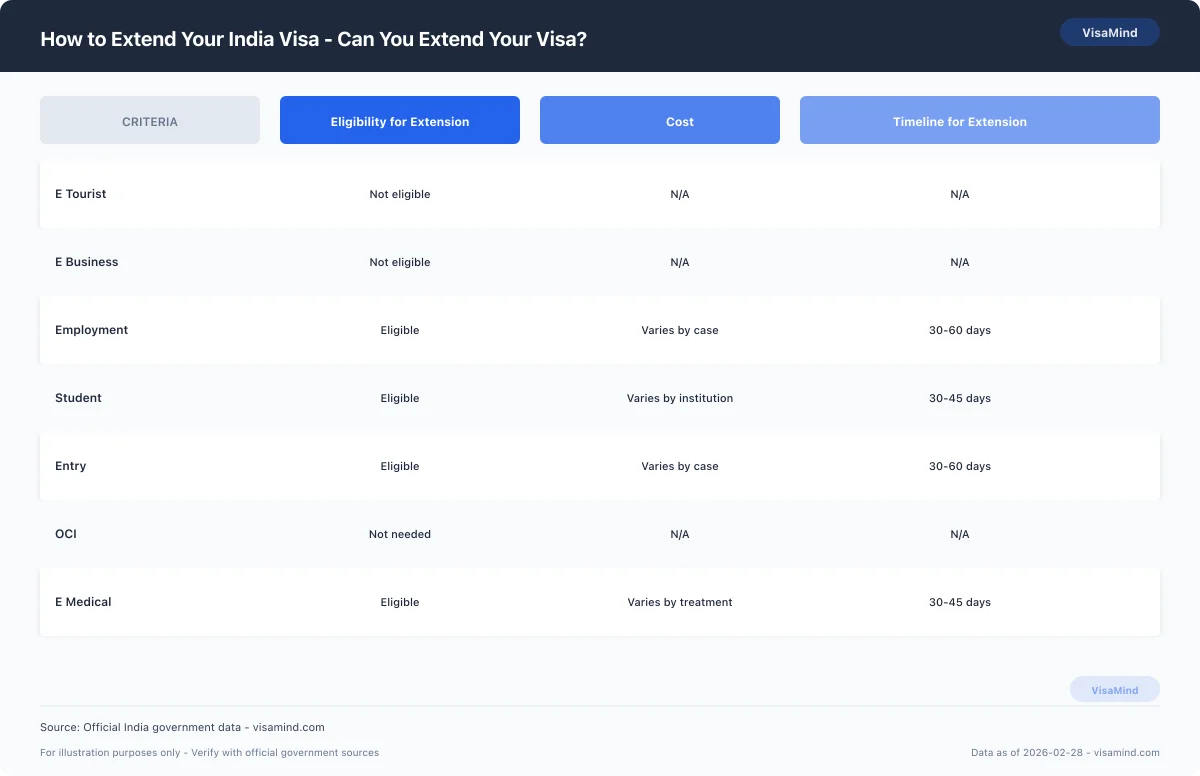
India offers a diverse range of visas, each with its unique eligibility criteria for extension. It is important to understand which visa types can be extended within the country through the Foreigners Regional Registration Office (FRRO). Here is a detailed overview:
Visa Extension Eligibility
| Visa Type | Eligibility for Extension | Purpose |
|---|---|---|
| e-Tourist Visa | Not Eligible | For recreation, sightseeing, or short-term visits. Extensions are not permitted. |
| Tourist Visa | Eligible | Primarily for leisure travel and visiting friends or relatives. Extensions may be granted under specific circumstances. |
| Business Visa | Eligible | For engaging in business activities in India. Extensions are possible if additional time is required for business engagements. |
| Employment Visa | Eligible | For foreign nationals employed in India. Extensions depend on continued employment and compliance with local laws. |
| Student Visa | Eligible | For those pursuing academic studies in India. Extensions are usually granted based on the duration of the course. |
Important Considerations
Important: e-Visas, such as the e-Tourist Visa, cannot be extended. If you require a longer stay, consider applying for a regular Tourist Visa instead, which might offer more flexibility for extensions.
How to Proceed with an Extension
When considering an extension, ensure that your passport has at least six months of validity from the date of application. It is crucial to gather the necessary documentation, such as a recent passport-sized photograph and the photo page of your passport showing personal details. These documents will be important in lodging your application with the FRRO.
Additional Resources
For more detailed information on each visa type, you can explore the following resources:
Understanding the eligibility criteria for visa extensions is essential for planning your stay in India effectively. Always verify the most current requirements and processes on the official website or consult directly with the FRRO to ensure compliance with all regulations.
The Extension Application Process
#-
Determine Your Visa Extension Eligibility
Before starting the extension process, confirm that you qualify for a visa extension in India. Eligibility typically depends on your visa type, such as E Tourist or Employment, and the purpose of your stay. Ensure your passport is valid for at least six months beyond your intended extended stay, and review any specific conditions attached to your current visa.
-
Choose Between Online or In-Person Application
You can apply for a visa extension either online through the e-FRRO portal or in person at the Foreigners Regional Registration Office (FRRO). The online process is generally more convenient and efficient, allowing you to track your application status digitally. If you prefer in-person interaction or require assistance, visiting an FRRO office may be the better option. Keep in mind that applying online might help you avoid delays.
Tip: File online to avoid mail delays and get a receipt number immediately.
-
Gather Necessary Documentation
Collect all required documents needed for your visa extension application. This typically includes:
- A recent front-facing photograph with a white background
- The photo page of your passport containing personal details
- Proof of continued purpose for your stay, such as employment letters or enrollment in a study program
Ensure that all documents are up-to-date and meet the specifications outlined by the FRRO.
-
Lodge Your Application
Once you have gathered all the necessary documents, proceed to lodge your application. If applying online, follow the e-FRRO portal instructions to upload your documents and fill out the necessary fields. For in-person applications, visit your nearest FRRO office with all required documents and supporting information.
-
Pay the Applicable Fees
Pay any applicable fees for your visa extension. The fee structure varies based on your visa type and the length of the extension requested. Verify the current fee schedule on the FRRO website or through the e-FRRO portal to ensure accurate payment.
-
Await Decision and Follow Up
After your application is submitted, monitor the status through the e-FRRO portal or contact the FRRO office if you applied in person. Decisions may take several weeks, so plan your extension application accordingly. Once a decision is made, you will be notified via email or through the portal.
Important: Ensure all information is correct and complete to avoid processing delays or rejections.
By following these steps, you can effectively navigate the process of extending your stay in India. For further guidance, refer to our Documents Checklist and Processing Times resources.
What to Submit with Your Extension
#To extend your visa in India, you will need to prepare a comprehensive set of documents and evidence to support your application. This section outlines the essential documents you must submit to the Foreigners Regional Registration Office (FRRO) to successfully lodge your extension request.
Personal Identification Documents
- Passport: Ensure your passport is valid for at least six months from the date of your application. You will need to provide a copy of the photo page and any relevant visa pages.
- Recent Photograph: A recent front-facing photograph with a white background is required. Ensure the photo meets the specifications outlined in the Documents Checklist.
Visa-Specific Documents
- Current Visa Details: Include a copy of your current visa. This is crucial for verifying your current legal status in India.
- Proof of Purpose for Extension: Depending on your visa type, you may need to provide additional documentation that supports the reason for your stay, such as:
- E Tourist Visa: Proof of ongoing tourism activities or plans (E Tourist Vs Tourist).
- Employment Visa: A letter from your employer confirming continued employment and the necessity of your stay (Employment Vs Project Visa).
Supporting Documents
- Proof of Residence in India: Lease agreement, utility bill, or hotel booking that confirms your stay in India during the visa period.
- Financial Proof: Evidence of sufficient funds to support your stay in India. This could include bank statements or a letter of financial support from a family member or sponsor.
Tip: Always verify the exact requirements for your specific visa type and extension purpose on the official FRRO website, as requirements can change.
Additional Considerations
- Application Form: While you won't submit a form titled "How to Extend Your India Visa," you should ensure that you complete the relevant visa extension application from the FRRO.
- Additional Evidence: Depending on personal circumstances, such as medical reasons for staying, additional documentation might be needed. Check specific requirements related to Medical Visas if applicable.
By gathering these documents and ensuring they meet the FRRO's requirements, you increase the likelihood of a successful visa extension in India. Always double-check the latest guidelines and procedures, as these can frequently be updated.
What It Costs and How Long It Takes
#It's important to understand the associated costs and how long the process might take. Here's a breakdown of what to expect when lodging an application for a visa extension with the Foreigners Regional Registration Office (FRRO).
Extension Fees and Processing Timelines
| Visa Type | Cost (INR) | Processing Time | Expedited Option |
|---|---|---|---|
| E-Tourist Visa | 7,500 | 7-10 Days | Not available |
| Tourist Visa | Varies | 10-15 Days | Not available |
| Business Visa | 13,500 | 10-15 Days | Not available |
| Employment Visa | 12,000 | 15-20 Days | Available at an extra charge |
| Student Visa | 8,000 | 15-20 Days | Not available |
Payment and Additional Charges
Visa extension fees must be paid in Indian Rupees (INR) and are non-refundable. The exact amount may vary based on the visa type and nationality. Always check the visa extension details for the most current fees.
Important: Ensure that your passport is valid for at least six months when applying for a visa extension. This is a requirement for eligibility.
Expedited Processing
While most visa types do not offer expedited processing, you can request faster processing for an Employment Visa. Additional charges apply, and you should inquire directly with the FRRO when submitting your application.
For more detailed information on timelines, you can refer to the Processing Times guide.
Tips for a Smooth Process
- Always gather all necessary documents before submitting your application. Check the Documents Checklist to ensure nothing is missed.
- Use the online application system to avoid delays and to get immediate confirmation of your submission.
Tip: Apply well in advance of your visa expiration to avoid unnecessary complications with your stay in India.
The Risks of Staying Past Your Visa
#Overstaying your visa in India can lead to significant consequences that impact both your immediate travel plans and future visa applications. The Foreigners Regional Registration Office (FRRO) is the agency responsible for managing visa extensions and addressing overstays within India.
Consequences of Overstaying
If you remain in India beyond your visa's expiration, you could face a variety of penalties. Here are the key repercussions:
-
Fines: Overstaying typically incurs a daily fine, which can quickly accumulate. As of 2023, fines can range from INR 500 to INR 2,000 per day, depending on the duration of the overstay. It's crucial to verify the exact amounts on the official website.
-
Legal Action: Extended overstays may lead to legal proceedings, which can include detention or deportation. This can severely disrupt your travel plans and lead to additional costs.
-
Blacklisting: Being blacklisted means you could be barred from entering India for a specified period, often five years or more. This can apply even to short overstays if deemed severe by immigration authorities.
Impact on Future Visa Applications
An overstay history can complicate future travel plans to India, as well as to other countries:
-
Visa Denials: A previous overstay can lead to future visa applications being scrutinized more rigorously, resulting in potential refusals not only for India but also for other countries that share immigration information.
-
Restrictions on Visa Types: Even if you are not outright denied a visa, future applications may be limited to shorter or stricter visa types. For example, securing a Tourist Visa may become more challenging.
How to Mitigate Risks
To avoid these severe repercussions, it's important to take proactive steps:
-
Apply for an Extension Early: If you know you need to stay longer, lodge an application for a visa extension through the FRRO well before your current visa expires. This can often be done online, providing a more efficient process.
-
Keep Documentation Ready: Ensure all necessary documents are prepared and up-to-date. Refer to the Documents Checklist for detailed requirements.
-
Seek Legal Advice: If you've already overstayed, consult with an immigration lawyer to understand your options and potential solutions.
Important: Ignoring overstay penalties can result in being detained or banned from entry, significantly impacting your ability to travel internationally.
Seeking Help and Information
For those needing assistance, the FRRO offices across India provide support and can guide you through the process of extending your stay legally. Additionally, the How To Apply guide can be a valuable resource for understanding the application process.
By planning ahead and understanding the implications of overstaying, you can avoid unnecessary complications and ensure your travels in India remain enjoyable and legal.
Visa-by-Visa Extension Rules
#Visa extension rules in India vary depending on the type of visa you hold. This section provides a detailed breakdown of the extension requirements and processes for tourist, student, work, and family visas. Understanding these distinctions can help you prepare effectively for the extension process.
Visa-by-Visa Extension Rules
| Visa Type | Eligibility Criteria | Cost | Timeline for Extension |
|---|---|---|---|
| Tourist Visa | Primarily for recreation, sightseeing, and casual visits. | Varies by nationality; check with FRRO | Typically processed within 2-3 weeks. |
| Student Visa | Must be enrolled in a recognized educational institution. | Depends on course duration; verify online | Generally takes 3-4 weeks for approval. |
| Employment Visa | Requires an offer from an Indian company and relevant skills. | Based on salary and position; consult FRRO | Processed in about 4-6 weeks. |
| Family Visa | For spouses and dependents of Indian citizens or residents. | Fees vary; check with FRRO | Usually takes 2-4 weeks to process. |
Key Considerations for Each Visa Type
Tourist Visa Extensions
Tourist visa extensions are typically granted for a short duration and can vary based on the applicant's nationality. You can apply for an extension through the FRRO office nearest to your current location in India. Ensure that your passport has at least six months of validity remaining, as this is a crucial eligibility requirement.
Tip: Lodging your extension application well before the expiry date can prevent any potential overstay issues. For more detailed information, see the E Tourist Vs Tourist guide.
Student Visa Extensions
If you are studying in India, maintaining your student status is essential for visa extension. Ensure that your enrollment in the educational institution is up-to-date and that you have all required documentation, such as attendance records and fee receipts. Extensions are typically aligned with the academic calendar, so plan accordingly.
Important: Any gap in your enrollment could impact your extension application, so keep your institution informed of any changes in your status.
Employment Visa Extensions
Employment visas require confirmation of continued employment with an Indian company. Make sure you have up-to-date employment contracts and a letter from your employer confirming your ongoing position. For more insights on work-related visas, visit the Employment visa page.
Family Visa Extensions
Family visa extensions are generally available for spouses and dependents of Indian citizens or residents. Ensure that your relationship status is well-documented and that your sponsor can provide adequate financial support evidence. These extensions require a careful review of personal and financial documentation.
Additional Resources
For further guidance and detailed documentation requirements, refer to the How To Apply and the Processing Times guides. These resources can provide valuable insights into the specific steps and timelines involved in the visa extension process.
What Else Can You Do?
#When looking to extend your stay in India, there are several options available beyond simply extending your current visa. Depending on your circumstances, you might consider changing your visa status, leaving and re-entering the country, switching to a different visa type, or even voluntarily departing India. Here’s how you can explore these possibilities:
Can You Change Your Visa Status?
If your purpose in India has changed, you might need to switch to a different visa type. For instance, if you've initially entered on a Tourist Visa but have secured employment, you might need an Employment Visa. Similarly, if you decide to study, transitioning to a Student Visa would be necessary. Such changes usually require you to leave India and apply for a new visa from an Indian mission abroad.
Important: Changes in visa status often require exiting the country. Verify the specific requirements for your desired visa type on the official website.
Can You Leave and Re-enter India?
Leaving India and re-entering can sometimes be a strategic way to reset your visa status. If you are eligible for an e-Tourist Visa, you can apply for it online and return after a short departure. Ensure your passport has at least six months' validity and a recent photo that meets the specifications.
Switching to a Different Visa Type
Consider switching visa types if your activities in India align better with another category. For example, if you're engaging in business activities rather than tourism, an E Business Visa might be more appropriate. Check the Documents Checklist to prepare the required documentation for a new visa application.
Voluntary Departure
If extending your stay or changing your visa type is not feasible, voluntary departure is a straightforward option. Ensure you comply with all exit formalities, including obtaining any necessary Exit Permit from the FRRO if required.
Tip: Plan your departure well in advance to avoid last-minute complications and potential overstays.
By understanding these options and planning accordingly, you can effectively manage your stay in India. Always verify the latest requirements and procedures on official websites to ensure compliance with Indian immigration laws.
FAQs
What does it cost to extend an Employment Visa in India?
How long does the FRRO take to process a Student Visa extension in India?
Is it possible to attend a yoga program on an e-Tourist Visa extension?
Can I combine educational and recreational activities under an extended e-Tourist Visa in India?
How can I ensure my India visa extension application is not delayed?
What are the risks of overstaying a Business Visa in India?
Can I apply for an Employment Visa extension if my passport is expiring soon?
Sources
Last reviewed: March 1, 2026
VisaMind provides informational guidance only and is not a government agency. This is not legal advice. Requirements can change and eligibility depends on your specific facts. If your case is complex or high-stakes, consult a licensed immigration attorney.
Next steps
Requirements vary by nationality, purpose, timeline, and case details. Use Find My Visa to get a personalized checklist for India with official sources and deadlines.
Find my visa